


More news on this day
Travelers across the United States are facing widespread disruption as Southwest Airlines records 1,083 delayed flights and several cancellations in a single day, snarling domestic routes into major hubs including Dallas, Denver, Chicago, Las Vegas, Phoenix, Orlando, Nashville, Houston, and Baltimore.
Get the latest news straight to your inbox!
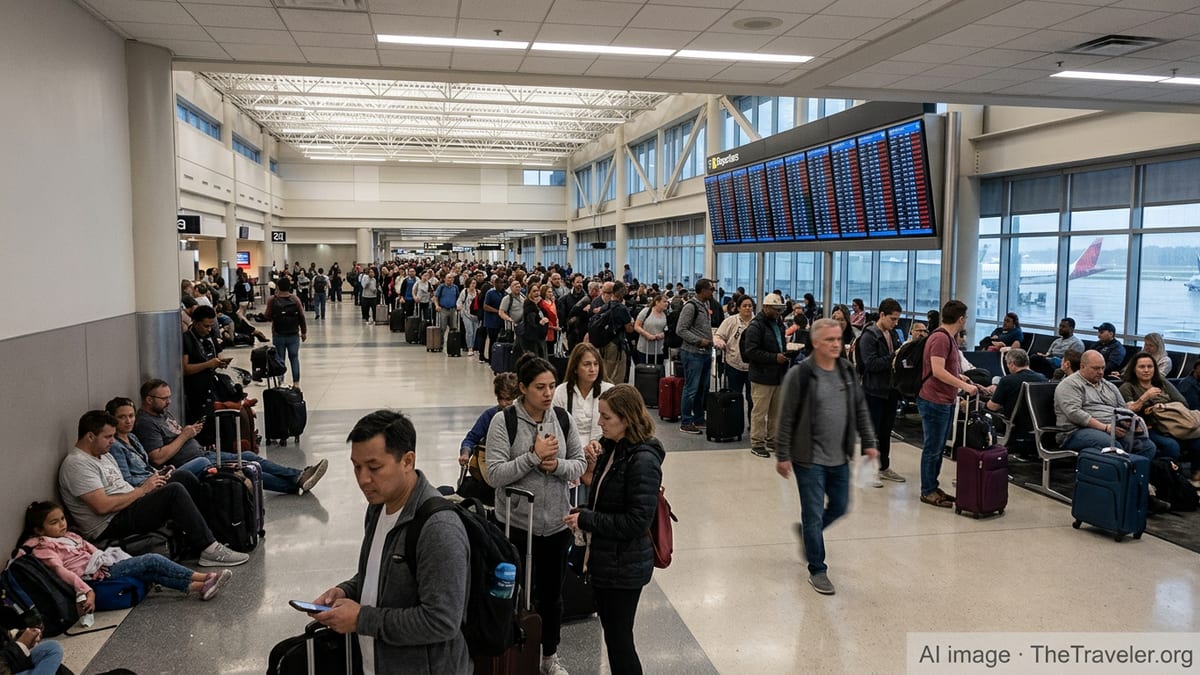
Systemwide Disruption Hits Key Southwest Markets
Publicly available flight-tracking data on June 18, 2026, shows Southwest Airlines battling more than one thousand delays, with the ripple effects felt from early morning departures to late-night arrivals. The scale of the disruption places the carrier among the most affected U.S. airlines on one of the busiest travel days of the early summer period.
The impact is most visible at airports where Southwest has a strong presence, including Dallas Love Field, Denver International, Chicago Midway, Las Vegas Harry Reid, Phoenix Sky Harbor, Orlando International, Nashville International, Houston Hobby, and Baltimore/Washington International. Delays on these routes are cascading through the network, affecting onward connections and turning what should be short domestic hops into all-day ordeals for many passengers.
Reports from live airport boards and flight-status services indicate that while only a small number of Southwest flights have been fully cancelled, the high volume of delayed departures and arrivals is enough to push gate capacity, crew scheduling, and baggage operations to their limits in multiple cities at once.
Travel forums and social channels show travelers describing hours-long waits on the ground, missed connections, and late-night arrivals well beyond scheduled times, underscoring how even a limited number of outright cancellations can translate into large-scale inconvenience when delays climb into the quadruple digits.
Weather, Congestion, and Tight Schedules Combine
Published coverage and flight-tracking analysis suggest that a combination of summer thunderstorms, constraints in air traffic management, and tightly packed schedules are contributing to Southwest’s rough day of operations. Even when storms are localized, they tend to affect multiple major hubs simultaneously, amplifying disruption across point-to-point networks such as Southwest’s.
In cities like Denver, Chicago, and Dallas, convective weather can quickly trigger ground stops, spacing restrictions, or rerouting that slow the flow of arrivals and departures. When this happens during peak travel windows, aircraft and crews often end up out of position, and the knock-on effect can last for many hours after skies begin to clear.
Industry analyses following previous disruption events have noted that airlines with dense daily schedules and high aircraft utilization leave themselves little margin to recover once delays begin stacking up. The pattern visible in today’s Southwest performance aligns with that dynamic, as even modest initial disruptions appear to have grown into systemwide congestion by midday.
Operational challenges are also intensified by ongoing industry-wide staffing pressures. While hiring has increased, many carriers are still working to rebuild deep reserves of pilots, flight attendants, mechanics, and ground handlers, which can limit flexibility when irregular operations stretch beyond a single region.
Passengers Confront Long Lines and Limited Alternatives
At airports from Las Vegas to Orlando, travelers are encountering long lines at check-in counters and customer service desks as they attempt to rebook, reroute, or modify itineraries. With a majority of Southwest routes operating point-to-point rather than through a traditional hub-and-spoke system, missed flights can be more difficult to re-accommodate when alternative departures are already heavily booked.
Some passengers report using mobile apps and online tools to secure new flights faster than they can reach an agent in person, while others describe confusion as flight statuses oscillate between “on time,” “delayed,” and “cancelled” within short windows. Travel discussion threads highlight cases in which passengers only learned of cancellations after proactively checking their reservations, emphasizing the value of frequent monitoring when large disruption events are unfolding.
Because Southwest does not participate in traditional interline ticketing agreements with other major U.S. carriers, options to move affected customers to competing airlines are limited. This can leave travelers in cities like Nashville, Houston, and Baltimore with fewer same-day alternatives if all later Southwest departures are sold out or face their own delays.
Passengers with onward connections on other airlines or international itineraries face a particularly complex challenge. A delay of several hours on a domestic leg into a gateway city can cause an outright misconnection, forcing expensive last-minute changes or additional overnight stays that are not always covered by standard airline policies in cases where weather plays a role.
Financial and Reputational Stakes for Southwest
While today’s numbers fall short of the mass meltdown the carrier endured in late 2022, the latest wave of disruption comes at a sensitive moment for Southwest’s brand. The airline has long marketed itself on reliability, transparent fares, and customer-friendly policies, but a series of high-profile operational snarls over recent years has prompted scrutiny from travelers, analysts, and consumer advocates.
Repeated days with elevated delays and scattered cancellations can erode customer confidence, especially when competitors are perceived to recover more quickly from similar weather patterns. Travelers discussing their experiences online increasingly compare Southwest’s service and pricing to other domestic airlines, weighing the carrier’s open seating model and free checked bags against growing concerns about schedule reliability.
Operational turbulence also carries direct financial consequences. Disrupted days often require additional spending on crew repositioning, overtime, fuel for rerouted flights, and in some instances vouchers or goodwill credits to placate inconvenienced customers. For an airline operating thousands of daily flights, even a modest increase in disruption frequency can translate into substantial incremental costs over a season.
Analysts note that such events arrive as U.S. carriers work to manage higher labor and maintenance expenses while still capitalizing on resilient leisure demand. Persistent reliability questions may push some price-sensitive travelers to explore alternatives, particularly now that low-cost competition has shifted following exits and consolidations in the broader market.
What Travelers Can Do on a Disrupted Southwest Day
Consumer travel advocates consistently advise passengers to act quickly and proactively when confronted with large-scale delays of the kind seen at Southwest today. Monitoring flight status frequently, rather than waiting solely for notifications, can provide a crucial head start on rebooking when limited seats remain on later departures.
Travel planners recommend that affected travelers use multiple channels at once, such as managing changes through mobile apps while simultaneously joining a service desk line at the airport. In fast-moving disruption cycles, securing even a slightly earlier option can mean the difference between arriving the same day or facing an unexpected overnight stay.
Experts also highlight the importance of knowing one’s rights and carrier policies before a trip. In weather-related events, compensation in the form of cash or hotel stays is often limited, but airlines may still provide meal vouchers, travel credits, or free changes as a gesture to maintain customer loyalty, particularly for significant delays or missed connections within their control.
With the peak summer travel season underway, today’s wave of Southwest disruptions serves as another reminder that even short domestic flights can be vulnerable to complex, systemwide pressures. For travelers headed into or out of Dallas, Denver, Chicago, Las Vegas, Phoenix, Orlando, Nashville, Houston, Baltimore, and dozens of other connected cities, building in buffer time, considering earlier departures, and keeping contingency plans ready have become increasingly important parts of flying in 2026.