


More news on this day
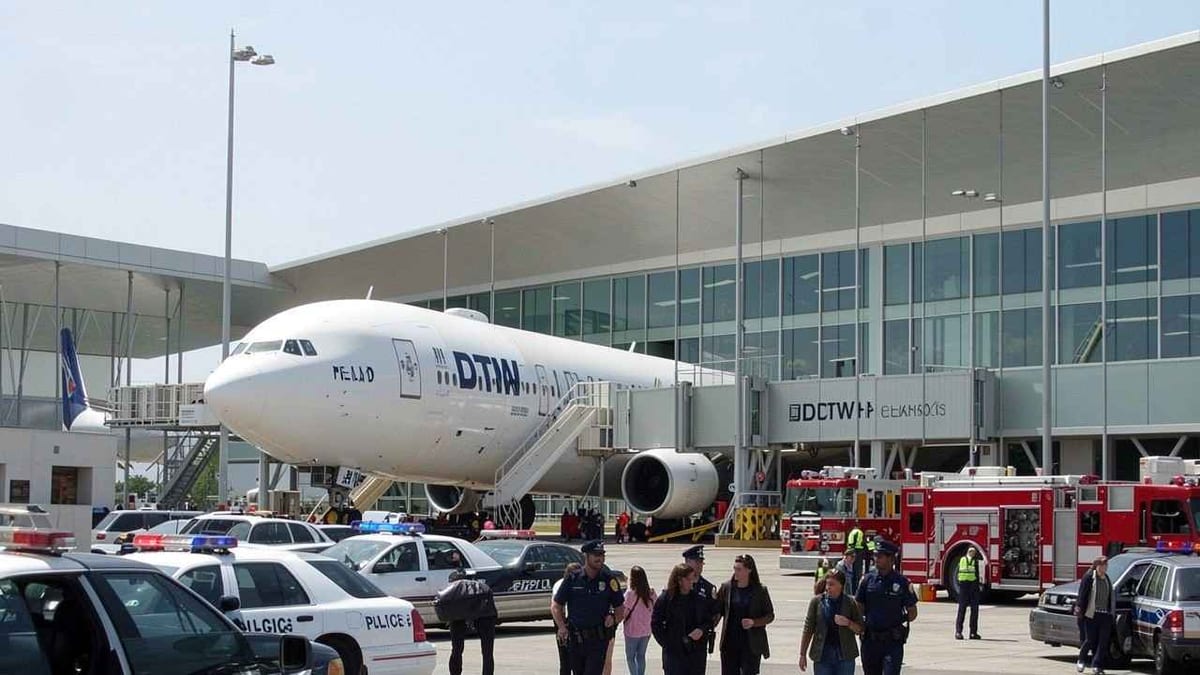
Passengers on Southwest Airlines flight WN4241 faced a late night surprise when the Kansas City to Wichita service diverted to Kansas City instead of completing its final leg to Wichita, marking another visible example of how tight summer operations can rapidly reshape flight plans across the central United States.
Get the latest news straight to your inbox!
Late-Night Diversion Disrupts Kansas City to Wichita Link
Publicly available flight-tracking data show that Southwest Airlines flight WN4241, a regularly scheduled Kansas City to Wichita service, did not complete its expected hop into Wichita late Friday night, instead remaining in Kansas City in what appears to be an operational diversion. The flight is typically scheduled to depart Kansas City International Airport around 21:40 and arrive at Wichita Dwight D. Eisenhower National Airport shortly before midnight, forming one of the late-evening links between the two Kansas markets.
Online schedule tools list WN4241 as a weekly service connecting Kansas City and Wichita, generally operating with strong on-time performance. The unexplained decision to bypass Wichita on this particular night left travelers reliant on rebooking options or overland transportation to complete their journeys. Flight followers on social media noted the missing arrival in Wichita and shared screenshots indicating that the aircraft did not proceed on the usual short in-state sector.
While detailed cause information had not been published at the time of writing, the change occurred against a backdrop of active summer weather in Kansas and a nationwide pattern of strained airline operations, conditions that frequently lead to late adjustments in aircraft routing and crew deployment. The timing of the disruption, at the end of the day’s schedule, also reduced the range of same-night alternatives for affected passengers.
Weather, World Cup Traffic and a Strained Summer Network
The diversion unfolded as Kansas and neighboring states experienced severe weather alerts, including late-evening flood and thunderstorm warnings in parts of the Wichita region. Public safety advisories issued for June 26 referenced heavy rainfall and hazardous conditions in several southeast Kansas counties, creating challenging conditions for aviation planners attempting to keep flights running on time late into the night.
At the same time, Kansas City is entering an unusually intense period of air-traffic demand. Federal aviation advisories for the 2026 World Cup outline expectations of increased air traffic and temporary flight restrictions in the Kansas City area from mid-June through mid-July. That influx of charter movements, business aviation and commercial traffic is adding extra complexity to an already busy summer schedule for carriers such as Southwest.
Industry data for mid-June also point to a wider pattern of disruptions across the United States. One recent analysis of operational performance recorded thousands of delayed flights in a single day, with Southwest among the airlines most heavily affected. In that environment, carriers have been regularly repositioning aircraft and crews, often making last-minute adjustments to protect the stability of the broader network, even when it means cancelling or diverting individual segments.
Operational Priorities Behind a Short-Haul Bypass
Aviation scheduling specialists note that short-haul flights like the Kansas City to Wichita leg served by WN4241 are sometimes the first to be adjusted when an airline is attempting to recover from a day of irregular operations. Because the two cities are connected by road in roughly three hours and alternative routings via other hubs are sometimes available, airlines may judge that the impact on passengers, while significant, is more manageable than disrupting longer-haul or international services.
Aircraft routing data for Southwest show that many planes operate complex daily patterns that touch multiple cities. A late-running inbound flight, a crew reaching duty limits, or a maintenance check that cannot be deferred may require airlines to end an aircraft’s day in a city like Kansas City rather than operating an additional late-night turn to a smaller destination. When this occurs, flights like WN4241 may be cancelled or diverted so that both aircraft and crews are better positioned for the following morning’s departures.
In the case of WN4241, analysts looking at historical schedule information note that the route typically boasts an excellent on-time record, with almost no recorded delays or cancellations in recent weeks. That record underscores how unusual the latest diversion is and suggests that it was likely driven by broader network considerations rather than by chronic issues on the Kansas City to Wichita pairing itself.
Impact on Wichita Travelers and Regional Connectivity
For travelers booked on the late Kansas City to Wichita leg, the operational shift translated into a difficult end to the day. Late-night disruptions limit options for same-day rebooking, particularly in regional markets where frequencies taper off in the evening. Some passengers likely faced overnight stays in Kansas City hotels or had to arrange ground transportation across Kansas to reach Wichita in the early hours of the morning.
The missed service also highlights the delicate nature of air connectivity for mid-sized cities such as Wichita. While Wichita enjoys a solid schedule of nonstop flights to major hubs and leisure destinations, its links often rely on a small number of daily frequencies. When one of those flights is removed from the schedule at short notice, the practical effect for passengers can be far more significant than a similar disruption at a major hub with dozens of alternative departures.
Regional business travelers, in particular, depend on late-evening flights to position themselves for early morning commitments. The interruption of WN4241 may prompt some corporate travelers to review their itineraries for the coming weeks and to build in additional buffer time or alternative routes when using late-night services into Wichita or Kansas City during the peak summer period.
What the WN4241 Diversion Signals for Summer Flyers
The diversion of Southwest flight WN4241 is a relatively minor event in the context of a nationwide summer schedule, but it serves as a telling snapshot of how closely balanced airline operations are in 2026. With fleets and staffing calibrated to busy yet finely tuned schedules, even localized weather or a brief disruption earlier in the day can ripple outward, ultimately changing the fate of a seemingly straightforward short hop between neighboring cities.
For travelers across the central United States, the incident is a reminder of the value of close monitoring of flight status and building flexibility into travel plans. Published guidance from airlines and aviation agencies consistently encourages passengers to rely on airline apps and airport information boards for the most current details, particularly when severe weather or major events are affecting key hubs like Kansas City.
As the World Cup period progresses and summer storms continue to pass across the Plains, aviation observers expect more nights when flights like WN4241 become barometers for the health of the broader network. Whether the Kansas City to Wichita link settles back into its usual routine or sees further operational tweaks, its latest diversion underscores how even a short final leg at the end of the day can quickly turn into a focal point of the season’s travel story.