


More news on this day
Spain has emerged as a powerful new market for AirHelp’s mobile app, helping to drive downloads past the one million mark as travelers increasingly look beyond airline channels for real-time control over delayed, disrupted, or cancelled flights.
Get the latest news straight to your inbox!
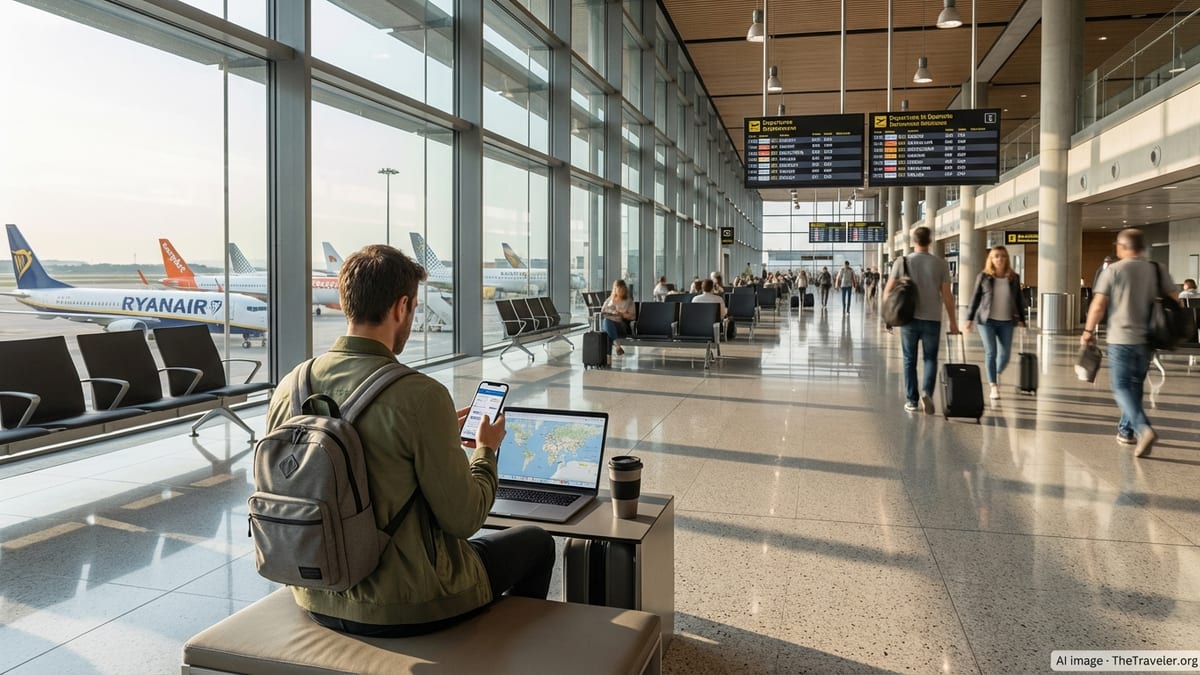
Spain Becomes a Key Growth Market for AirHelp
Publicly available app data and company information indicate that Spain has recently joined France, the Netherlands, Germany, Ireland, Turkey, the United Kingdom, Brazil, Saudi Arabia, and Poland among AirHelp’s most active markets. The expansion reflects the company’s focus on countries with large volumes of international traffic and frequent disruption, where passengers stand to gain the most from stronger visibility into their journeys.
Recent disruption analysis published by AirHelp shows that Spain sits near the top of Europe’s busiest and most delayed aviation markets, with tens of millions of departing passengers each year and a high proportion of affected flights. That mix of heavy traffic and operational strain has created fertile ground for digital tools that can help passengers monitor their flights and understand when they may be entitled to compensation.
Spain’s role is especially significant because it connects major tourist destinations such as Barcelona, Madrid, Palma de Mallorca, and the Canary Islands with hubs across Europe and long haul routes to Latin America and the Middle East. As more of those passengers adopt mobile tools to keep track of their trips, Spain’s contribution to AirHelp’s download milestone is expected to keep growing.
Real-Time Flight Tracking Moves Beyond Airline Apps
AirHelp positions its mobile app as a complement to airline and airport tools, offering a consolidated view of flight statuses alongside eligibility checks for compensation. Information on the company’s app pages describes real-time flight status notifications, calendar and email synchronization to automatically import bookings, and the ability to store all itinerary details in one place.
Travelers can use the app to receive alerts about delays, cancellations, and schedule changes, and then see whether a particular disruption might trigger compensation under regional or national passenger rights rules. The goal is to give passengers an independent channel for monitoring their rights, rather than relying solely on airline communications that may focus on rebooking or vouchers.
This model is resonating in markets where disruptions have become a regular feature of travel. Reports on recent summer seasons in Europe highlight high rates of delays and cancellations across major hubs, driven by capacity constraints, staffing challenges, and airspace congestion. In that context, tools that combine live status updates with automatic rights checks are gaining traction among frequent flyers and occasional travelers alike.
Network Effect Across Europe, the Middle East, and Latin America
The list of countries now driving AirHelp’s one million download breakthrough illustrates how passenger rights rules are converging with mobile adoption. France, Germany, the Netherlands, Ireland, Spain, and Poland are covered by the European framework that sets standard compensation levels for many delayed or cancelled flights departing from or within the European Union.
Turkey and Saudi Arabia have introduced dedicated passenger rights regulations that mirror key aspects of the European model, including fixed compensation bands in cases of severe disruption. Brazil has its own consumer protection regime for air travel, which establishes clear thresholds for care, rerouting, refunds, and in some cases monetary compensation. Public materials from AirHelp point out that these different legal frameworks are embedded into its claims assessment systems.
In the United Kingdom, a post-Brexit version of the European passenger rights regulation continues to apply to many flights, ensuring that UK travelers remain a central audience for rights-focused services. Coupled with the country’s large outbound tourism market and strong uptake of travel apps, the UK remains one of AirHelp’s most important download bases.
The result is a network effect across multiple regions. Each additional market with clear passenger protections, high smartphone usage, and busy air traffic corridors creates new demand for tools that translate legal rights into practical, real-time guidance on what passengers can expect when flights go wrong.
Demand for Independent Passenger Rights Tools Rises
AirHelp’s trajectory reflects a broader shift in how travelers manage disruption. Rather than relying only on airline notifications or airport departure boards, passengers are turning to third party apps that aggregate flight information and cross check it against complex regulations. Guides released by AirHelp describe how compensation amounts vary by distance, delay duration, and origin or destination, demonstrating the complexity that individual travelers may face when trying to interpret their rights alone.
Consumer behavior appears to be changing in parallel. In many key markets, online reviews and travel forums increasingly highlight independent flight tracking and claims tools as standard items in the digital toolkit, alongside airline apps, digital boarding passes, and airport navigation services. This trend is particularly visible among younger travelers, who expect real-time mobile updates and clear, actionable information.
The one million download threshold underscores how that behavior is moving into the mainstream. For Spain and the other leading markets, widespread adoption of such services may also have a feedback effect, encouraging airlines and regulators to communicate more transparently about passenger rights and to ensure that operational data is shared promptly with trusted third party platforms.
What Spain’s Surge Signals for the Next Travel Seasons
Spain’s emergence as a driver of AirHelp’s growth coincides with a period of strong demand for leisure and visiting friends and relatives traffic across Europe and beyond. Capacity remains tight on many routes serving Spanish airports, with peak season schedules leaving little margin for weather events, industrial action, or air traffic control restrictions.
Analysts following European aviation note that structural issues such as staffing shortages and airspace constraints are unlikely to disappear in the short term. That outlook suggests that irregular operations will remain part of the travel landscape, reinforcing demand for specialized tools that help travelers anticipate, understand, and respond to disruption.
For passengers departing from or traveling to Spain, the practical effect is that mobile services offering real-time flight control and clear rights information are quickly becoming as essential as online check in. As AirHelp’s app surpasses one million downloads, Spain’s growing share of users signals how central the country has become in the broader shift toward traveler centric, data driven disruption management.