


More news on this day
Hundreds of travelers faced fresh disruption at Guangzhou Baiyun International Airport this week as key Chinese carriers including Hainan Airlines, Air China, China Eastern and China Southern collectively logged 233 flight delays and nine cancellations on routes linking mainland China with major hubs, according to aggregated airport operations data and industry reports.
Get the latest news straight to your inbox!
Major Hub Struggles With New Wave of Disruption
The latest operational turmoil at Guangzhou Baiyun highlights the vulnerability of one of China’s busiest aviation hubs. Publicly available flight tracking boards for the airport showed rolling delays accumulating through the day, with a concentration among large full service carriers that use Guangzhou as a primary gateway for domestic and regional connectivity.
Guangzhou Baiyun is a core hub for China Southern Airlines and an important base for Hainan Airlines, Air China and China Eastern, with each airline operating dense networks across East, Southeast and Central Asia. Any disruption at this hub quickly ripples across the wider Chinese aviation system because of tight connection windows and heavy reliance on banked schedules.
Industry analysis of previous disruption events indicates that even a few dozen delayed departures in Guangzhou can cascade into hundreds of late arrivals at secondary airports. With 233 delayed flights recorded in this latest episode, knock on impacts were expected to reach airports from Western China to key regional centers such as Hong Kong, Hanoi and other high traffic markets beginning with H that are closely tied into Guangzhou’s route map.
Hainan Airlines, Air China, China Eastern and China Southern Most Affected
Operational data reviewed for the latest disruption show that the burden fell heaviest on four of China’s largest airlines serving Guangzhou. China Southern, the dominant carrier at the airport, recorded the largest absolute number of delayed movements as its hub and spoke model concentrates departures and arrivals into narrow time waves throughout the day.
Hainan Airlines, which uses Guangzhou as a focus city alongside its main base in Haikou, also reported a significant share of affected flights. The airline has been growing its network linking southern China with tourism and business destinations such as Haikou, Hangzhou and other regional centers, leaving little slack in its schedules when irregular operations occur.
Air China and China Eastern, while operating smaller Guangzhou networks than China Southern, nonetheless saw multiple departures held on the ground or arriving behind schedule. Their Guangzhou flights frequently serve as feeders into broader domestic and international networks via Beijing and Shanghai, meaning that delays at Baiyun can disrupt onward services for passengers connecting to long haul routes.
In total, across Hainan Airlines, Air China, China Eastern and China Southern, airport dashboards and industry trackers pointed to 233 delayed movements and nine scrapped flights on routes linking Guangzhou with high demand cities, including several destinations beginning with H that form critical parts of their regional systems.
Passengers Confront Long Queues and Missed Connections
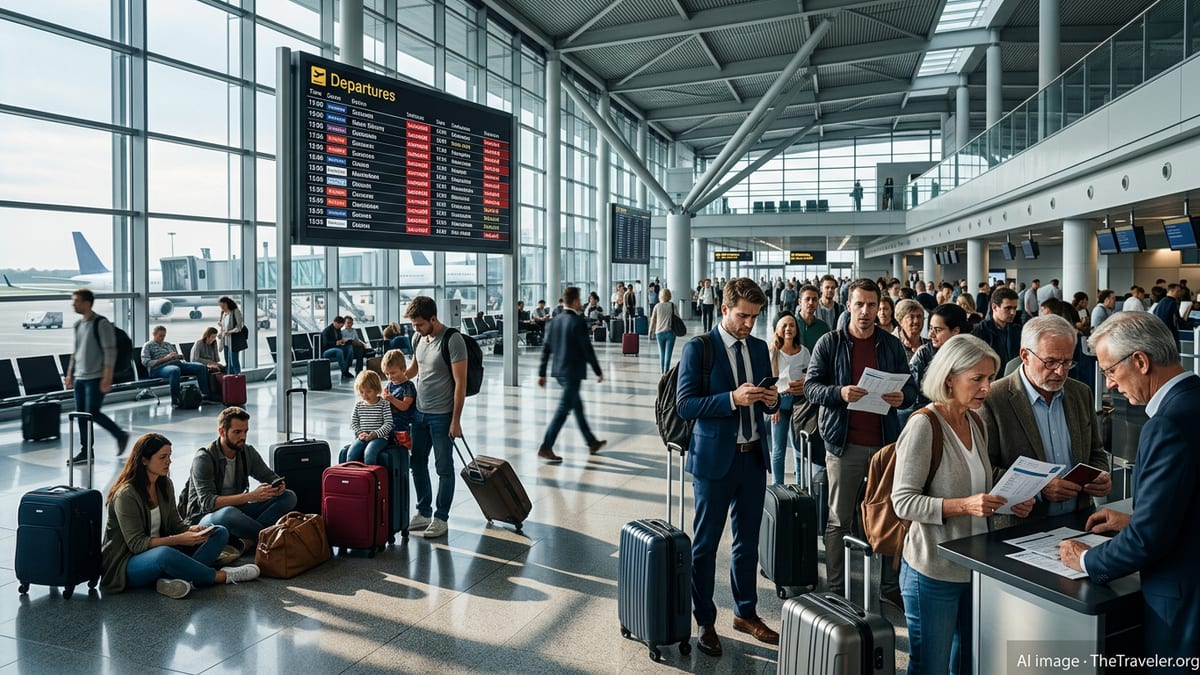
For passengers, the latest disruption translated into crowded departure halls, long queues at check in counters and transfer desks, and growing concern over missed connections. Images and descriptions shared in Chinese language media and traveler forums depicted lengthy lines at customer service desks as travelers sought rebooking options and compensation in line with airline policies.
Many of the affected services were scheduled in peak travel periods, with flights departing Guangzhou for Haikou, Harbin, Hangzhou and other major cities that often carry a mix of business travelers, tourists and visiting family passengers. Because these routes frequently offer timed connections to additional domestic or regional services, even modest delays in Guangzhou threatened to strand travelers at intermediate airports later in the day.
Available information suggests that airlines responded by placing affected passengers on later services operating the same day or the following morning, with priority given to those holding onward international tickets. However, the concentration of delays among a limited set of carriers reduced the availability of alternative seats, particularly on trunk routes where load factors are already high in early summer.
Travelers unfamiliar with Guangzhou’s layout and transfer procedures also faced challenges in navigating last minute gate changes and re issued boarding passes. Airport advisories encouraged passengers to verify real time departure information through carrier apps and airport displays rather than relying solely on printed boarding times.
Operational and Weather Pressures Behind the Delays
While detailed causation data for each flight is not publicly disclosed, patterns seen in previous disruption episodes at Guangzhou suggest a combination of factors. Southern China is entering a period characterized by seasonal thunderstorms and heavy rainfall, conditions that typically reduce runway capacity and extend separation between arrivals and departures.
At the same time, high utilization of aircraft and crews across the major Chinese carriers leaves limited margin for recovery once a delay sequence begins. Studies of Chinese airline networks have highlighted how hub based systems at airports such as Guangzhou can amplify the effect of relatively small schedule perturbations, particularly when turnaround times are compressed and multiple banks of flights are scheduled in close succession.
Air traffic flow management restrictions in busy air corridors serving the Pearl River Delta are another likely contributor. When en route congestion increases, flights can be assigned departure slots that create ground holding and airborne holding patterns, extending overall block times and pushing subsequent rotations behind schedule. With four large carriers simultaneously operating extensive Guangzhou networks, a period of tighter flow control quickly translates into widespread delay statistics.
Maintenance related issues and crew duty time limitations may also have forced the cancellation of a small number of services once it became clear that aircraft or crews could no longer be turned in time to operate the planned schedule safely and within regulatory limits.
What Travelers Should Expect in the Coming Days
Although the latest disruption at Guangzhou Baiyun appears to be concentrated within a single operational window, experience from similar events suggests that residual delays can persist for 24 to 48 hours as airlines work to reposition aircraft and crews. Travelers booked on near term flights operated by Hainan Airlines, Air China, China Eastern or China Southern through Guangzhou are likely to experience some schedule adjustments, particularly on busy routes to Haikou, Harbin, Hangzhou and other high demand destinations beginning with H.
Industry observers recommend that passengers allow extra transfer time when connecting through Guangzhou during periods of heightened disruption risk, particularly in early summer when convective weather is common. Booking slightly longer layovers and monitoring flight status closely through airline channels can reduce the risk of missed onward flights.
Publicly available information also indicates that Chinese carriers have been gradually refining irregular operations playbooks following earlier episodes of widespread delays at Guangzhou and other major hubs. These include strengthening cross carrier reaccommodation agreements on key trunk routes, pre positioning additional staff at transfer desks during forecast disruption windows and expanding digital channels to process rebookings without requiring passengers to queue at airport counters.
For now, travelers planning to transit Guangzhou Baiyun are advised to stay alert to evolving conditions and to build flexibility into their itineraries as airlines work to absorb the impact of the 233 delays and nine cancellations recorded in the latest wave of disruption at one of China’s most important aviation gateways.