


More news on this day
Amsterdam Schiphol Airport is facing a fresh wave of disruption as operational problems led to 23 flights being grounded and at least 49 more delayed, stranding passengers bound for the United States, United Kingdom, Italy, Ireland, Latvia, Türkiye, Taiwan and several other destinations.
Get the latest news straight to your inbox!
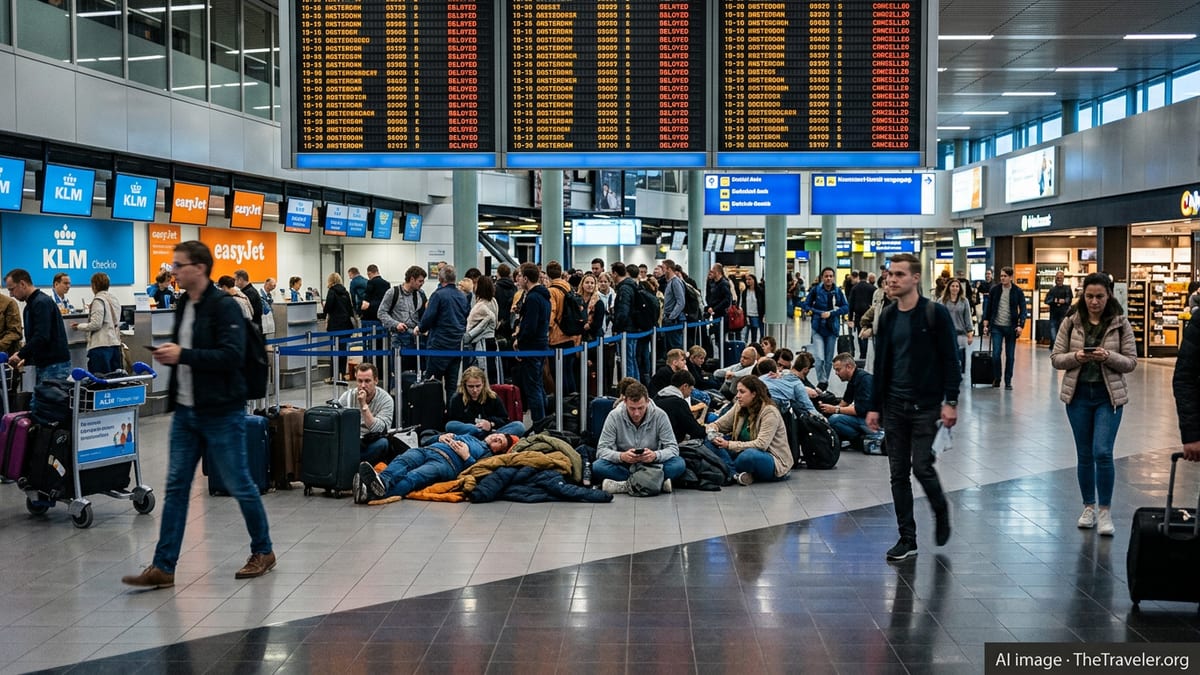
Grounded and Delayed Flights Hit Key Long Haul and European Routes
Published schedules and tracking data indicate that dozens of departures and arrivals at Schiphol have been affected within a short window, with cancellations and long delays concentrated among services operated by KLM, Delta Air Lines, Air Baltic and several partner carriers. The disruption has rippled through both long haul and short haul networks, affecting travel plans far beyond the Netherlands.
Services to major hubs in the United States and United Kingdom, including New York, Minneapolis and London, have reported extended delays or aircraft changes, while a number of regional links to Ireland, Italy and Latvia have been cancelled outright or retimed. Additional knock-on delays are being reported on connecting services via Schiphol to Türkiye, Taiwan and secondary European cities as aircraft and crews fall out of planned rotation.
Operational databases for June 23 and June 24 show that, out of several hundred scheduled movements at Schiphol, a subset of 23 flights did not operate as planned and at least 49 more experienced significant departure or arrival delays. The mix includes mainline KLM flights, codeshares operated with Delta on transatlantic routes, and regional partners such as Air Baltic that feed traffic into the Amsterdam hub.
The pattern mirrors earlier disruption episodes at Schiphol this year, where relatively small numbers of cancellations have produced outsized effects on connecting passengers because of tight connection times and heavily banked departure waves.
Passengers Confront Missed Connections and Overnight Disruptions
Reports from passenger forums and social media describe travelers missing onward connections by narrow margins after modest initial delays spiraled into long waits for the next available departure. In several cases, passengers heading to North American destinations through Amsterdam reported being rebooked one or two days later because alternative flights were already heavily booked.
Travelers bound for the United Kingdom and Ireland similarly described being rerouted via other European hubs when their Schiphol departures were cancelled or heavily delayed. Some passengers connecting to regional airports in Italy and Latvia reported that they were left without same-day alternatives and were instead offered hotel accommodation and travel the following day.
Publicly available accounts also highlight complications in handling baggage during the disruption. In previous operational disturbances at Schiphol, luggage has at times remained in Amsterdam while passengers were rerouted on other carriers or via other hubs, and early indications suggest similar issues are affecting some of those caught up in the latest wave of cancellations and delays.
For travelers headed onward to Türkiye and Taiwan, the disruption has been particularly challenging because of the limited number of daily frequencies on certain routes. A missed connection or cancellation on a long haul service can translate into a delay of 24 hours or more, depending on aircraft and crew availability and on seat capacity on subsequent flights.
Multiple Factors Add Strain to an Already Busy Hub
Operational data and recent coverage show that Schiphol has been under sustained pressure in recent months, with a combination of infrastructure constraints, staffing challenges, air traffic flow restrictions and separate rail disruptions influencing passenger flows to and from the airport. On some days, severe weather and visibility issues have also forced airlines to thin schedules or adjust flight plans.
Rail operators have announced reduced services on routes linking Schiphol with other Dutch cities during peak heat and during specific industrial actions, limiting access to the airport and adding stress to departure banks. In parallel, airlines have periodically turned to proactive cancellations at Schiphol to stabilize their operations, prioritizing longer haul services while trimming shorter regional sectors.
KLM, Delta Air Lines and Air Baltic all rely heavily on predictable ground handling and de-icing capacity in Amsterdam during the winter months, and on swift turnaround times year-round. Industry commentary suggests that when ground resources or staffing fall short of plan, carriers may consolidate flights or cancel selected rotations in order to keep the overall network running, which can lead to the type of concentrated cancellations and delays seen in the latest Schiphol episode.
Historic data from earlier this year indicate that even a relatively small disturbance in aircraft positioning or crew schedules at Schiphol can result in multiple days of follow-on delays and missed connections, particularly on high-demand transatlantic and intra-European corridors.
What Stranded Travelers Can Expect in Terms of Support
Publicly available information from airline policies and consumer rights guides indicates that passengers affected by the Schiphol disruption may be entitled to support that can include rebooking, hotel accommodation, meal vouchers and, in some cases, financial compensation, depending on the cause and length of the delay or cancellation and the jurisdiction under which the flight falls.
For many of the routes affected at Schiphol, including flights within Europe and services departing from the European Union to the United States, United Kingdom, Türkiye and other destinations, European passenger rights rules can apply if the operating carrier is an EU or UK airline. Under those frameworks, travelers may be eligible for fixed-sum compensation when cancellations or long delays are not caused by extraordinary circumstances and when minimum delay thresholds are met.
Guidance from travel rights organizations stresses that passengers should keep boarding passes, booking confirmations and any written communication regarding the disruption, as these documents are frequently required when submitting claims. Travelers are also advised, in publicly available resources, to document out-of-pocket expenses incurred during their extended stay, such as meals and local transportation, in case they can be reclaimed later.
In addition to statutory compensation schemes, airlines serving Schiphol typically offer flexible rebooking options during periods of disruption, allowing passengers to change travel dates without change fees or to request vouchers or refunds under specified conditions. The exact options available often depend on the fare type, route and reason for disruption.
Advice for Upcoming Flights Via Amsterdam Schiphol
Given the fresh operational problems at Schiphol and the possibility of further knock-on effects in the coming days, publicly shared travel advice emphasizes the importance of building in additional buffer time for connections when routing through Amsterdam, especially on itineraries involving long haul sectors to the United States, Türkiye or Asia.
Travel planning resources that track Schiphol operations recommend that passengers with itineraries touching Amsterdam closely monitor their flight status through airline apps and airport displays on the day of travel, as departure times and gate assignments can change at short notice in response to staffing levels, weather and air traffic restrictions.
For those who have not yet started their journey, some analysts suggest considering alternative routings through other major European hubs if tight connections through Schiphol cannot be avoided on critical trips. However, capacity constraints during peak summer travel periods mean that many flights across the region are already heavily booked, limiting the ability to switch plans at short notice.
The situation at Amsterdam Schiphol underscores how quickly a combination of operational challenges can cascade across global networks, leaving passengers heading for destinations as far apart as Belfast, Rome, Dublin, Riga, Istanbul and Taipei facing the same problem: an unexpected wait in one of Europe’s busiest hubs while airlines work to restore normal schedules.