


More news on this day
Hundreds of travellers at Jakarta’s Soekarno-Hatta International Airport faced severe disruption as 28 flights were withdrawn and 97 delayed, causing missed connections and lengthy waits on busy regional routes.
Get the latest news straight to your inbox!
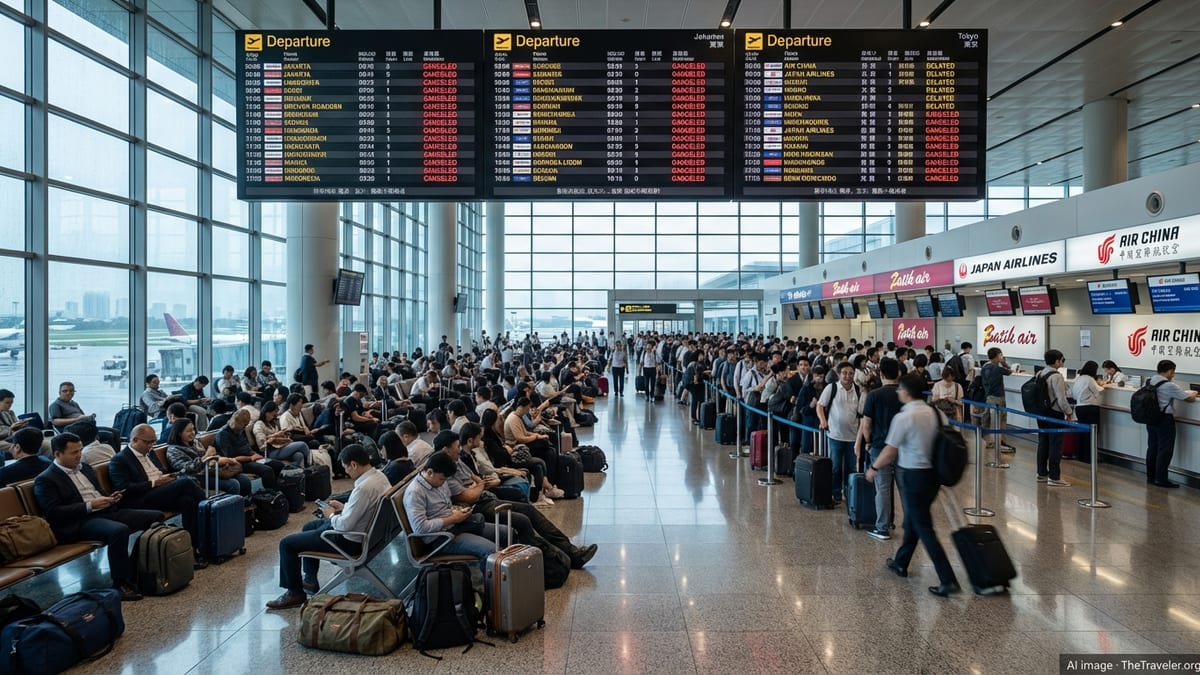
Heavy Operational Disruption Across Major Indonesian Carriers
Operational data from Soekarno-Hatta on the latest affected day indicate that a combined total of 28 flight withdrawals and 97 delays were recorded, creating a ripple effect for passengers flying within Indonesia and across Southeast Asia. The disruption primarily involved leading Indonesian airlines Batik Air, Garuda Indonesia, Lion Air, Citilink and Super Air Jet, which together handle a substantial share of movements at the country’s busiest hub.
Most of the withdrawn services were concentrated in a small number of routes, while delays were spread across a broad network of domestic and short-haul international flights. The pattern reflects how tight aircraft rotations and slot constraints at Soekarno-Hatta can magnify schedule changes, turning relatively small operational issues into hours of knock-on disruption for travellers.
Published coverage of the episode notes that services linking Jakarta with regional gateways such as Singapore, Kuala Lumpur and Bangkok were among those affected. As a result, passengers heading onward to long-haul destinations from these hubs often faced rebooking or overnight stays, particularly where self-connecting itineraries were involved.
Although airport operations continued and there was no full shutdown of terminals or runways, the volume of altered flights left check in halls, security lanes and boarding gates crowded well into the evening, with many travellers seeking last minute alternatives.
Impact on Links to Singapore, Malaysia and Thailand
Soekarno-Hatta International Airport functions as Indonesia’s primary aviation gateway, funnelling traffic onto some of Southeast Asia’s busiest corridors. When multiple airlines simultaneously withdraw and delay flights, connections to nearby hubs in Singapore, Malaysia and Thailand are among the first to feel the strain.
According to publicly available timetable and route data, carriers such as Batik Air, Garuda Indonesia, Lion Air, Citilink and Super Air Jet field a dense pattern of departures from Jakarta to cities including Singapore, Kuala Lumpur and Bangkok. On the disrupted day, reduced frequencies and delayed departures on several of these sectors meant that passengers missed onward flights booked on separate tickets, particularly on low cost and regional airlines based at those hubs.
Travel accounts posted online describe travellers arriving in Singapore and Kuala Lumpur hours behind schedule, forcing last minute changes to hotel bookings and tour plans. For some, the timing of the delays meant that same day onward options were unavailable, leaving them to arrange overnight accommodation at their own expense where tickets were not protected on a single booking.
The situation has renewed attention on how dependent Indonesia’s international connectivity is on these short regional links. When flight reliability dips on Jakarta’s outbound legs, the consequences are felt across a wide geography, from business meetings in Singapore’s financial district to leisure itineraries spanning Malaysia’s resort islands and Thailand’s beach destinations.
Which Airlines and Routes Were Most Affected
While no single carrier released a full public breakdown of its disrupted services, operational snapshots and media summaries point to a broad mix of domestic and regional international routes being hit. Within Indonesia, city pairs such as Jakarta to Medan, Balikpapan, Makassar and various secondary provincial capitals saw both withdrawals and rolling delays, reflecting how tightly aircraft and crews are scheduled on these high demand routes.
Internationally, Jakarta flights serving key Southeast Asian markets took some of the heaviest passenger impact, not necessarily because they experienced the greatest number of cancellations, but because they carried a large share of travellers relying on onward connections. Flights timed to feed morning and late night banks at Singapore Changi and Kuala Lumpur International Airport were particularly sensitive, as even moderate delays could push travellers past minimum connection windows.
The disruption also highlighted the central role of airline groups in Indonesia’s domestic aviation landscape. Lion Air Group carriers, including Lion Air, Batik Air and Super Air Jet, operate a significant portion of departures at Soekarno-Hatta, while Garuda Indonesia and its low cost arm Citilink provide both full service and budget options on many of the same routes. When several of these brands adjust schedules at once, the range of fallback alternatives for same day travel narrows sharply.
For affected passengers, options varied widely depending on fare type and booking channel. Travellers holding flexible tickets or itineraries on a single carrier generally reported smoother rebooking, while those combining separate tickets across different airlines or booking platforms often had to purchase entirely new segments.
Why Delays at Soekarno-Hatta Escalate Quickly
Analyses of Indonesian aviation performance have long identified Soekarno-Hatta as a pressure point for on time operations. Academic and industry studies on the airport’s punctuality note that high traffic density, limited runway capacity during peak periods and complex terminal logistics can all contribute to knock on delays when even minor disruptions occur.
Research examining on time performance at the airport points to factors such as tight aircraft turnaround times, air traffic flow restrictions and weather related constraints as recurrent contributors. Once an early rotation runs late, subsequent flights using the same aircraft can see their departure times slide progressively through the day, especially for low cost operators that aim to maximise aircraft utilisation.
In addition, route networks built around dense waves of departures in the morning and evening mean that a disruption in one bank can spill into the next. When multiple airlines experience similar pressures simultaneously, the available spare capacity in gates, ground handling teams and air traffic slots can quickly be exhausted, extending delays well beyond the original trigger event.
Recent discussion in Indonesian transport circles has focused on long term measures to boost resilience at Soekarno-Hatta. These include infrastructure upgrades, improved slot management and tighter enforcement of performance regulations designed to encourage airlines to maintain realistic schedules and provide clearer communication to passengers when plans change.
What Travellers Can Do When Flight Chaos Hits
The recent disruption at Jakarta highlights the vulnerability of self planned itineraries and tight connections in a hub environment where multiple carriers show variable on time performance. Travel experts and frequent flyer communities consistently advise allowing longer connection windows at Soekarno-Hatta, particularly when travelling on separate tickets or mixing low cost and full service airlines.
For passengers with imminent travel through Jakarta, publicly available guidance suggests checking flight status repeatedly in the 24 hours before departure and monitoring email and text notifications from airlines and online travel agents. Many Indonesian and regional carriers have adopted increasingly proactive messaging when schedules change, but coverage can still be uneven, especially for bookings made via intermediaries.
Travel insurance that explicitly covers delays, missed connections and additional accommodation costs can also mitigate some of the financial strain when large numbers of flights are disrupted at once. Policies differ significantly, so travellers are advised to verify coverage details in advance and retain documentation such as boarding passes, delay notices and receipts for any extra expenses incurred.
Ultimately, the scenes at Soekarno-Hatta serve as a reminder that even routine regional journeys can be upended when several major airlines record high volumes of withdrawals and delays on the same day. For travellers navigating one of Southeast Asia’s busiest hubs, building flexibility into itineraries and staying informed in real time remain key strategies for reducing the risk of being stranded.