


More news on this day
A major Spanish holiday hotspot is experiencing one of the highest levels of flight cancellations and disruption for British travellers this summer, as a mix of new border checks, airport bottlenecks and wider European aviation pressures turns peak season into an obstacle course for UK holidaymakers.
Get the latest news straight to your inbox!
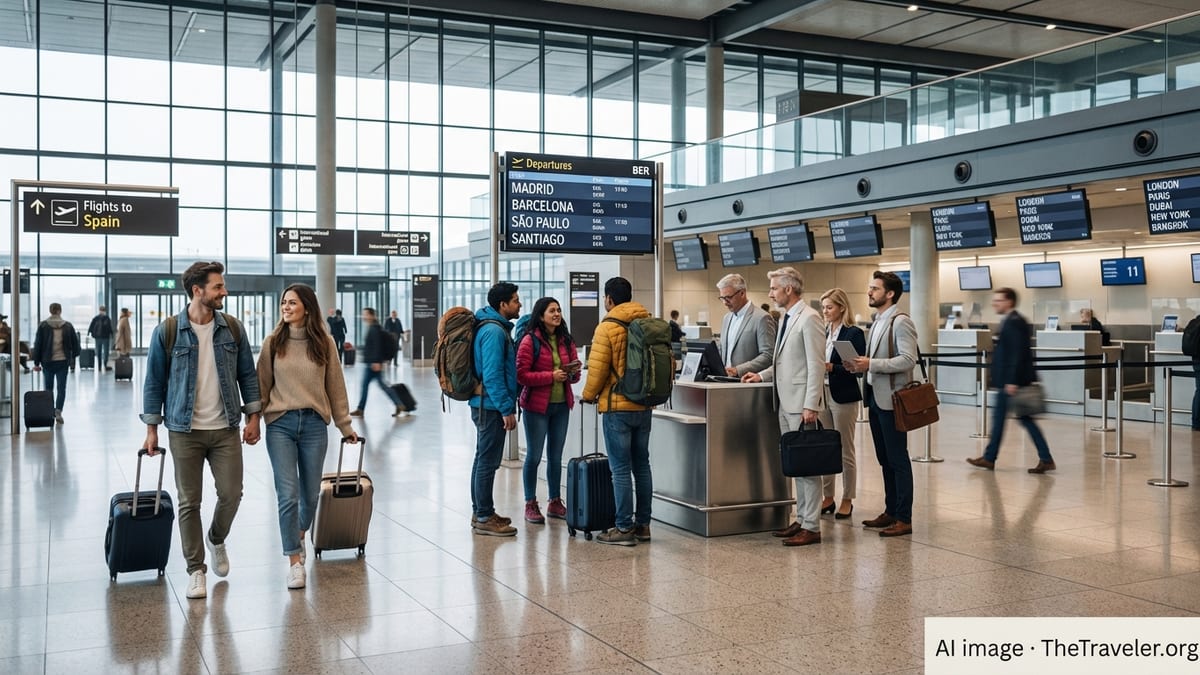
Queues, checks and cancellations converge at key Spanish hubs
Across Spain’s main coastal airports, a convergence of operational pressures and new border rules is translating into some of the heaviest disruption of the summer for British visitors. Publicly available flight tracking data and recent coverage highlight Palma de Mallorca, Málaga, Alicante and Tenerife South as among the worst affected, with clusters of cancellations and long delays on routes to and from the UK.
The introduction of the European Union’s Entry/Exit System, which requires extra biometric checks for non-EU nationals such as UK passport holders, is adding minutes to each border control process at already busy terminals. Reports indicate that this is contributing to lengthy queues at passport control in some Spanish airports, with travellers warning of missed departures and aircraft leaving with empty seats because passengers did not clear checks in time.
At the same time, Spain’s wider aviation network has faced periodic waves of cancellations and delays at major hubs including Madrid, Barcelona, Málaga and Palma de Mallorca. Industry monitoring of a recent 24 hour period showed dozens of services cancelled and more than a thousand delays across these airports, underscoring how quickly local bottlenecks can ripple into widespread disruption for British holidaymakers.
Low cost and full service airlines alike are being affected, with operational data pointing to schedule adjustments across multiple carriers rather than problems isolated to a single airline. For UK travellers, this means that disruption can appear inconsistent and hard to predict, varying by airport, day of the week and time of travel.
Why this Spanish destination is seeing “most cancellations”
Among Spain’s most popular sun destinations for UK travellers, Palma de Mallorca has emerged as a particular flashpoint for cancellations and delays in recent weeks. Published reports highlight the airport’s heavy reliance on short haul leisure traffic from Britain and northern Europe, leaving it especially exposed when airlines thin out schedules or when bad weather and air traffic restrictions hit the western Mediterranean.
Operational snapshots compiled from aviation data providers suggest that on some peak days, Palma has recorded more cancellations than other Spanish resorts, with knock on effects on nearby islands and mainland connections. When services are cut at short notice, the heavily seasonal nature of the Mallorca market gives airlines limited flexibility to re accommodate passengers on later flights, intensifying frustration for stranded Britons.
The island’s popularity with package tour operators also means that a single cancelled flight can affect several planeloads of holidaymakers tied to fixed hotel bookings and transfer times. Travel industry analysis indicates that this can quickly escalate into scenes of crowded terminals, long rebooking queues and confusion over entitlement to refunds or alternative transport.
The combination of Palma’s high dependence on UK leisure traffic, tight turnarounds for aircraft and busy slot patterns at both Spanish and British airports is helping to explain why the destination is currently being flagged in some coverage as facing “the most cancellations” for UK holidaymakers among Spain’s traditional beach hotspots.
Brits report chaotic scenes at airports and resorts
On the ground, British travellers have described chaotic conditions at several Spanish airports during disruption spikes, with images and first hand accounts circulating across social media and consumer platforms. Passengers arriving into Málaga and Palma have highlighted long night time queues at passport control and baggage reclaim during busy weekends, sometimes coinciding with major sporting events or school holiday peaks.
At departure, travellers have reported being held in lengthy security and border queues while departure boards fill up with delayed or cancelled flights to UK cities. In some cases, publicly available accounts suggest that passengers have missed flights despite arriving at the airport hours in advance, citing bottlenecks at biometric checkpoints and limited staffing as key pressure points.
Within resorts, British holidaymakers affected by cancellations have faced challenges rearranging transfers and accommodation when flights are significantly delayed or rescheduled. Travel forums and local press coverage refer to families forced to pay for extra nights in hotels, last minute hire car extensions and alternative flights home at short notice when original bookings could not be re protected to suitable alternatives.
While such stories represent only a fraction of the total number of UK visitors successfully reaching Spanish destinations this summer, they highlight how sudden clusters of cancellations at a handful of airports can create the impression of system wide chaos for those caught up in the disruption.
What is driving the disruption for UK holidaymakers
Several overlapping factors are contributing to the elevated rate of cancellations and delays on Spain routes popular with British travellers. Airlines are still managing the knock on effects of a recent jet fuel supply squeeze, which led some carriers to thin out summer schedules to avoid operating flights they might later be unable to support. Government and industry analysis suggests that carriers have tended to cut flights on short haul leisure routes where alternative options exist, including services between the UK and Spain.
Weather and air traffic management have added further pressure. Thunderstorms across southern Europe and the western Mediterranean, along with capacity restrictions at busy UK airports, have resulted in temporary reductions in the number of aircraft allowed to operate, prompting last minute cancellations on both outbound and inbound legs to Spanish resorts.
Industrial action elsewhere in Europe has also had an indirect impact. Strikes affecting air traffic control, ground handling or security staff in neighbouring countries can block key air corridors or cause knock on delays for aircraft that operate multi segment rotations taking in Spain, the UK and other European hubs.
Finally, the phased roll out of the EU’s new border systems is being closely watched by airlines and airports. Travel industry observers note that if e gates and manual checks are not fully resourced at Spanish airports serving large numbers of British travellers, peak summer demand could continue to trigger long queues and missed flights even when weather and fuel supplies are relatively stable.
How British travellers can prepare for a volatile summer
With Palma de Mallorca and other Spanish hotspots facing one of the most challenging peak seasons in recent years, travel experts are advising British holidaymakers to build more flexibility into their plans. Guidance in public travel advice and consumer rights materials emphasises the importance of checking flight status repeatedly in the 24 hours before departure and signing up for airline notifications.
Travellers are also being encouraged to arrive earlier at airports than they might have done in previous years, particularly at Spanish hubs where biometric checks for non-EU passport holders are in place. Allowing extra time for security and border control can help reduce the risk of missing flights due to unexpected queues, especially at weekends and during school holidays.
Booking with airlines or tour operators that offer clear, written disruption policies and straightforward options for rebooking or refunds is another key recommendation. Consumer groups point to the continued protection offered by UK and EU passenger rights regulations, which can provide entitlements to rerouting and care in cases of cancellations and long delays, although these rights vary depending on the cause of disruption.
While no strategy can fully eliminate the risk of cancellations at especially affected destinations such as Palma de Mallorca, a combination of early planning, flexible tickets where possible and realistic expectations around queues and delays may help British travellers navigate what is shaping up to be an unsettled summer in some of Spain’s favourite holiday hotspots.