


More news on this day
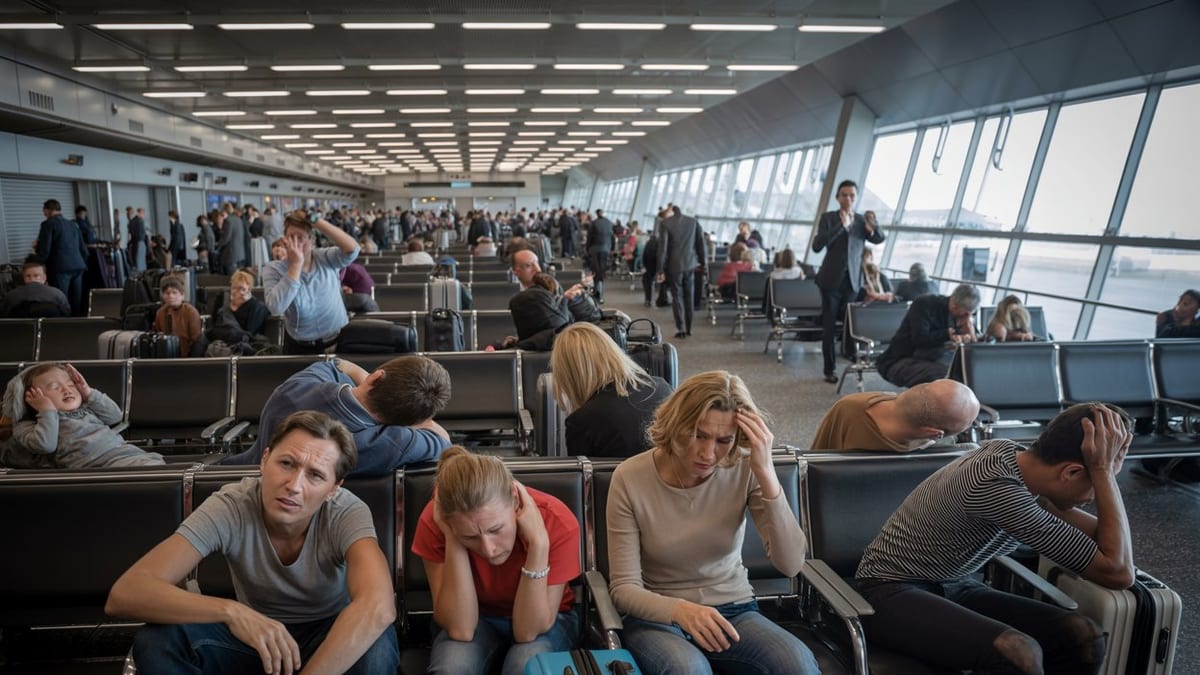
An hours-long delay of a SpiceJet flight from Amritsar to Dubai on August 30 left around 300 passengers stranded overnight at Sri Guru Ram Dass Jee International Airport, triggering angry scenes in the terminal and drawing fresh attention to how long disruptions are managed on busy India–Gulf routes.
Get the latest news straight to your inbox!
Flight rescheduled repeatedly as departure slips into next day
According to published coverage, the SpiceJet service from Amritsar to Dubai, operating as flight SG5155, was scheduled to depart around 8.30–8.40 am local time on Sunday, August 30, 2026. Instead of boarding as planned, travellers reported a series of rolling delays that pushed the departure window back throughout the day.
Reports indicate that the flight’s departure was first revised to late morning, around 11–11.40 am, and later moved again to early afternoon. Passengers were eventually informed that the service was now expected to leave in the early hours of Monday, implying a delay of roughly 17–18 hours compared with the original schedule.
Flight-tracking and aviation data sites list SG5155 as the regular SpiceJet connection between Amritsar’s Sri Guru Ram Dass Jee International Airport and Dubai International Airport. Online records for the August 30 operation show a scheduled morning departure and overnight rescheduling, consistent with accounts of a substantial delay that extended into the next day.
Coverage in regional and national outlets describes confusion in the terminal as departure times were updated multiple times over the course of the day, leaving many travellers unsure when they would actually leave or whether alternative arrangements might be offered.
Scenes of anger at Amritsar airport as families wait overnight
Local-language and English-language reports from Amritsar describe increasingly tense scenes at the SpiceJet counters as the day wore on. With no timely departure in sight, groups of passengers gathered near the airline desks, some raising slogans and staging sit-ins in an effort to draw attention to their situation.
Accounts in Punjabi and Hindi media highlight that many passengers were travelling with young children and elderly relatives, spending long hours sitting or lying in public areas of the terminal. Images shared in coverage show families resting on the floor or in crowded seating zones while waiting for fresh updates on the rescheduled flight.
Several outlets note that the number of affected travellers was close to 300, filling much of the international departures area. Video clips referenced in news reports show passengers accusing the airline of poor communication and demanding clearer information on the cause of the delay and what support they could expect while stuck at the airport overnight.
Online reactions mirrored the frustration reported from the terminal, with social media users sharing posts about the disruption and tagging the airline, while travel forums and comment sections referenced the Amritsar incident as another example of the strains facing some Indian carriers on international sectors.
Questions raised over communication and passenger support
Across multiple news reports, one of the main grievances raised by passengers was a perceived lack of clear, timely communication as departure estimates continued to shift. Travellers quoted in coverage said they received fragmented updates at the counter or via display boards, often learning of new timings only after arriving at the airport early for the original schedule.
According to published coverage, passengers also questioned the handling of meals, refreshments and possible accommodation during the prolonged delay. Several accounts allege that stranded travellers were left to arrange their own food or rest areas while the departure time moved steadily into the night and early morning.
Indian civil aviation regulations provide a framework for assistance and compensation in the event of long delays, particularly for flights of more than two hours on domestic routes and for significant disruptions to international services. Publicly available guidance from the Directorate General of Civil Aviation outlines obligations on airlines to provide meals, refreshments and in some cases hotel accommodation once certain thresholds are crossed, depending on the length of delay and the reason for the disruption.
Coverage of the Amritsar incident notes that many passengers believed they were entitled to stronger support under these rules and sought refunds or alternative flights. The episode has renewed discussion in consumer forums about how consistently airlines apply passenger-rights provisions in practice, especially on high-demand routes linking Indian cities with Gulf hubs.
Spotlight on SpiceJet’s operations and broader reliability concerns
The Amritsar–Dubai disruption comes at a time when SpiceJet’s operational reliability is already under close public scrutiny. Recent press coverage and online discussions have highlighted a pattern of delays, short-notice schedule changes and cancellations affecting some of the airline’s domestic and international services.
Aviation enthusiasts and travellers tracking the carrier’s performance have pointed to a reduced active fleet and aircraft availability challenges as potential contributors to irregular operations. Posts on travel forums in recent weeks describe passengers facing long delays or next-day rebookings on certain routes, with many debating whether to choose alternative airlines for time-sensitive journeys.
Industry commentators quoted in earlier analyses of the Indian aviation market have noted that carriers with smaller or constrained fleets can be more vulnerable to cascading delays when one aircraft or rotation is disrupted. When flights operate to and from international hubs like Dubai, any prolonged delay can have a knock-on effect on work commitments, onward connections and visa or immigration timelines for passengers.
While the specific technical or operational cause of the Amritsar delay has not been fully detailed in public reports, the incident has added to a perception among some travellers that planning buffer time is increasingly important when flying on busy India–Gulf sectors, particularly with carriers that have faced recent reliability questions.
What the Amritsar episode means for India–Gulf travellers
The Dubai corridor remains one of the most important international markets for northern India, serving migrant workers, business travellers and family visitors who rely on predictable schedules to manage jobs, contracts and tight itineraries. The Amritsar incident has underscored how quickly confidence can erode when a heavily used route experiences a disruption affecting hundreds of people at once.
Travel advisers often recommend that passengers on critical trips build in extra time for connections and employer reporting dates, particularly when flying on routes or carriers that have recently seen operational stress. For India–Gulf traffic, that can mean arriving in the destination a day early, especially for those starting new jobs or with onward flights booked on separate tickets.
For regulators and consumer advocates, cases like the Amritsar–Dubai delay are likely to feed into ongoing debates about how passenger protections are communicated and enforced. Analysts following the sector note that public awareness of compensation and assistance rules has grown, with more travellers now citing regulatory provisions when seeking redress after long delays.
As airlines in India’s crowded market work to balance capacity constraints with growing demand for international travel, observers suggest that transparent communication during disruptions and consistent adherence to published passenger-rights frameworks will remain central to rebuilding trust among affected travellers.
The Tribune: Delay in SpiceJet Amritsar–Dubai flight sparks outcry
India Today: SpiceJet Amritsar–Dubai flight delayed by nearly 18 hours
Times of India: Passengers fume as SpiceJet flight to Dubai delayed
Punjabi Tribune: 300 passengers protest over Amritsar–Dubai delay