


More news on this day
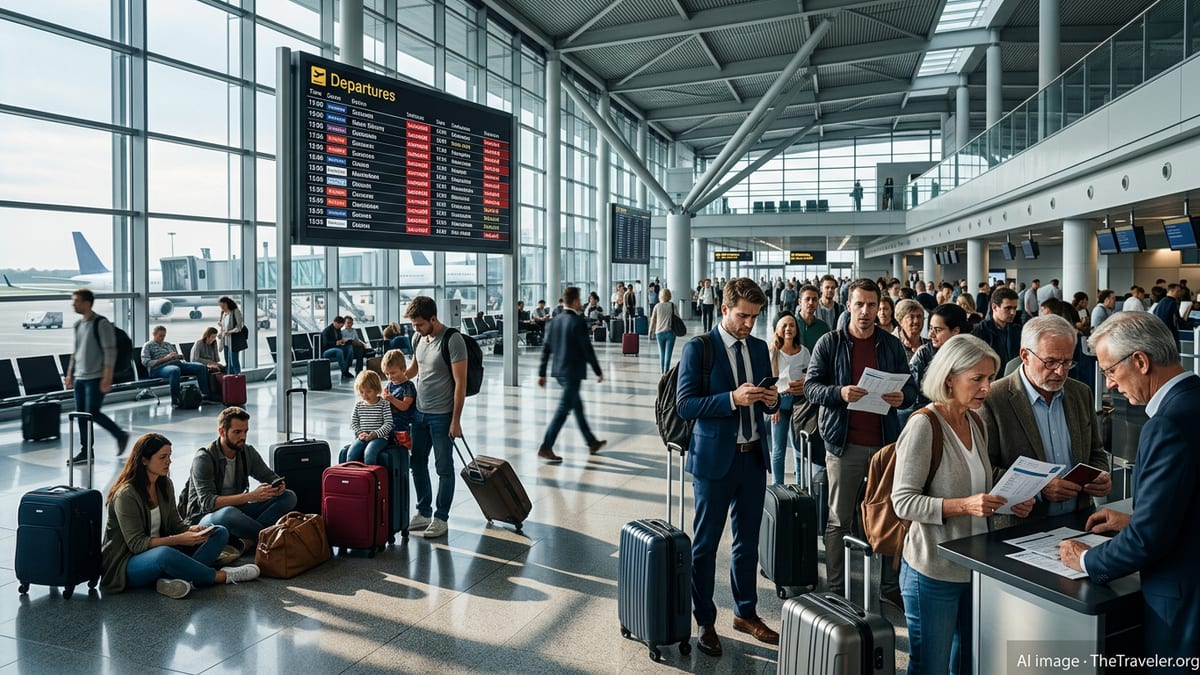
SpiceJet passengers at Delhi’s Indira Gandhi International (IGI) Airport faced widespread disruption on Saturday, September 19, 2026, after multiple departures were delayed or cancelled, leaving travelers scrambling for updates, rebookings, and alternatives.
Get the latest news straight to your inbox!
What happened at Delhi IGI on September 19
Published coverage from Indian outlets indicated that an operational disruption affected parts of SpiceJet’s schedule at Delhi, with knock-on effects at check-in areas and departure timelines. Some passengers reported long queues and uncertainty around revised departure times as flight statuses shifted through the morning and afternoon.
Several specific services out of Delhi were highlighted in reports, including SpiceJet flights to Leh and Jammu. Coverage pointed to delays running into multiple hours for some departures, while other flights were cancelled, adding pressure to airline counters and airport help desks as passengers sought clarifications.
Delhi Airport’s social-media messaging referenced coordination between on-ground teams and the airline to assist affected passengers and manage crowding and operational impact. Reports also noted that travelers were advised to contact the airline for the latest status and rebooking guidance rather than relying on earlier schedules.
Which routes and flights were most affected
Reports focused on disruption involving flights from Delhi to Leh (including SG121 and SG127) and Delhi to Jammu (including SG2160), with at least one account describing a delay of more than four hours for a Leh service. Travel to and from high-demand leisure and gateway routes can amplify the impact of even a small set of delayed departures, as missed connections and onward plans cascade quickly.
International travel also surfaced prominently in earlier disruption reports from the same week. Separate coverage described Dubai-bound SpiceJet flights from Delhi facing extremely long delays on earlier dates, prompting passenger frustration at the airport and, in some instances, public protests at terminal areas. While those incidents were not identical to the September 19 delays, they contributed to an overall narrative of recurring operational stress.
Flight-tracking data and airline schedule information can help confirm what was planned versus what operated, but the fastest-changing element for travelers is often the live status on the day of departure. For passengers, the key practical takeaway is that a published timetable does not guarantee an on-time pushback, particularly when an airline is recovering from disruptions across multiple aircraft rotations.
Why disruptions can ripple quickly across an airline schedule
Airline operations are tightly interlinked: a delay on one early-morning departure can pull aircraft and crew out of position for later legs, causing subsequent flights to depart late, swap equipment, or be cancelled if required resources are unavailable. At a major hub like Delhi IGI, where slots and gate availability are constrained, operational recovery can be especially challenging when multiple flights are affected close together.
Published coverage tied Saturday’s disruption to “operational reasons,” a broad label that can include aircraft availability, technical issues, or staffing constraints. Some reports also referenced passenger complaints about check-in and ground handling bottlenecks, which can further complicate departure timelines even when an aircraft is ready.
In the days leading up to September 19, multiple news stories highlighted ongoing pressures around SpiceJet’s operations and finances. For travelers, this context matters less than the immediate question of whether a flight will operate, but it helps explain why disruption episodes may recur and why recovery can take longer than passengers expect.
What passengers are entitled to in India during delays and cancellations
India’s passenger-protection framework is set out in the Directorate General of Civil Aviation’s Civil Aviation Requirement (CAR) for denied boarding, cancellations, and delays. Publicly available guidance also notes that airlines must facilitate affected passengers in accordance with the CAR, including assistance during waiting periods and options in case of cancellation.
Separately, SpiceJet publishes passenger-rights information stating that, when a checked-in flight is delayed from its scheduled departure, the airline will provide reasonable refreshments to checked-in passengers. The airline also states that if it offers an alternative flight to or from an airport or terminal different from the one originally booked, it will bear the cost of transfer between the alternate point and the originally booked one.
Compensation and assistance can depend on circumstances, including how much notice is provided and whether disruption stems from factors within or beyond an airline’s control. Because outcomes can vary, travelers should keep documentation: boarding passes, baggage receipts, proof of delay notifications, and any additional expenses incurred due to airline disruption.
Practical steps for travelers flying SpiceJet via Delhi in the next few days
Passengers scheduled to fly SpiceJet from Delhi should check live flight status repeatedly on the day of travel, especially before leaving for the airport, and again after arriving. When schedules shift, rebooking queues can form quickly, and earlier action generally improves the odds of securing seats on alternative flights.
For those facing a delay, it can be helpful to confirm whether the flight is still operating, whether boarding time has changed, and whether baggage drop and check-in cutoffs have been adjusted. If a flight is cancelled, travelers typically need to decide quickly between an alternative offered by the airline and a refund, weighing time sensitivity and the availability of seats on other carriers.
Delhi IGI is a major connecting point, so travelers with onward bookings should review connection windows and any nonrefundable hotel or tour commitments. If a disruption threatens a same-day connection, passengers may need to consider switching to a later connection, moving to an earlier departure if available, or rerouting through another city, depending on what the airline can accommodate.