


More news on this day
Flights at Riyadh’s King Khalid International Airport (RUH) saw a wave of delays and some cancellations over the weekend, disrupting departure boards and ripple-effecting connections across the Gulf and beyond as airlines worked to recover schedules.
Get the latest news straight to your inbox!
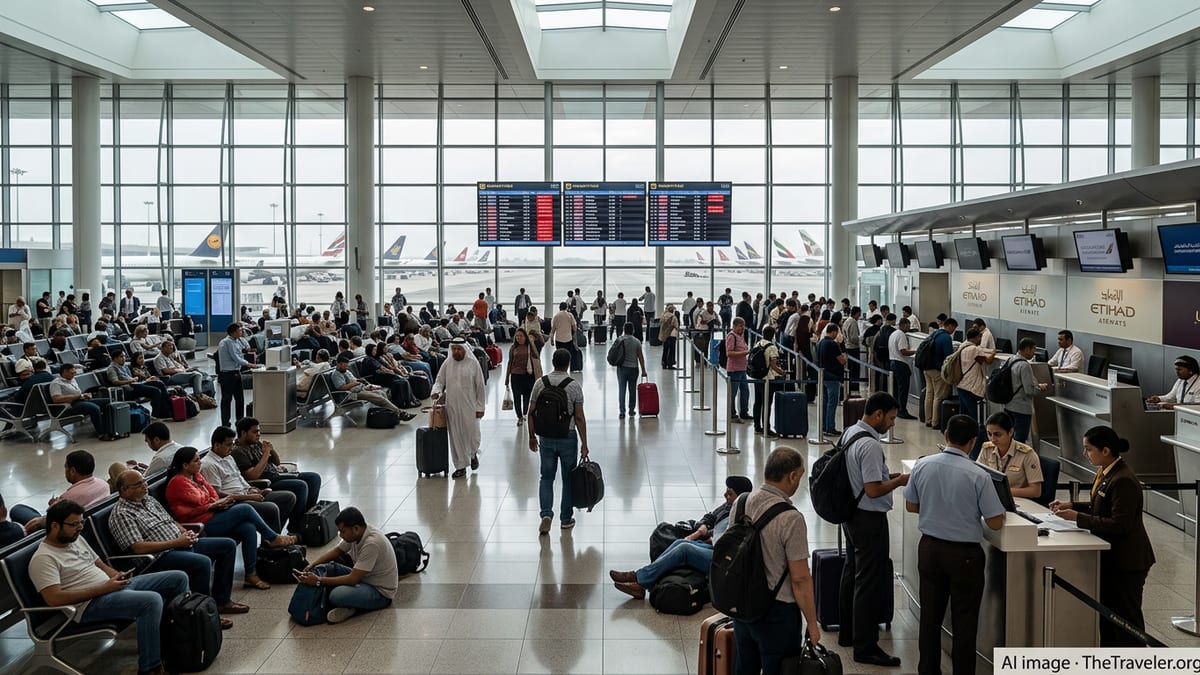
What happened at King Khalid International Airport
Published coverage and flight-tracking summaries indicate RUH experienced a temporary disruption on Saturday, September 19, 2026, with operational knock-on effects continuing into Sunday as airlines repositioned aircraft and crews and worked through backlogged departures.
While Riyadh airport operations later appeared to normalize, the impact for travelers was uneven: some flights operated but departed late, while others were cancelled or rescheduled, particularly where aircraft rotations depended on earlier legs arriving on time.
Third-party monitoring pages that compile airport status data showed limited cancellations around the period, alongside broader delay patterns that can surge during short operational interruptions. Travelers were urged by airlines’ automated notifications and airport status screens to recheck departure times before heading to the terminal.
How passengers are seeing disruptions: delays, rebookings, and missed connections
For many passengers, the most immediate problem has been cascading delays rather than a full shutdown. When a morning bank of departures leaves late, that can push back arriving flights later in the day, tightening connection windows and forcing rebookings on busy regional routes.
Riyadh is a major hub for domestic Saudi routes and for international services across the Middle East, South Asia, Europe, and North Africa. Even a brief interruption can leave passengers stuck in long lines for rebooking, particularly when multiple flights are delayed at once and airline service desks become overwhelmed.
Travelers connecting onward through RUH are especially exposed. If the inbound leg arrives late and the onward flight is missed, the solution depends on the ticket type and whether both legs are on the same booking. In many cases, passengers end up shifted to later flights, sometimes via alternate cities, as carriers rebuild their rotations.
Real-time status: where to check before heading to the airport
Riyadh’s airport operator provides a flight-search function for arrivals and departures, which is intended to reflect real-time status changes such as delays, gate updates, and cancellations. Saudi Arabia’s national digital portal also points travelers to RUH’s live schedule tools for checking status by flight number or destination.
Because disruptions can evolve quickly, travelers are generally best served by checking multiple sources close to departure time: the airline’s app or SMS updates for rebooking options, the airport’s live departures page for gate and terminal information, and an independent flight-tracking service for situational awareness of inbound aircraft positioning.
Passengers who already have boarding passes are still advised to verify terminal and gate details, as airlines sometimes consolidate processing at specific counters or make late gate changes during recovery periods.
Passenger rights in Saudi Arabia: what rules cover delays and cancellations
Saudi Arabia’s General Authority of Civil Aviation (GACA) maintains Passenger Rights Protection Regulations that set out care obligations and compensation frameworks for certain disruptions. The rules are written around categories including delay, cancellation, and denied boarding, and they also address assistance such as information updates and, in some circumstances, accommodation.
Separately, airport and regulator guidance pages summarize practical expectations for travelers: airlines are expected to inform passengers of delays and provide updated departure times, and the framework includes defined compensation and care mechanisms depending on the circumstances and duration of the disruption.
For travelers who need to escalate an unresolved issue, Saudi e-government services include an aviation complaint channel routed through the regulator’s published consumer protection pathways. Passengers should keep records such as boarding passes, booking confirmations, and receipts for disruption-related expenses, since documentation is typically required when pursuing reimbursement or compensation.
What travelers can do now: rebooking strategies and timing tips
During recovery periods, the fastest path to a workable itinerary is often self-service rebooking via an airline app or website, where available. Seats on the next few departures can fill quickly, so flexibility on timing, routing, and nearby airports can matter, particularly for regional connections.
For international itineraries, travelers with time-sensitive connections may want to proactively seek later departures that provide a larger buffer, rather than accepting tight rebooked connections that could fail again if delays persist. Where an overnight wait becomes unavoidable, passengers should review the carrier’s care options and any eligibility for accommodation or vouchers under the applicable rules and fare conditions.
At the airport, arriving earlier than usual can help with long security and check-in queues that sometimes follow systemwide delays, but passengers should balance that against updated check-in cutoffs shown by their airline. With conditions changing hour to hour, the most reliable approach is a final status check shortly before leaving for RUH, then again upon arrival to confirm terminal, gate, and boarding time.