


More news on this day
Saudi Arabia’s Red Sea tourism ambitions have entered a new phase with the launch of the Saudi Red Sea Authority’s “Deeper Than It Seems” campaign, an initiative designed to reveal the extensive regulatory and environmental framework that underpins the country’s fast‑growing coastal and marine tourism sector.
Get the latest news straight to your inbox!
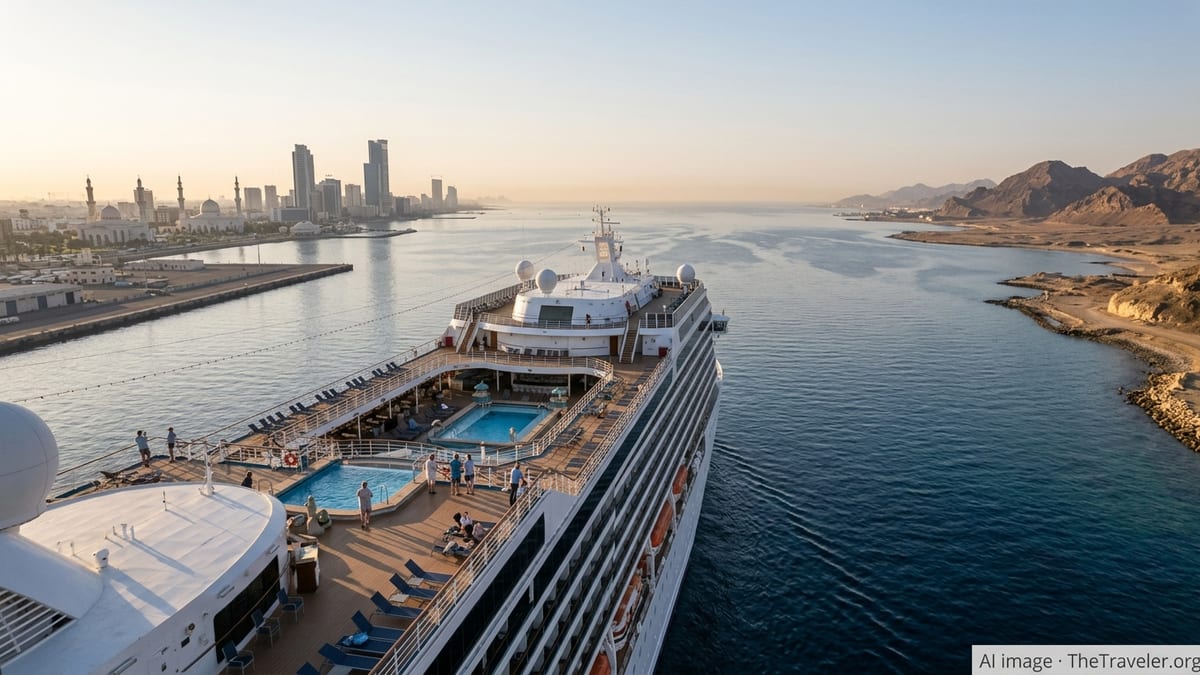
A Campaign Framing the Next Stage of Red Sea Tourism
Publicly available information shows that the “Deeper Than It Seems” campaign, unveiled in early September 2026, is framed as an awareness drive targeting tourists, operators, and investors along Saudi Arabia’s Red Sea coast. The initiative highlights how safety, quality, and sustainability standards are embedded into every stage of the visitor journey, from licensing vessels to monitoring coastal infrastructure and enforcing environmental protections.
Reports indicate that the campaign is being promoted across digital channels and specialized travel and maritime media as Red Sea cruise calls, yacht movements, and coastal resort openings accelerate. The narrative positions Saudi Arabia’s Red Sea as a maturing destination in which the regulatory architecture is intended to grow in step with iconic leisure projects such as Red Sea Global and Amaala, which form part of the wider Vision 2030 diversification strategy.
Coverage of the launch emphasizes that the message is not only about attracting more visitors, but also about reassuring international markets that marine tourism growth is being managed within a clear rules‑based framework. That positioning is increasingly important as Saudi Arabia seeks to draw cruise lines, charter operators, and international investors that are accustomed to strict compliance expectations in established Mediterranean and Caribbean markets.
Eight New Regulations and Hundreds of Compliance Visits
According to data released through Saudi Press Agency and subsequent analysis by regional outlets, SRSA has introduced eight regulations dedicated to marine and navigational tourism activities, described as the first such comprehensive package in the Kingdom. These rules cover areas such as licensing of tourism vessels, safety standards for excursions, operational requirements for marinas and jetties, and obligations related to passenger protection and insurance.
The authority has complemented these regulations with four technical codes for coastal tourism infrastructure, setting engineering and design benchmarks for facilities such as floating docks, berths, and related shoreline developments. The intention, as described in published material, is to provide a common reference point for planners and developers so that new infrastructure is compatible with both maritime safety and environmental constraints along a sensitive coastline.
Compliance enforcement is emerging as a central pillar of the campaign. Official statistics cited in local coverage show that SRSA has carried out more than 600 field compliance and awareness visits to sites where tourism activities are practiced, including marinas, dive centers, and excursion operators. These inspections are presented as a mechanism to verify that regulations are being applied in real operating conditions, while also educating businesses on how to meet standards without disrupting the visitor experience.
In parallel, SRSA has catalogued more than 3,200 tangible and intangible assets related to Red Sea coastal tourism, ranging from natural sites to operational facilities. Public information notes that over 100 investors have received technical, administrative, and advisory support, underlining the campaign’s investment dimension alongside its regulatory messaging.
Digital ‘Rassa’ Platform and Mapping Push Support Investors and Operators
The “Deeper Than It Seems” campaign also highlights the digital and geospatial tools being deployed behind the scenes to organize Red Sea tourism growth. One key component is the pilot launch of “Rassa,” described in official communications as a unified digital platform for coastal and marine tourism services. The system is designed to consolidate license applications, permits, and status tracking into a single online interface, reducing processing times and providing a transparent record for operators.
Geospatial mapping is another feature leveraged by the campaign narrative. SRSA, working with the General Authority for Survey and Geospatial Information and other partners, has produced detailed maps covering the geographic scope of marine and navigational tourism activities along the Saudi Red Sea. These maps use updated geospatial data to chart navigational routes, activity zones, and sensitive environmental areas, providing operators with clearer guidance on where and how they can safely operate.
Published information indicates that the authority has also issued a unified reference guide for coastal tourism activities. The guide consolidates regulatory information for tourists, operators, and investors across the Red Sea coastline, aiming to reduce ambiguity and support newcomers to the market. By foregrounding these tools under the “Deeper Than It Seems” banner, SRSA is seeking to show that the regulatory system is not only strict but also accessible and service‑oriented.
Observers note that these steps build on earlier promotional efforts such as the “No Limits” campaign, which was tied to the launch of Saudi cruise operations in 2024, and subsequent outreach highlighting investment potential along the coast. The latest initiative reflects a shift from pure promotion toward a more institutional narrative in which regulation itself is presented as a value proposition for the destination.
Environmental Safeguards as a Core Tourism Asset
The Red Sea is widely recognized for its global environmental significance, hosting one of the world’s largest and most climate‑resilient coral reef systems. Saudi Press Agency features over recent years have underscored that the Saudi Red Sea coastline stretches more than 1,800 kilometers and includes an extensive network of coral reefs and marine habitats that are central to diving, snorkeling, and nature‑based tourism.
Within this context, the “Deeper Than It Seems” campaign places notable emphasis on environmental protection as an integral part of the tourism value chain. SRSA has coordinated with environmental authorities to design what has been described as the first mechanism in Saudi Arabia to verify marine environmental protection at sites where tourism activities take place. This mechanism incorporates environmental criteria into the licensing and compliance process so that approvals for operators are linked to demonstrable protection measures.
Reports also indicate that the authority’s field visits do more than review paperwork. They assess on‑site practices that affect marine ecosystems, such as anchoring methods near reefs, waste management on vessels, and the operation of coastal infrastructure in sensitive zones. By embedding environmental checks into routine tourism oversight, SRSA aims to align Red Sea tourism growth with international sustainability benchmarks increasingly demanded by travelers and global tour operators.
The prominence of environmental messaging in the campaign resonates with wider Vision 2030 projects along the Red Sea that have positioned conservation at the center of their branding. For visitors, the underlying message is that the Kingdom’s efforts to protect coral reefs, marine life, and coastal landscapes are not an add‑on, but a foundational layer beneath the visible resort and cruise experiences.
Positioning Saudi Arabia in the Global Coastal Tourism Market
The unveiling of “Deeper Than It Seems” comes as Saudi Arabia moves to secure a larger share of the global coastal and marine tourism market, supported by multi‑billion‑dollar investments in resorts, marinas, and cruise infrastructure. International reporting on Vision 2030 notes that the Red Sea is one of five flagship tourism megaproject areas, with ambitions to attract both regional leisure travelers and long‑haul visitors from Europe, Asia, and North America.
By spotlighting regulations, mapping, and digital tools, the campaign signals that Saudi Arabia intends to compete not only on new hardware such as luxury hotels and marinas, but also on governance and visitor safety. This approach aligns with expectations from major cruise lines and yacht operators, which typically assess regulatory clarity, environmental safeguards, and port state control regimes when considering new itineraries.
Regional media commentary suggests that SRSA’s visibility has grown as Red Sea routes become more prominent in cruise deployment plans and as coastal developments move from construction into phased operation. Participation in more than 100 exhibitions, conferences, and forums has helped the authority present the Red Sea as a coherent tourism region, rather than a collection of isolated projects.
For travelers, the practical impact of the campaign may be less visible than new resorts or cruise terminals. However, the systems it highlights underpin many of the experiences that are starting to draw global attention to Saudi Arabia’s Red Sea, from mapped dive sites and regulated marine excursions to the assurance that vessels and operators are working within audited safety and environmental frameworks.
What the New Era Means for Future Visitors
As “Deeper Than It Seems” rolls out across communication channels, the campaign is likely to influence how potential visitors perceive the Red Sea as an emerging destination. The emphasis on rules and oversight may appeal to travelers who are curious about new frontiers but cautious about safety and sustainability, particularly in remote marine settings.
The focus on investor support and asset mapping indicates that further product diversification is expected along the Saudi Red Sea coast, including more marinas, small‑ship experiences, and nature‑based excursions layered onto larger resort anchors. For the international travel trade, the campaign offers a consolidated reference point for understanding how the Kingdom regulates and enables these activities, which can inform itinerary planning and risk assessments.
While the initiative is still in its early public phase, its scale and the detailed statistics released around regulations, inspections, and support programs signal that Red Sea tourism is moving into a more structured era. For Saudi Arabia’s broader tourism strategy, that evolution may prove as significant as the physical build‑out of the coastline itself.
Saudi Press Agency coverage on “Deeper Than It Seems” and Red Sea tourism regulation
Cruise Industry News: Saudi Red Sea Authority debuts awareness campaign
Ajel English: “Deeper Than You See” campaign to regulate marine tourism
Saudi Press Agency feature on Red Sea environmental protection and tourism