


More news on this day
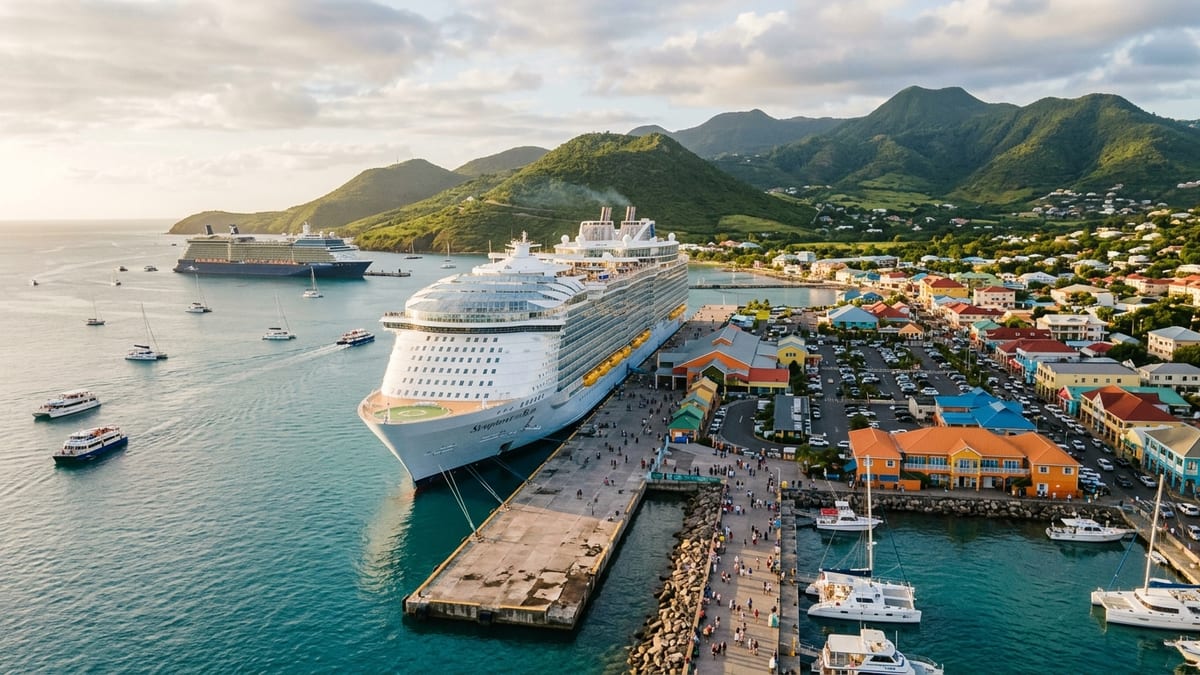
St. Kitts and Nevis is rapidly reclaiming its place on the Caribbean cruise map, with the 2025–2026 season on track to push annual passenger arrivals beyond the one million mark and cement the twin-island federation as one of the region’s most dynamic comeback stories.
Get the latest news straight to your inbox!
Record Cruise Volumes Signal Full Post-Pandemic Recovery
Publicly available government data and regional reporting indicate that cruise tourism in St. Kitts and Nevis has moved from recovery to expansion in less than four years. Budget figures for 2025 show that more than 778,000 cruise passengers arrived in the federation between October and April, an 8.4 percent increase over the previous peak season and the strongest performance since before the pandemic disrupted global travel in 2020.
By the first quarter of 2026, local coverage from Basseterre reported that St. Kitts had already welcomed more than 918,000 cruise passengers for the ongoing season, even though several months of calls remained on the calendar. That trajectory aligns with earlier projections that the 2025–2026 cruise year would be “on track for over 1 million passengers” as major lines restored and expanded itineraries featuring Port Zante in Basseterre.
This rapid growth comes after cruise arrivals fell sharply in 2020, when regional authorities documented a more than 70 percent drop in traffic to the federation. Current passenger volumes now not only match but exceed pre-pandemic levels, turning St. Kitts and Nevis into a case study in how small-island destinations can rebuild a core industry around cruise homeport and port-of-call business.
The scale of the rebound has also pushed St. Kitts and Nevis back into the conversation about the Caribbean’s busiest cruise hubs. While mega-ports such as Nassau and Cozumel still dominate regional rankings, St. Kitts’ ability to attract close to or more than one million cruise passengers a year underscores the destination’s growing relevance in itinerary planning.
Dense 2025–2026 Schedule Underpins Passenger Surge
The numbers are supported by an unusually dense schedule of cruise calls stretching through late 2025 and into 2026. Cruise itineraries published by the St. Kitts Tourism Authority and port operators show a roster of vessels from large mainstream lines such as Royal Caribbean, Carnival and Princess Cruises alongside premium and luxury brands, with multiple double-ship and occasional triple-ship days at Port Zante.
October 2025 schedules released in advance highlight the intensity of the season, with repeat visits from ships like Celebrity Reflection and Grand Princess, alongside marquee calls by new-generation vessels including Royal Caribbean’s Star of the Seas and Disney Magic. Independent shore-excursion planners and cruise schedule aggregators list steady traffic continuing through mid-2026, with large-capacity ships scheduled into the summer months and beyond.
Government budget documentation notes that 450 cruise calls are already booked for the 2025–2026 season, including several inaugural visits. At typical load factors for today’s mega-ships, that call volume positions St. Kitts to comfortably clear the one-million-passenger threshold, even allowing for schedule adjustments related to weather or redeployments.
The federation’s location in the northeastern Caribbean, within easy sailing distance of major homeports in Florida and Puerto Rico and in combination with nearby islands such as Antigua, St. Maarten and the Virgin Islands, continues to make it a natural choice for seven-night Eastern Caribbean routes and longer voyages that seek a balance of beach, heritage and soft adventure.
Economic Impact Spreads Across the Local Visitor Economy
The surge in cruise arrivals is translating into visible gains for the wider visitor economy. Official briefings on tourism performance for the first quarter of 2026 highlight that total visitor spend in St. Kitts reached more than US$62 million in just three months, a figure that includes both cruise and stay-over markets but reflects the growing contribution of day visitors arriving by sea.
Local reporting emphasizes that the current tourism strategy prioritizes higher-quality spending rather than volume alone. Marketing campaigns encourage cruise guests to book independent tours, patronize locally owned restaurants and bars, and purchase authentic handicrafts and services, from island tours and catamaran sails to wellness and culinary experiences. This approach aims to channel more per-capita expenditure into community-based businesses while spreading benefits beyond the immediate port district.
Regional economic analyses underscore how central tourism and, in particular, cruise traffic are to the federation’s economic profile. Prior to the pandemic, travel and tourism were estimated to account for nearly half of St. Kitts and Nevis’ gross domestic product, with thousands of jobs tied directly or indirectly to visitor arrivals. The current cruise surge is therefore seen as a key driver of post-pandemic job recovery and fiscal stabilization, even as policymakers caution that the sector must remain resilient to global shocks.
The influx of passengers has also catalyzed further investment in portside infrastructure. Retail and service offerings around Port Zante have expanded, with additional duty-free outlets, entertainment venues and tour dispatch facilities designed to handle peak days more efficiently. These enhancements aim to reduce congestion and improve guest satisfaction while maximizing the time and money cruise visitors spend ashore.
Sustainability, Crowd Management and Safety in Focus
As cruise numbers rise, St. Kitts and Nevis is positioning its tourism growth within a broader sustainability agenda. The government’s Sustainable Island State framework and a Tourism Strategy and Action Plan adopted in 2024 emphasize a “pro-people, pro-planet” model that balances economic gains with environmental protection and the quality of life for residents. Policy documents highlight efforts to manage visitor flows to sensitive sites, promote lower-impact excursions and strengthen climate resilience in coastal infrastructure.
Environmental and planning initiatives are particularly relevant for popular attractions such as the UNESCO-listed Brimstone Hill Fortress National Park, the St. Kitts Scenic Railway and the island’s south-coast beaches, which can see heavy use on high-ship days. Destination managers are encouraging timed tours, staggered departures and diversified excursion portfolios to ensure that both visitors and residents experience less crowding and that natural and cultural assets remain protected.
Safety has also been a point of attention as visitor volumes climb. Recent international coverage of an isolated incident involving a missing cruise passenger underscored the importance of clear safety guidance for independent hikers and beachgoers. Public information circulated by local tourism bodies and cruise partners continues to highlight recommended trails, use of licensed guides, hydration, and awareness of departure times, reinforcing that responsible behavior and adequate preparation are essential for a safe day ashore.
Visa and entry rules are another operational consideration. Since the introduction of an electronic travel authorization system in 2025, cruise passengers visiting for the day have been explicitly exempted from eTA requirements, according to publicly available immigration policy summaries. This carve-out keeps cruise calls frictionless for travelers, while the digital system tightens screening for overnight visitors arriving by air or sea.
Positioning St. Kitts and Nevis in the Next Phase of Caribbean Cruising
The momentum in St. Kitts and Nevis reflects broader shifts in Caribbean cruising as lines deploy larger ships and test new itineraries that blend marquee ports with smaller destinations. Regional tourism datasets show that cruise passenger numbers are rising across many islands, but the scale of St. Kitts’ rebound stands out when compared with its compact population and land area.
Industry-facing schedules compiled by trade publications and booking platforms show St. Kitts and Nevis firmly embedded in 2026 and 2027 deployment plans for North American and European cruise brands. The federation is also preparing for a further evolution of its role in the cruise economy, with plans reported for homeport operations beginning in late 2027, which would see passengers starting and ending voyages in St. Kitts rather than visiting solely as a port of call.
For now, the focus remains on managing the current wave of arrivals and ensuring that the milestone of more than one million cruise passengers translates into lasting benefits. With robust call volumes booked, strengthened airlift for stay-over visitors and a destination strategy that foregrounds sustainability and community impact, St. Kitts and Nevis is poised to remain a prominent stop on Caribbean cruise maps in 2026 and beyond.
How this trajectory unfolds will depend in part on global economic conditions, fuel costs, and competitive dynamics among Caribbean ports. Yet the latest figures and schedules suggest that, after years of disruption, the twin-island federation has firmly rejoined the ranks of the region’s high-performing cruise destinations, with the one-million-passenger milestone serving as both a symbolic and a practical benchmark for its tourism future.
Cruise Season on track for over 1 million passengers in St. Kitts
Government of St. Kitts and Nevis 2026 Budget Address (tourism section)
St. Kitts Tourism Authority performance and strategy update
Sustainable Island State Agenda and tourism strategy overview