


More news on this day
Rail vehicle manufacturer Stadler has opened a substantial expansion of its U.S. plant in Salt Lake City, marking a decade of operations in the country and paving the way for up to 300 new jobs in Utah’s fast-growing manufacturing sector.
Get the latest news straight to your inbox!
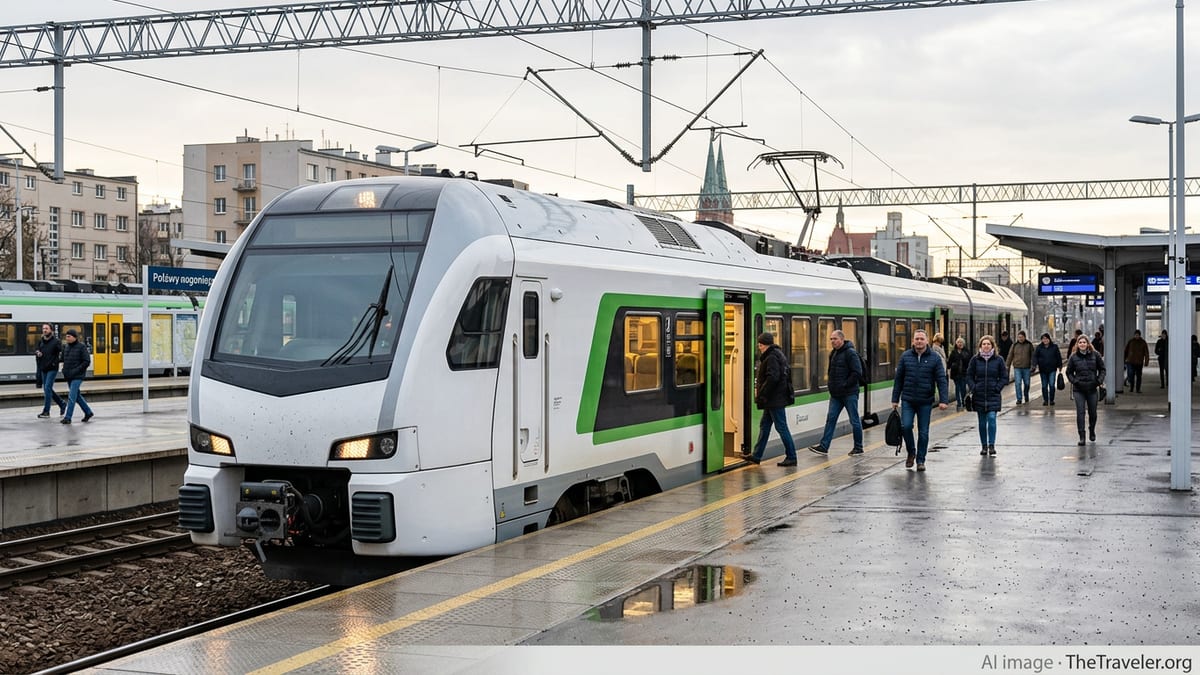
Major factory expansion on Salt Lake City’s west side
The enlarged Stadler complex on Salt Lake City’s west side adds roughly 245,000 square feet of new industrial space, bringing the total manufacturing area to about 475,000 square feet. Publicly available information indicates that the expanded footprint includes a new production hall and related facilities designed to streamline assembly of multiple train platforms for the North American market.
The investment was formally unveiled at the beginning of July 2026, coinciding with Stadler’s 10th anniversary in the United States. Reports from rail industry outlets describe the project as a significant scaling-up of the company’s original Utah factory, which began as a leased site before the current permanent plant opened in 2019.
Coverage in European and U.S. business media notes that the new halls expand Stadler’s ability to handle large and complex orders, from commuter rail units to intercity and regional trains. The expansion is framed as part of a longer build-out of the campus, following earlier additions such as a dedicated welding facility that increased the level of U.S. content in vehicles assembled in Salt Lake City.
Company releases and trade reports indicate that the Utah site now serves as Stadler’s main production hub for both U.S. and Canadian rail operators, with the enlarged shop floor intended to shorten delivery times and support a broader mix of rolling stock built under federal Buy America rules.
Up to 300 jobs and a growing rail cluster
According to multiple news reports and corporate statements, the Salt Lake City expansion is expected to generate up to 300 additional local jobs as production ramps up. The roles are described as a mix of skilled manufacturing positions, technical specialists and support staff, reflecting the complexity of modern train-building.
Several outlets highlight that a portion of these new roles is forecast to be youth-focused apprenticeships and training positions. This approach aligns with Utah’s broader strategy of pairing industrial investment with workforce development programs, particularly in advanced manufacturing and transportation technology.
Stadler’s workforce in Salt Lake City has already grown rapidly over the past decade. Earlier disclosures cited in rail trade coverage put current employment at several hundred people prior to the latest expansion. With the new hall in operation and further hiring underway, observers note that the company is on track to support well over 1,000 jobs in the medium term, including direct and indirect positions across its supply chain.
Local economic development materials point to the factory as one element of a wider rail and mobility cluster along the Wasatch Front, alongside transit agencies, engineering firms and logistics operations. The new capacity is expected to reinforce that ecosystem, creating more opportunities for local suppliers and service providers tied to long-term rolling stock contracts.
Supporting major rail projects across North America
The enlarged Salt Lake City plant is positioned to supply a range of prominent passenger rail projects across the United States. Industry coverage notes that Stadler already builds electric and diesel multiple units, double-deck trains and other rolling stock at the site for customers including Caltrain in California, Metra in the Chicago region, TexRail in Texas and MARTA in Atlanta.
With the expansion, the company gains additional assembly lines and staging space to manage overlapping contracts, including options for future fleet extensions and new orders as agencies modernize equipment. Trade publications report that North American demand for more efficient, higher-capacity trains is rising as metropolitan areas invest in commuter and regional rail.
The Utah facility is also expected to play a role in supplying newer technologies such as battery and hydrogen-powered trains as they enter the U.S. market. Previous announcements from Stadler have outlined pilot projects and framework agreements for low-emission vehicles, and the larger production footprint in Salt Lake City offers more flexibility to integrate these platforms into ongoing manufacturing schedules.
For transport agencies, a domestic factory capable of handling complex projects can reduce logistical risks and simplify compliance with federal content requirements. Observers in the rail sector note that having trains built and tested in Utah may also ease commissioning and maintenance planning for operators spread across the continent.
Implications for Utah’s economy and workforce
Utah officials and business groups have long promoted advanced manufacturing as a pillar of the state economy, and Stadler’s latest expansion is being cited in local commentary as a case study in long-term industrial investment. The west-side site, once largely underutilized land near freight corridors and the airport, has become a high-profile symbol of Salt Lake City’s effort to attract export-oriented employers.
Economic analysts quoted in regional coverage emphasize the multiplier effects of rail manufacturing, from metal fabrication and electronics to professional services and logistics. The prospect of up to 300 additional jobs at Stadler’s plant is expected to ripple through nearby neighborhoods and communities, particularly as apprenticeships and mid-skill roles open pathways for residents into higher-wage sectors.
Workforce development organizations in Utah have previously highlighted partnerships with industrial employers to align training programs with real hiring needs. The emphasis on youth apprenticeships and technical training at the expanded Stadler facility fits into that broader pattern, giving students and career changers practical routes into fields such as welding, electrical assembly and quality assurance.
As the facility scales up, transport and planning discussions in the region are also noting the importance of connecting west-side job centers with transit and active mobility options. While those debates extend well beyond any single employer, the continued growth of the Stadler site underscores the west side’s role as a key industrial and employment hub for greater Salt Lake City.
Broader momentum for U.S. passenger rail
The timing of Stadler’s factory expansion coincides with renewed interest in passenger rail across the United States. Federal infrastructure funding, state-level initiatives and metropolitan transit plans have combined to create a larger pipeline of rolling stock projects than in previous decades.
Analysts following the sector note that this momentum is particularly visible in commuter and regional rail, where aging fleets are being replaced by modern electric and diesel multiple units. According to rail industry news outlets, manufacturers with an established U.S. presence and domestic supply chains, such as Stadler in Salt Lake City, are well positioned to compete for this wave of orders.
For Utah, hosting a major rail vehicle plant offers a visibility boost that extends beyond immediate job numbers. Coverage in international business and transport media often frames the Salt Lake City facility as an example of how secondary markets can attract high-value manufacturing tied to global infrastructure trends.
As more U.S. cities and transit agencies evaluate new or expanded rail services, the expanded Stadler plant adds further capacity on the supply side, reinforcing the country’s ability to source complex trainsets domestically while fostering specialized skills and industrial know-how in the American West.