


Walk through any of the monumental gates of Istanbul’s Grand Bazaar and it is easy to think you have entered a colorful tourist trap: hanging lamps, piles of carpets, pyramids of sweets and a dozen voices calling "My friend, where are you from?" Yet that mental picture is precisely why so many travelers leave disappointed, overcharged or simply overwhelmed. The Grand Bazaar is one of the world’s oldest trading complexes, a living commercial ecosystem that runs on its own rules. Understanding what most people get wrong about it is the key to turning a stressful visit into one of the most rewarding experiences in Istanbul.
Get the latest updates straight to your inbox!
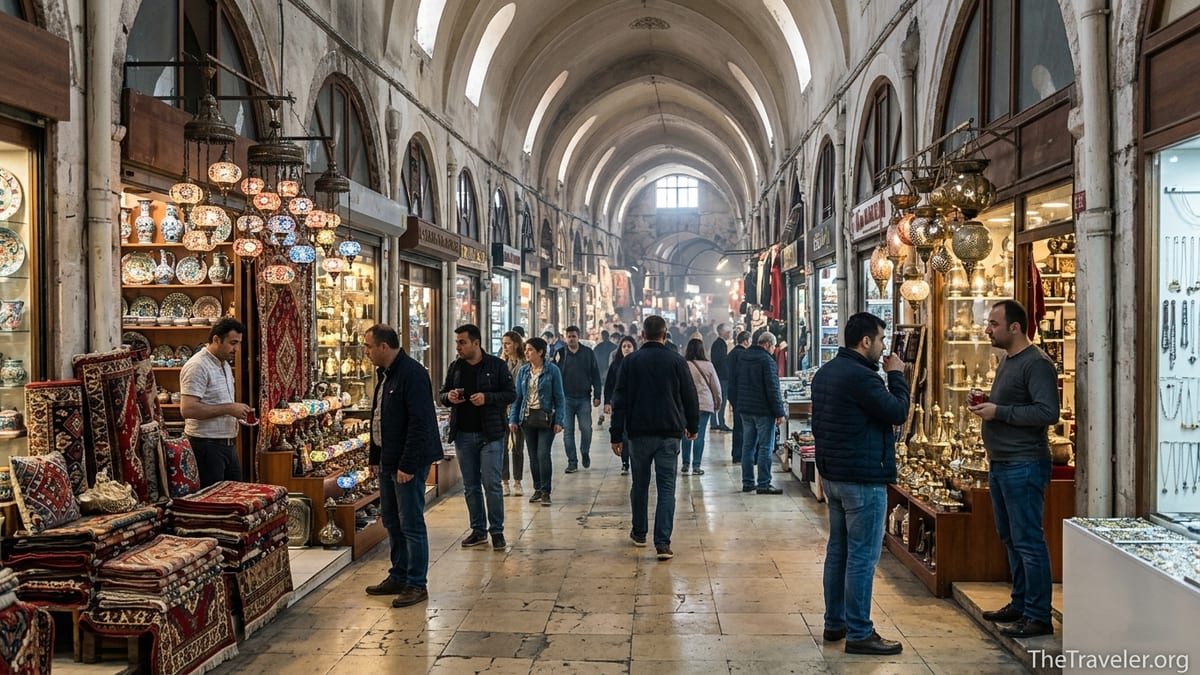
Myth 1: “It’s Just a Giant Souvenir Market for Tourists”
The biggest misconception about the Grand Bazaar is that it exists mainly for tourists looking for magnets and T-shirts. In reality, it is still a serious commercial center that anchors parts of Istanbul’s gold, jewelry and textile trade. Local jewelers buy gold by weight here, wholesalers source leather and textiles, and craftspeople maintain workshops in adjacent hans, or caravanserais. The bazaar may look theatrical to outsiders, but for many Istanbul merchants it is simply where business is done.
This dual identity explains why some streets feel like a theme park while others resemble a trade fair. Walk down Kalpakçılarbaşı Street, often described as the main spine between two of the major gates, and you will mostly see jewelry shops with serious security and sober interiors rather than stacks of trinkets. Step into the inner antiques section, the old İç Bedesten, and you will find dealers selling high-value carpets, silverware and Iznik-style ceramics to collectors and interior designers. Tour groups might only skim the surface, but behind the scenes the bazaar still functions as an economic engine, not just a backdrop for Instagram shots.
For travelers, this means your experience depends greatly on where you walk. Stay on the loud, central arteries and you will be treated as a passing tourist with a short attention span. Drift into quieter side alleys or ask a shopkeeper to show you their workshop upstairs and you step into the bazaar’s working side, where relationships matter more than today’s single sale. Many visitors never realize there is a choice.
Another result of this mixed identity is price structure. Rents for central, high-visibility locations are extremely high, which inflates prices in the most touristy corridors. The same style of leather bag or mosaic lamp may cost noticeably less just two or three streets away, simply because that corner does not get the same tour-bus traffic. Assuming the entire bazaar shares one uniform “tourist price” is one of the first mistakes visitors make.
Myth 2: “Everything Here Is Authentic, Handcrafted and Turkish”
The second big misunderstanding is to assume that the bazaar automatically guarantees authenticity. Many guidebooks still describe it as a showcase for traditional Turkish handicrafts. While pockets of genuine craftsmanship absolutely exist, much of what is on display today is imported, mass-produced or only loosely connected to local traditions. Travelers who treat every brass lamp, “handwoven” rug or leather sneaker as an heirloom-quality piece are setting themselves up for disappointment.
Take mosaic lamps as a concrete example. You will see dozens of stalls hung with thousands of colorful glass globes. Some are carefully assembled by hand from cut glass and beads, designed to last. Others are manufactured cheaply, sometimes abroad, with thin glass and low-grade fittings. At a glance, both kinds create the same magical glow. But the price difference is huge: a small, decent-quality handmade table lamp might fairly cost the equivalent of 50 to 80 euros, whereas a mass-produced copy can be had wholesale for a fraction of that and still be sold to a rushed tourist for over 100 euros.
Carpets tell a similar story. Authentic hand-knotted wool or silk rugs that follow traditional Anatolian or Hereke designs take months to produce and are priced accordingly, often in the thousands of euros. Yet visitors regularly walk into brightly lit carpet galleries, are served tea and a short history lesson, and then believe they are getting a unique masterpiece for a few hundred euros. Some pieces are machine-woven or part-synthetic, others are made in bulk in countries far from Turkey. None of this is necessarily criminal, but the assumption that “because it is in the Grand Bazaar, it must be a Turkish village masterpiece” is simply wrong.
Even food items inside the bazaar can be misleading. Tourists often buy Turkish delight or packaged spices from stalls that specialize in dramatic displays and heavy sampling. Locals, on the other hand, are more likely to buy their baklava from established patisseries elsewhere in the city or choose the nearby Spice Bazaar for higher turnover on spices and teas. A box of lokum in the bazaar might cost double the neighborhood price while containing more glucose syrup and coloring than pistachios or real fruit. The bazaar is an intense retail environment, not an authenticity guarantee.
Myth 3: “If You Haggle Hard Enough, You Can Get Anything for Half Price”
Visitors often arrive with an overly aggressive idea of bargaining, convinced that any initial quote is wildly inflated and that getting the price down by 50 or even 70 percent is both expected and necessary to avoid being cheated. This misunderstanding usually leads either to awkward confrontations or to buying things just to justify a long negotiation. In reality, haggling in the Grand Bazaar is more ritualized and nuanced than many travelers expect.
For mid-range souvenirs like lamps, ceramics or textiles, opening prices might be 20 to 40 percent higher than what a seller is willing to accept, rather than double or triple. Confident travelers who counter at roughly half of the first quote and then grudgingly climb upward often end up overpaying or irritating the merchant, who may simply lose interest. A better approach is to decide what you are comfortable paying, offer slightly below that, and move in steady, smaller steps. If a shopkeeper starts at the equivalent of 100 euros for a lamp you value at around 60, you might begin at 45, expect resistance, and aim to close somewhere between 55 and 65.
High-value items like carpets or gold jewelry follow different norms. Here, starting prices can include a more significant negotiating margin, but they are also tied to objective factors such as weight, materials and workmanship. A gold bracelet, for example, is partly priced by the daily gram price of gold that locals follow closely. Expecting to slash that price by half misunderstands how these trades work and can quickly signal that you are not a serious buyer. Merchants may still quote higher figures to casual browsers, but sustained, respectful negotiation tends to converge on a narrower band around the real value.
The other mistake is to see bargaining as a battle you must “win.” Good haggling in Turkey is social. Merchants appreciate customers who greet them, show some interest, accept tea if offered and keep a sense of humor. Many will genuinely walk away from a sale they feel has become hostile or too time-consuming. Insisting on endless back-and-forth over a few euros, or claiming you can get the same thing online for half the price, usually backfires. The goal is a price you are happy with for an item whose quality you understand, not bragging rights about how low you forced the seller to go.
Myth 4: “Central Stalls Are Safer and Better, Side Alleys Are Risky”
Because the most visible streets are brighter and busier, many travelers assume that the stalls nearest the main gates and thoroughfares are somehow more trustworthy, with better quality or more consistent pricing, and that they should avoid quieter back lanes. In practice, the opposite is often true. Central corriders face the highest rents and the heaviest tour-group traffic, so they lean strongly toward high-margin merchandise, fast turnover and polished sales patter.
Move a few lanes away and you are more likely to encounter shops that cater to a mix of local and foreign customers. A leather workshop just off a main artery might be repairing jackets for Istanbul residents as well as selling new pieces. A ceramics seller near the edges may be stocking simpler designs that do not photograph as dramatically but use better glazes and firing techniques. These merchants often have more flexibility on price because they are not paying for the most coveted floor space in the bazaar.
One real-world example: travelers frequently report paying high prices for simple cotton peshtemal towels or machine-woven kilims from stalls right off the popular gates, only to discover similar or better items for 30 to 40 percent less in less-trafficked corridors or in the markets that radiate downhill toward Eminönü. That price difference is not necessarily a scam; it reflects the location premium and the assumption that many tourists will not comparison shop. Adventurous visitors who deliberately explore the maze instead of sticking to their tour group’s path usually discover more realistic pricing.
This does not mean that every hidden shop is a secret gem. Some side alleys harbor the densest clusters of counterfeit fashion and copycat perfumes, and language barriers can be greater once you leave the mainstream tourist routes. But judging trustworthiness purely by how busy a street looks is misguided. As in any city, the best places are those recommended by people you trust or that show signs of mixed local and tourist patronage: modest signage in Turkish, repeat customers greeting the owner by name, or a workshop bench in the back rather than only a glossy showroom.
Myth 5: “Grand Bazaar Prices Are Always Terrible Compared with the Rest of Istanbul”
It is true that the Grand Bazaar is not where budget-conscious locals buy everyday items. Many Istanbul residents will tell you they would never shop there for basic clothing or kitchenware when they can find cheaper options in Mahmutpaşa, Kadıköy or neighborhood markets. From that perspective the bazaar has a reputation for higher prices, especially for generic souvenirs that could be purchased elsewhere for less.
However, the assumption that every purchase here is automatically bad value is also incorrect. For certain categories, the bazaar can be competitive or even advantageous, provided you know roughly what you are buying. Gold and silver jewelry are the clearest example. Because the bazaar is a central hub for this trade, many shops operate with relatively thin margins on metal priced by weight, making their offers comparable to or slightly above smaller neighborhood jewelers. In return, you gain an enormous concentration of choice and the ability to compare workmanship across dozens of shops in a single afternoon.
Specialty crafts are another case. Hand-knotted carpets, high-quality copper cookware, genuine Iznik-style ceramics or finely made meerschaum pipes command premium prices across Turkey, not only in the bazaar. While a similar-looking copper pan in a tourist zone might cost much less, it may use thin metal or a non-traditional lining that warps quickly. A heavier, tinned copper pot from a reputable bazaar coppersmith will be more expensive than a basic steel pan in a supermarket, but it may still be fairly priced for what it is. The key is understanding that you are paying for craftsmanship and materials, not just for the bazaar’s famous vaulted ceilings.
On the other hand, purely decorative or easily standardized items such as fridge magnets, simple keychains, basic T-shirts and generic evil-eye charms are almost always cheaper in other parts of the city. Buying these at the Grand Bazaar is mainly paying a convenience fee for being able to complete your gift list in one hit. Savvy travelers often do a quick price comparison in nearby streets or other markets like the Spice Bazaar before committing to large purchases inside the bazaar itself.
Myth 6: “If Someone Is Friendly or Offers Tea, They Must Be Pushing a Scam”
First-time visitors sometimes interpret every gesture of hospitality inside the Grand Bazaar as the beginning of an elaborate trap. This is understandable, because there are documented cases of overly insistent sales tactics and some high-pressure shops, particularly in categories like carpets and leather. Yet equating any free tea or warm greeting with a scam misunderstands local culture and deprives you of the genuine human connection that can make the visit memorable.
In Turkey, offering tea is a normal part of doing business, whether you are opening a bank account or buying a pair of shoes. Bazaar shopkeepers drink tea all day from glass tulip cups delivered by runners weaving through the corridors. Inviting you to share a glass is an invitation to slow down and talk, not necessarily a signal that you are being hypnotized into a major purchase. You are always free to decline politely or to accept a single glass and then walk away after a friendly chat.
The trouble begins when social norms and tourist expectations collide. Some travelers feel obliged to buy something expensive after sitting through a prolonged carpet demonstration complete with tea, sweets and small talk about family. Others stay too long out of politeness even when they are not interested, which encourages more pressure from the sales side. The healthiest approach is to enjoy the hospitality but maintain clear boundaries. If you are not in the market for a big-ticket item and a conversation starts drifting in that direction, say so early, with a smile.
There are situations where it is wise to be cautious, such as unsolicited invitations from strangers outside the bazaar to visit “a cousin’s shop” for a special deal, or offers that involve leaving the main complex for a distant warehouse. Within the bazaar itself, though, a normal level of friendliness should not be read as an automatic red flag. The goal is to distinguish normal sociable selling from truly manipulative behavior, not to shut down every interaction.
Myth 7: “The Grand Bazaar Is Dangerous or Full of Crime”
Stories of scams and dramatic news headlines can leave travelers thinking the Grand Bazaar is a risky place, filled with pickpockets and criminal activity. The reality for most visitors is far more mundane. The bazaar is heavily policed, intensely social and, during opening hours, one of the safer environments in Istanbul for basic street crime. Serious incidents are relatively rare compared with the volume of people passing through each day, which is often measured in the tens of thousands.
That said, the concentration of wealth and tourists does attract certain types of opportunism. The most common issues reported by travelers are inflated prices, item substitutions for things like carpets or jewelry, and soft-pressure tactics that make it hard to walk away from a deal. Classic pickpocketing is more often mentioned in the crowded streets that link the bazaar to nearby transport hubs than inside the vaulted halls themselves. Simple precautions such as keeping bags zipped, avoiding large amounts of visible cash and checking receipts before leaving a shop go a long way.
High-profile police operations targeting smuggled antiques, undeclared precious metals or counterfeit goods do occur periodically and sometimes make international news. These tend to focus on specific traders or networks rather than the bazaar as a whole. For the average traveler, their existence is a reminder to be cautious about buying “antique” artifacts or high-end luxury brands from unknown shops at impossibly good prices. If an offer feels far below what you would expect in your home country, there is usually a reason.
In day-to-day terms, the biggest risk most visitors face is spending more than they intended or leaving with items whose quality does not match the story that came with them. Approaching the bazaar as a place where you must constantly watch for serious crime can overshadow the genuine pleasure of wandering its corridors. A measured attitude works best: stay alert, but not afraid.
FAQ
Q1. Is everything in the Grand Bazaar overpriced compared with the rest of Istanbul?
Many items cost more than in neighborhood markets, especially simple souvenirs, but categories like gold jewelry, quality carpets and copper can be fairly priced for their craftsmanship when you compare carefully.
Q2. How much should I expect to negotiate off the first price?
For typical souvenirs, discounts of around 20 to 30 percent from the opening quote are common, while very deep cuts usually mean either unrealistic expectations or a big compromise on quality.
Q3. Are the carpets in the Grand Bazaar genuine Turkish hand-knotted rugs?
Some are, many are not. You will find a mix of authentic hand-knotted rugs, machine-made pieces and imports, so you should always ask detailed questions about origin, material and knotting technique before buying.
Q4. Is it safe to buy gold and silver jewelry in the Grand Bazaar?
Reputable jewelry shops operate under local hallmark regulations and treat gold largely as a commodity priced by weight, but you should still compare several shops, ask for written receipts and avoid deals that seem implausibly cheap.
Q5. Do I have to buy something if I accept tea from a shopkeeper?
No, accepting tea does not create a formal obligation to buy, and locals regularly drink tea while browsing, but it is polite to be upfront if you are just looking so expectations stay realistic.
Q6. Are brand-name bags, sneakers and watches in the bazaar real?
Most brand-name fashion items sold at bargain prices are replicas or inspired pieces rather than official products, even if the quality can vary from very poor to surprisingly convincing.
Q7. When is the best time of day to visit the Grand Bazaar?
Late morning on weekdays tends to balance open shops with manageable crowds, while early opening hours offer a calmer atmosphere and late afternoons often feel more hectic.
Q8. Can I use a credit card, or should I bring only cash?
Many shops accept cards, especially for higher-value items, but cash often brings a slightly better final price because it saves the merchant processing fees, so carrying a reasonable cash reserve is helpful.
Q9. How can I tell if a shop is more local-oriented rather than purely touristy?
Shops that display prices in Turkish lira, have signage in Turkish, serve repeat local customers and keep a visible workshop area in the back are more likely to cater to a mixed clientele.
Q10. Is it worth visiting the Grand Bazaar if I am not a big shopper?
Yes, many people treat it as a cultural and architectural experience, wandering through the vaulted passages, watching the rhythms of trade and perhaps buying only a small memento or simply a tea.