


More news on this day
Starlux Airlines is set to raise excess baggage charges worldwide from September 1, introducing a more complex, region-based fee structure that will increase what many passengers pay to check additional or overweight bags.
Get the latest news straight to your inbox!
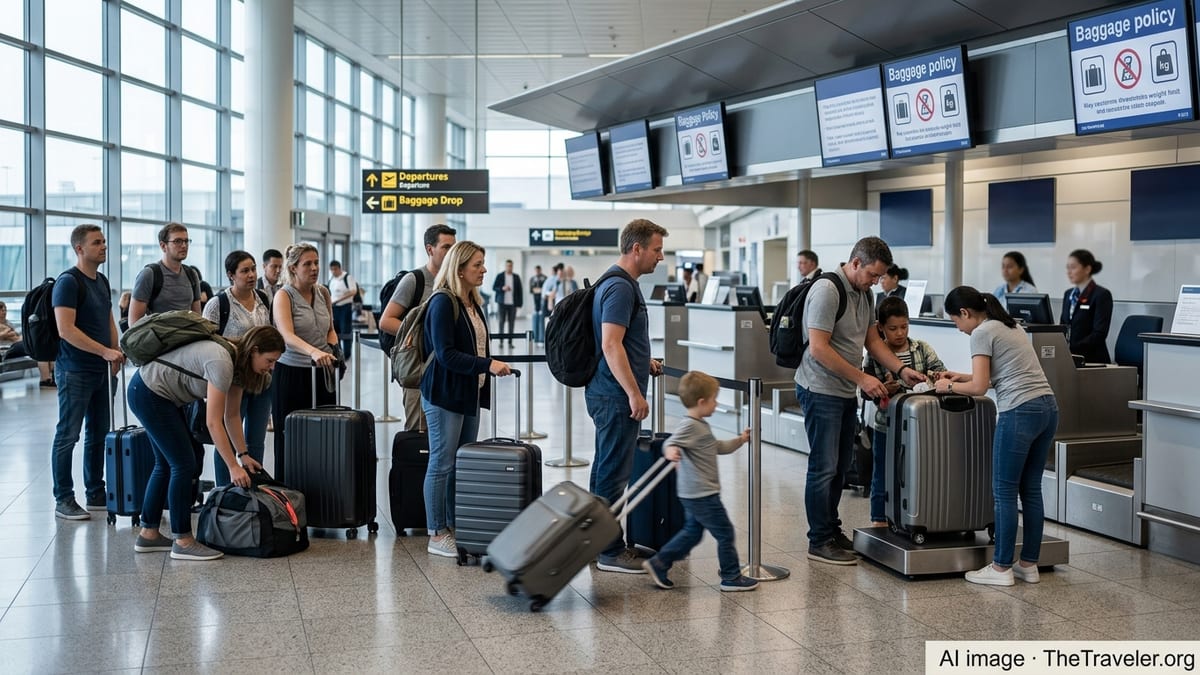
New Region-Based Charges Take Effect From September 1
Publicly available information from Starlux Airlines shows that excess baggage fees will change for tickets issued or reissued on and after September 1, 2026, replacing the current two-tier system with a more detailed region-based grid. The adjustments apply across the carrier’s global network, affecting travelers on both short-haul Asian routes and long-haul intercontinental services.
According to the airline’s updated excess baggage pages, the new structure divides the world into three broad regions for pricing in addition to Taiwan: a first zone that covers most of Asia and Guam; a second that includes western United States points, Canada, South Asia, Oceania, and the Middle East; and a third that encompasses the rest of the United States, as well as Europe, Africa, and Latin America. Charges vary depending on both the origin point and the destination region, rather than a single flat rate per route type.
For passengers, the most immediate impact is on so-called overpiece fees, which are charged when a traveler checks more bags than the free allowance for their ticket. Starlux’s own tables show that, under the new system, these overpiece fees will range from 150 dollars to 280 dollars per extra bag, depending on the itinerary and currency charged, with the highest levels seen on itineraries connecting major intercontinental markets.
Local media coverage in Taiwan highlights that the revised fees are scheduled to take effect at the start of September, following a notice posted on the carrier’s website. Reports indicate that the airline has framed the change as an adjustment of its ancillary fee structure, aligning baggage charges more closely with distance and market region.
How the New Overpiece Fees Compare With Current Rates
Until the end of August, Starlux calculates most excess baggage under a simpler model with regional and long-haul categories, with publicly available tariff documents indicating overpiece charges of around 150 dollars on regional routes within Asia and Guam, and 200 dollars on long-haul routes to and from the United States. Additional fees apply to pieces that exceed standard weight or size limits.
From September 1, the airline’s overpiece fee table becomes significantly more granular. For tickets originating in Taiwan, for example, the fee for one extra bag will be 150 dollars when traveling to the airline’s first region within Asia and Guam, 200 dollars to its second region including western North America and selected long-haul markets, and 220 dollars to its third and most distant region including the rest of the United States, Europe, Africa, and Latin America. The figures climb further when the journey starts outside Taiwan.
For flights originating in Starlux’s first region, such as many Asian cities, the overpiece fee to Taiwan is listed at 150 dollars, rising to 170 dollars for itineraries within the same region, 220 dollars to region two, and 240 dollars to region three. From region two origins, overpiece charges run from 200 to 260 dollars depending on the destination zone, while region three departures see the highest U.S. dollar fees, from 220 dollars up to 280 dollars per extra bag on some long-haul itineraries.
The new schedule also specifies separate amounts for tickets issued in Canadian dollars on flights departing Canada, where overpiece fees convert to a range of approximately 280 to 365 Canadian dollars per additional checked bag. This reflects both exchange-rate considerations and what the airline describes through its published material as applying local-currency pricing to optional services.
Higher Costs for Extra Bags on Long-Haul Routes
The biggest increases are concentrated on long-haul routes where demand for checked baggage is typically higher. The airline’s new maximum overpiece fee of 280 dollars per bag appears on journeys that start in its third region and connect to the farthest zones, such as long-haul services between North America or Europe and other distant markets in the network.
Compared with earlier fee levels of 200 dollars for an extra checked bag on many long-haul routes, the increase of up to 80 dollars per piece represents a notable shift in ancillary revenue strategy. Travelers planning to carry multiple checked bags on routes linking Taiwan with North America, Europe, or beyond could see total trip costs rise significantly if they exceed the free baggage allowance associated with their fare.
While the overpiece table has drawn the most attention, the carrier’s baggage pages also retain separate categories for overweight and oversize items, which are charged in addition to overpiece fees when applicable. Earlier tariff documents show amounts such as 75 dollars or 100 dollars for moderately overweight bags and higher fees for very heavy or oversized items, with charges scaling upward on intercontinental routes. The updated region-based framework is expected to continue layering these surcharges on top of any new overpiece amounts.
Published fare and fee information suggests that passengers who anticipate traveling with several bags on long-haul itineraries may benefit from carefully checking their ticket’s included allowance and comparing the cost of purchasing a higher-fare product or adjusting packing plans before departure, rather than relying on paying at the airport counter once the new fees apply.
What Passengers Need to Know Before They Fly
Starlux’s publicly available baggage information emphasizes that free checked baggage allowances still depend on fare family, cabin class, and route, meaning that some passengers may avoid excess charges entirely if they stay within the number of bags and weight limits shown on their tickets. Economy fares, particularly on certain booking classes, may include fewer pieces than premium cabins, making them more exposed to the higher overpiece fees that begin with tickets issued in September.
Travelers are advised, through the airline’s own guidance, to verify whether their itinerary follows a piece-based or weight-based baggage concept and to confirm the exact allowance printed on their e-ticket or booking record. On many long-haul routes, the piece concept applies, with one or two checked bags included depending on cabin and product type. On selected regional routes, weight-based allowances may still be in effect, with excess calculated per kilogram rather than per additional suitcase.
Information on the carrier’s optional services and fees pages notes that excess baggage charges are applied at the airport check-in counter when a bag exceeds the included piece, weight, or size limits. The airline also indicates that all such fees are subject to change and are collected in local currency based on point of departure, which explains the different dollar and Canadian-dollar amounts now listed in the updated tables.
Given the upcoming increase, passengers planning autumn and winter travel on Starlux routes may wish to finalize ticketing decisions before the new issue-date threshold where possible, or consider redistributing items between travelers on the same booking, shipping heavier items separately, or making greater use of carry-on allowances within the airline’s size and weight limits.
Part of a Broader Shift Toward Ancillary Revenue
The excess baggage adjustment follows a series of changes that illustrate how Starlux is refining its fee and product structure as its international network grows. Previous updates have included new booking service charges on tickets and more differentiated fare families, reflecting a trend across the airline industry toward segmenting products and generating more revenue from optional services.
Industry commentary and the airline’s own investor materials indicate that ancillary revenues such as baggage fees, seat selection, and service charges have become an increasingly important component of overall earnings for full-service carriers, particularly on competitive long-haul routes where base fares can be volatile. Aligning baggage fees with distance, region, and origin market is one way airlines seek to capture additional revenue while still offering promotional fares on the base ticket.
As Starlux continues to expand its long-haul network, especially between Asia and North America and other intercontinental markets, the more detailed excess baggage framework introduced from September positions the carrier more closely in line with other full-service airlines that already use multi-zone baggage pricing. For passengers, the new tables make it more important to review route-specific baggage information before booking and to factor potential excess charges into total trip budgets.
For now, the most significant change for travelers is clear: from early September onward, checking an extra bag on many Starlux itineraries will cost more, and the final amount will depend not only on how many bags are checked, but also on where the journey begins and which corners of the airline’s growing network are connected on a single ticket.