


More news on this day
The United States Department of State has issued a rare worldwide caution advising Americans traveling or living overseas to exercise increased vigilance, citing a deteriorating global security environment connected to the war involving Iran and heightened risks to U.S. interests far beyond the Middle East.
Get the latest news straight to your inbox!
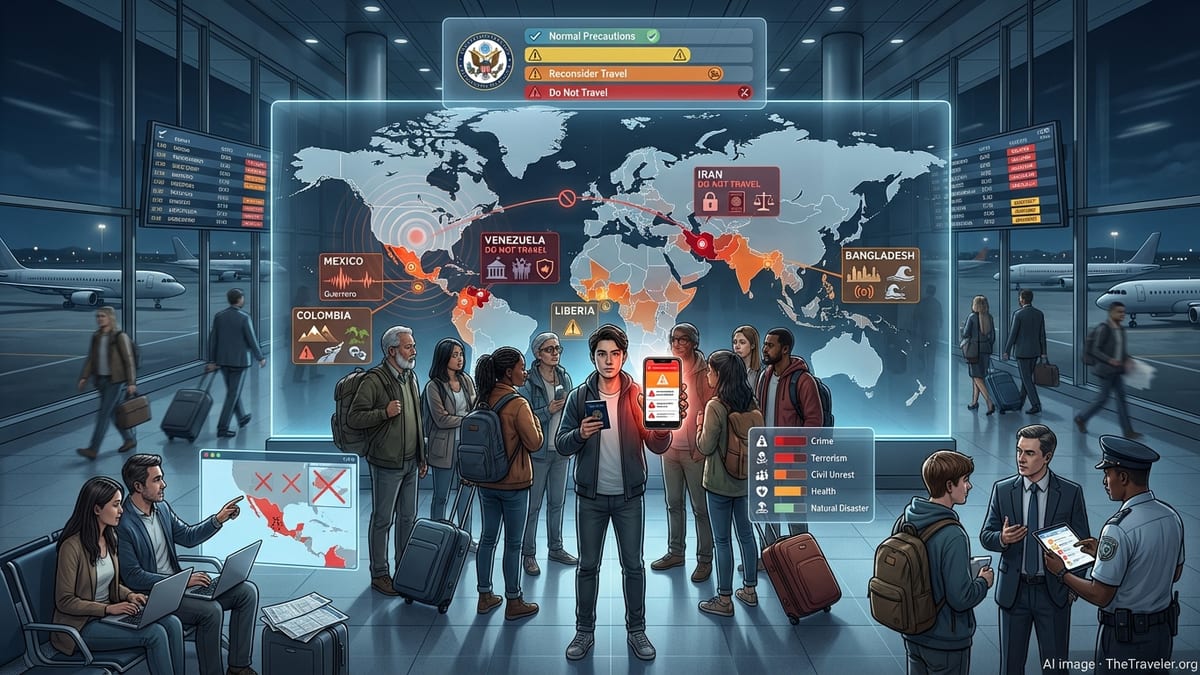
Unusual Global Alert Highlights Expanding Risk Landscape
The latest worldwide caution, published in late July, underscores a shift from localized country advisories to a broader, global warning that applies to all destinations. Publicly available information from the State Department indicates that security concerns have expanded beyond traditional hotspots, prompting a blanket notice for Americans abroad.
The alert emphasizes that U.S. diplomatic facilities in and outside the Middle East have been targeted in recent months, and that locations associated with Americans, including embassies, consulates, international schools, and U.S.-branded hotels or businesses, could face elevated risk. Coverage from outlets such as UPI and Travel + Leisure notes that the warning reflects both direct threats and fears of opportunistic attacks amid wider instability.
Worldwide cautions are not unprecedented, but they are relatively infrequent and typically reserved for moments of heightened global tension. Recent analysis points out that earlier cautions in recent years were often tied to terrorism concerns in specific regions, whereas the current notice is framed in the context of a sprawling regional war and its ripple effects across multiple continents.
Middle East War and Iran-Aligned Groups at the Center
According to recent reporting on the conflict, the ongoing war involving the United States, Israel, and Iran has significantly altered the security environment for American travelers. The State Department’s public messaging highlights groups supportive of Iran as a key concern, indicating that such actors may target U.S. interests or locations associated with Americans worldwide, not only inside the immediate war zone.
Travel coverage notes that threats range from potential attacks on diplomatic posts to strikes on soft targets such as hotels, restaurants, transportation hubs, and public gatherings frequented by foreign visitors. Analysts following the region suggest that Tehran-aligned networks and sympathizers in third countries may see American symbols and businesses as particularly visible outlets for retaliation.
At the same time, the warning reiterates earlier guidance for Americans already in or near conflict areas to monitor local conditions closely and to remain prepared for sudden changes in security measures, including curfews, airspace closures, or disruptions to commercial flights. This aligns with earlier country-specific advisories urging U.S. citizens in parts of the Middle East to depart while commercial options remain available.
How the Worldwide Caution Affects Trip Planning
For leisure and business travelers, the worldwide caution does not amount to a blanket prohibition on overseas trips, but it does signal that the U.S. government assesses a higher baseline risk than usual. Travel industry reports indicate that agencies and corporate travel managers are reassessing itineraries involving the Middle East and nearby regions, with some companies temporarily limiting nonessential trips.
Despite this, tourism experts quoted in recent coverage describe a more nuanced impact on destinations farther from the conflict. In Europe, Asia, and parts of Latin America, the practical effect may be a renewed emphasis on standard safety practices, such as avoiding demonstrations, staying aware of surroundings, and keeping a low profile in areas where anti-American sentiment might flare.
Airlines and tour operators are closely monitoring developments, particularly any additional guidance on specific countries or airports. Past global alerts have sometimes been followed by localized advisories or route adjustments, and observers note that carriers will likely respond to any new security information or changes in overflight permissions.
Guidance for Americans Already Abroad
Public guidance from official travel resources encourages U.S. citizens overseas to stay informed and reachable in the event of a fast-moving emergency. The worldwide caution urges travelers to sign up for government alert programs, monitor local news, and review security messages from nearby embassies or consulates.
Security experts cited in recent news coverage recommend that Americans maintain updated contact information, identify multiple exit routes from the cities they are visiting, and carry copies of key documents in both physical and digital form. In destinations where protests or political rallies are common, travelers are advised to steer clear of large crowds and government buildings, which may be more likely to attract unrest or targeted violence.
Travelers are also being reminded to double-check their insurance coverage, including evacuation benefits, and to keep friends or family in the United States informed of itineraries and accommodation details. These steps, while standard best practice, take on added importance under a global advisory that warns of the potential for sudden escalations linked to the Middle East conflict.
Balancing Travel Aspirations With Heightened Vigilance
For many Americans, the new worldwide caution arrives at the height of the summer travel season, when international tourism typically peaks. Travel commentators note that some travelers may choose to postpone trips to higher-risk regions, while others may adapt their plans rather than cancel outright, opting for destinations perceived as more stable or focusing on rural and nature-oriented itineraries.
Across the industry, there is broad acknowledgment that security concerns are now a central component of trip planning, on par with cost, weather, and entry requirements. Recent reporting suggests that travelers are more frequently consulting government advisories and local news in their destination countries before departure and throughout their stay.
The State Department’s rare decision to issue a worldwide caution underscores the interconnected nature of modern crises, where a regional war and related geopolitical tensions can influence travel conditions across multiple continents. For Americans abroad or preparing to depart, the message is not to stay home, but to move through the world with heightened situational awareness and a clearer understanding of the evolving risk landscape.