


More news on this day
The United States is urging its citizens to exercise increased caution while traveling abroad, as ongoing conflict involving Iran and regional powers has intensified security risks across the Middle East and raised concerns about possible spillover incidents worldwide.
Get the latest news straight to your inbox!
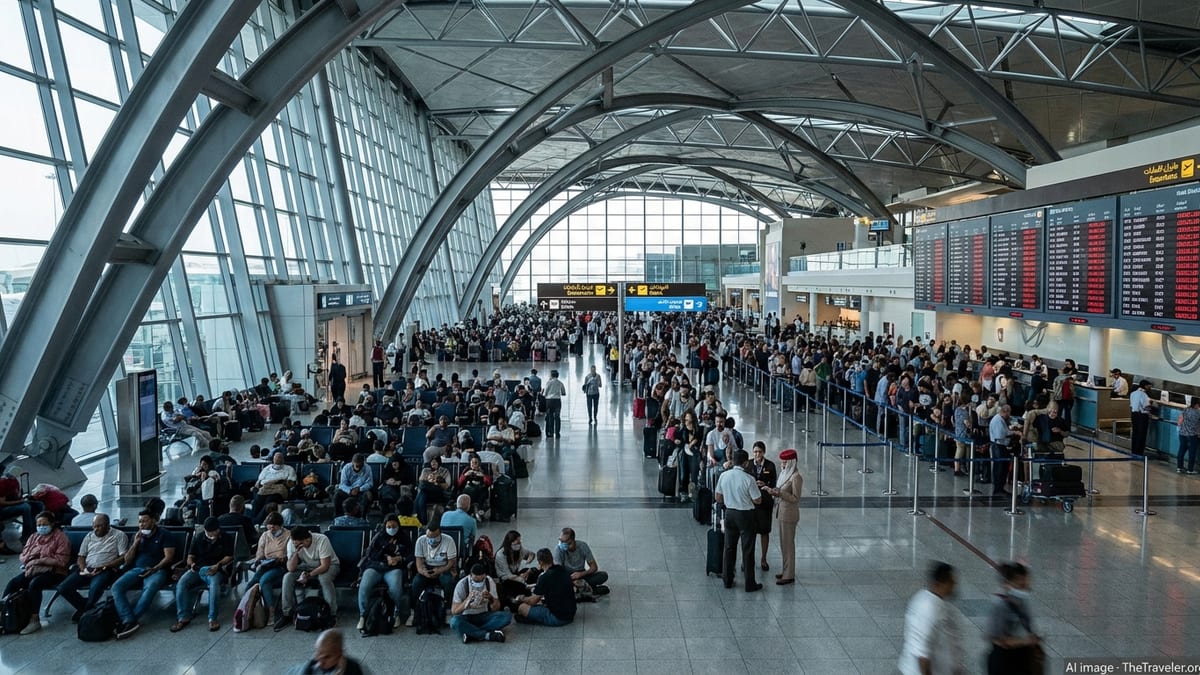
Worldwide caution reissued as conflict escalates
Publicly available alerts from the U.S. State Department show that a worldwide caution advisory, first issued on March 22, 2026, remains in effect, calling on Americans overseas to be vigilant and to avoid areas where tensions could quickly escalate. The alert highlights the heightened threat environment linked to the war involving Iran and the potential for violence targeting U.S. interests and crowded public places.
The current guidance emphasizes that the security environment is especially volatile in the Middle East, where military operations, missile and drone activity, and localized clashes have been reported in recent weeks. Coverage from major U.S. outlets indicates that incidents around the Strait of Hormuz and neighboring states have underlined the risk of sudden disruptions to air and maritime traffic.
Background material from Congress and the State Department describing the Worldwide Caution framework notes that it is used to inform U.S. citizens of universal risks, including terrorism, unrest, and the possibility of targeted or opportunistic attacks. The March alert, and subsequent region-specific updates, reflect concern that events tied to the conflict could generate security incidents far beyond active battle zones.
Middle East travel advisories remain at elevated levels
Alongside the global alert, individual country advisories across the Middle East remain at some of their highest levels in years, with several destinations listed as Level 3, meaning “reconsider travel,” or Level 4, “do not travel,” under the State Department’s four-tier advisory system. Official advisory pages show Iran, Iraq, Lebanon, Syria, Yemen and Gaza under Level 4 due to armed conflict, terrorism, kidnapping and risks of wrongful detention.
Other key regional hubs, including Saudi Arabia, Qatar, Oman, Bahrain, Kuwait, Jordan and the United Arab Emirates, are currently subject to Level 2 or Level 3 advisories that urge increased caution or advise travelers to reconsider nonessential trips. Recent updates for countries such as Israel and the United Arab Emirates reference the potential for missile or drone attacks, restrictions on U.S. government personnel movement and the possibility of rapid changes to flight operations.
Publicly available information on embassy operations shows that the State Department has, at various points this year, authorized or ordered the departure of some nonessential U.S. government staff and family members from posts in parts of the region. Those moves, reflected in advisory language, underscore concerns about the trajectory of the conflict and the exposure of diplomatic facilities, airports and other infrastructure.
Practical guidance for U.S. travelers and expatriates
The worldwide caution and country advisories are accompanied by detailed recommendations on how travelers can reduce their exposure to risk. Government resources encourage U.S. citizens to enroll in the Smart Traveler Enrollment Program so they can receive security updates and allow embassies to contact them more easily in an emergency.
Travelers are advised to closely review the advisory level and security details for each destination before departure, including transit points that might be affected by regional tensions. Public guidance suggests preparing contingency plans that account for flight disruptions, airspace closures, curfews or sudden security restrictions, particularly in and around the Gulf and Eastern Mediterranean corridors.
Consular information pages recommend maintaining a low profile, staying away from demonstrations and large gatherings, and monitoring local and international news for rapid developments. Travelers are also urged to ensure that travel insurance, medical coverage abroad and financial resources are sufficient in case of unexpected changes in itinerary or the need to depart a country on short notice.
Potential impact on global air routes and tourism flows
Industry reporting indicates that airlines have been adjusting routes and schedules to avoid high-risk airspace, especially near active conflict zones and coastal areas that have seen recent military activity. Some carriers have suspended or reduced flights to certain Middle Eastern destinations, while others have rerouted long-haul services to bypass affected corridors, potentially leading to longer journeys and higher operating costs.
Tour operators and travel agencies that focus on the broader region report increased inquiries from clients seeking clarification on safety conditions in neighboring countries that are not directly involved in hostilities but share borders or airspace with them. Public statements from tourism boards and local authorities in those destinations often stress that major visitor areas remain open, even as they acknowledge heightened alert levels and additional security screenings.
Global travel analysts note that while some leisure travelers may postpone or redirect trips away from the Middle East, business travel connected to energy, logistics and diplomacy continues, albeit with stricter security protocols. The worldwide caution advisory adds a layer of uncertainty for travelers planning multi-country itineraries that pass through regional hubs strongly linked to the conflict.
What prospective travelers should watch in the weeks ahead
For Americans considering international trips in the coming weeks, publicly available guidance suggests paying close attention to any updates to the worldwide caution notice and to individual travel advisories, which can change quickly in response to new incidents. Adjustments in advisory levels, evacuation orders for government personnel or significant changes in airline operations are all signals that conditions on the ground are evolving.
Travelers are encouraged to confirm booking flexibility with airlines, hotels and tour providers, and to keep digital and printed copies of passports and key documents accessible in case circumstances require rapid movement. Experts who track crisis response in the travel sector point out that advance preparation and a clear understanding of local conditions can help travelers make informed decisions about whether and how to proceed with planned journeys.
While the current alerts do not place blanket restrictions on international travel for U.S. citizens, they underline the need for caution, particularly for those heading to or transiting through the Middle East. Anyone with imminent plans to visit the region is advised, based on open guidance, to continuously review official advisories, remain situationally aware and be prepared to modify plans if the security environment deteriorates further.