


Few Caribbean experiences are as talked about as Grand Cayman’s classic combo: standing with southern stingrays at Stingray City, then drifting over coral heads and schooling fish at nearby Coral Gardens. For many visitors on a tight cruise-call or week-long beach stay, this two-stop outing is their single big water adventure. Understanding what each site offers, how deep the water is, what you will actually see, and how to time it can make the difference between a rushed box-tick and a highlight you remember for years.
Get the latest updates straight to your inbox!
Stingray City vs Coral Gardens: How the Combo Works
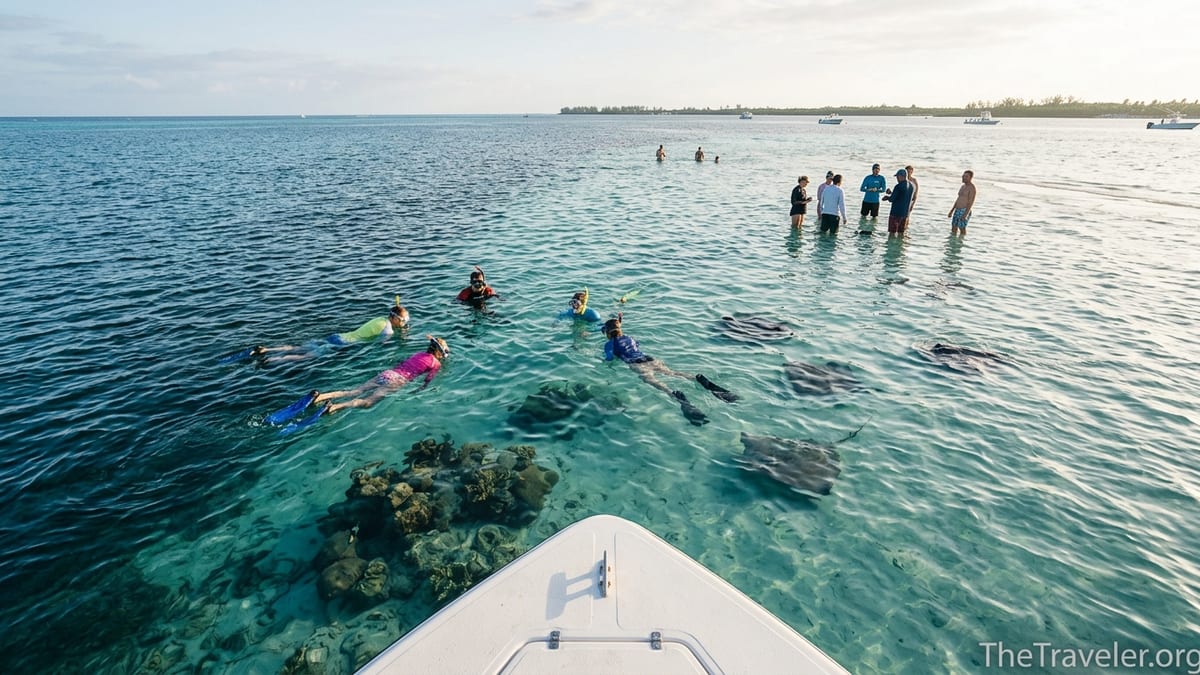
Most Stingray City and Coral Gardens tours follow a similar pattern. Boats leave from marinas on the edge of North Sound, such as those near Seven Mile Beach or from the Cayman Kai area, and make a short run out to the shallow Stingray City Sandbar first. Here, water depth is typically around 3 to 4 feet at low to mid tide, though it can creep closer to chest-deep for an adult on windier days or higher tides. Dozens of wild southern stingrays cruise the pale sand bottom, circling the boats for hand-fed squid from guides.
After 30 to 45 minutes of ray interaction and photos, many operators move to Coral Gardens or a similar inner reef patch such as the Barrier Reef in North Sound. Here the water deepens to roughly 8 to 12 feet in the areas commonly chosen for beginner-friendly snorkeling, shallow enough that confident swimmers can dive down a few feet to get closer to the coral, but deep enough to protect the reef from flailing fins. You float above spur-and-groove coral formations while guides toss small amounts of fish food to draw in sergeant majors, yellowtail snapper, and other reef fish.
Time on the reef is usually slightly shorter than at the sandbar, often 20 to 30 minutes in the water before the ride back or, on three-stop tours, a final pause at Starfish Point. Put together, a standard Stingray City and Coral Gardens excursion runs about 3 to 3.5 hours dock to dock, fitting neatly within most cruise ship port calls and leaving resort guests plenty of time for a relaxed afternoon on Seven Mile Beach.
While exact itineraries and site choices can vary by operator and daily conditions, the basic structure stays similar: shallow interactive wildlife encounter first, then a short hop to a deeper reef environment. Knowing this flow helps you decide what to prioritize and how to pace yourself in the water.
Water Depth, Visibility, and Conditions at Both Stops
At the Stingray City Sandbar, expect very shallow water where you can usually stand with your shoulders above the surface. Operators describe it as 3 to 4 feet under normal conditions, though wind-driven chop and high tides can push that a bit deeper. Families with young children or uneasy swimmers often stay near the boat’s swim ladder or hold onto a flotation mat that some companies provide. If you are shorter or visiting with small kids, ask your chosen tour about typical depth during the season you are visiting and whether life vests or pool noodles are available.
Coral Gardens and similar North Sound reef stops are deeper, typically around 8 to 12 feet in the main snorkel zones. In a few spots the tops of the coral heads rise to within a couple of feet of the surface, but guides generally moor where there is still comfortable clearance, so that a novice snorkeler can drift without the risk of accidentally kicking living coral. This depth balance is key: shallow enough for superb color and fish viewing, but not so shallow that every errant fin beats the reef.
Visibility in Grand Cayman’s North Sound is a major part of the appeal. Even on average days, you can usually see the sandy bottom and the stingrays gliding in from several meters away. On calm mornings, snorkelers at Coral Gardens often describe visibility of 40 to 60 feet or more, with the sun cutting shafts of light down between coral heads. Water temperatures are typically in the upper 70s to low 80s Fahrenheit for much of the year, so most people are comfortable in just a swimsuit or rash guard.
Conditions, however, are not identical every day. Winter cold fronts and strong trade winds can roughen the surface, especially in December through February. Several recent visitor reports mention that on windy days the sandbar can shift from waist-deep and placid to chest-deep with enough chop to unsettle very young kids or nervous swimmers. If your schedule is flexible, consider booking the tour after looking at the marine forecast once you are on island, or be ready to reschedule if an operator warns of high winds.
What You Will See: Stingrays, Fish, and Coral Types
The star attraction at Stingray City is the population of southern stingrays that have learned to associate the sandbar with food. Over decades of interaction, many of these rays have become remarkably calm around people. They glide past with wingspans that can reach 3 feet or more, brushing gently against legs or hands as they seek out pieces of squid from the guides. Some tours invite guests to hold a ray briefly, with a staff member supporting most of the animal’s weight, while others emphasize more hands-off observation. Either way, you are looking at free-swimming wild animals that choose to return to this sandbar again and again.
Once you move to Coral Gardens, the cast of characters changes. Instead of large rays on an open sand floor, you are floating above clusters of hard and soft corals: brain coral domes, branching elkhorn and staghorn in places where it has recovered, sea fans waving with the swell, and plates of star and lettuce coral along the reef slope. Between them, schools of blue tangs, chromis, grunts, and parrotfish weave in and out. Visitors often report spotting trumpetfish hovering vertically, butterflyfish in pairs, and the occasional hawksbill turtle gliding up for air at the edge of the snorkel area.
Coral Gardens is not the most dramatic reef in the Cayman Islands compared to the famed wall dives off the island’s north and east coasts, but it is intentionally chosen as a gentle, accessible environment. Operators like Crazy Crab Watersports and other North Sound outfitters highlight it as a place where beginners can appreciate coral diversity and colorful reef fish without strong surge or drop-offs. You may also see conch on the sand patches and smaller southern stingrays foraging naturally at the reef edge, a nice contrast to the feeding scene at the sandbar.
Because this is a live reef, what you see will vary seasonally and even day to day. The number of fish swirling near your group often depends on how much fish food guides are allowed or choose to use under current regulations and best practices. You should expect plenty of life and color, but it is wise to go in looking for variety and detail rather than a particular “must-see” species.
Gear, Safety, and Beginner Readiness
Most Stingray City and Coral Gardens combo tours include basic snorkeling gear in the price: mask, snorkel, and fins. Some also provide inflatable snorkel vests and pool noodles, especially those catering to cruise passengers. If you are particular about fit or hygiene, bringing your own mask and snorkel is a good idea. A common real-world scenario: a guest with a well-fitted personal mask spends their entire reef stop comfortably exploring, while someone with a loose rental mask is constantly clearing leaks and fog.
For non-swimmers or first-time snorkelers, the combo can still work, but expectations need to be realistic. At Stingray City, you can participate without ever fully swimming: the water is shallow enough that you may simply stand, hold onto the boat ladder, or kneel in the sand while a guide brings a ray close. At Coral Gardens, however, you will need to be able to float and kick, with your face in the water for several minutes at a time. Many tour crews offer in-water assistance, but they are not formal swim instructors. If you are extremely nervous, consider practicing with a mask and snorkel in your hotel pool the day before.
Safety briefings on reputable tours usually cover stingray behavior, how to shuffle your feet on the sandbar, and why you should never chase, grab, or corner wildlife. Operators stress that rays at Stingray City are accustomed to people, but they still have a tail spine and should be treated with respect. The biggest practical risks for most visitors are slips on wet boat steps and cuts on coral from standing in the wrong place, not stingray injuries. Wearing a rash guard and water-friendly sandals for boarding can reduce minor scrapes and sunburn.
From an environmental safety perspective, Coral Gardens is where your choices matter more. Guides repeatedly remind guests not to stand on coral, not to hold onto living formations, and to keep fins clear when turning. This is one reason why snorkel stops are often chosen with 8 to 12 feet of depth: it discourages people from trying to stand up on the reef. If you are bringing children, give them a clear rule before you enter the water: float flat on the surface and never kick downward at the bottom.
Timing Your Tour: Morning vs Afternoon and Cruise Days
Tour timing significantly shapes your experience at both Stingray City and Coral Gardens. Morning departures, especially those leaving docks between 8:00 and 9:30 a.m., often enjoy calmer sea conditions and lower crowds. The prevailing wind has had less time to build chop, and the light angle makes for softer, more flattering underwater visibility. If you are staying in a Grand Cayman hotel or condo, ask local operators about their earliest runs; this is when smaller boats and private charters often slip out before the bulk of cruise ship excursions arrive.
Midday tours, typically starting between 10:30 a.m. and 1:00 p.m., see the highest concentration of boats at the sandbar on busy cruise ship days. The upside is stronger sunlight that can make the sandy bottom look almost electric turquoise, and for many visitors on tight ship schedules, these are the only slots that line up with tender times. The downside is that you might share the sandbar with a dozen or more boats, a ring of people shoulder to shoulder in the water, and stingrays that are already well-fed and slightly less curious.
Afternoon trips, departing after 1:30 p.m., tend to quiet down again as cruise passengers head back to their ships. Visibility can remain excellent, although wind and short Caribbean squalls are a bit more likely later in the day, especially during the winter trade wind season. Some operators offer late-afternoon or “sunset” versions of the combo, where you are at Coral Gardens while the sun is lower and then ride back toward Seven Mile Beach in golden light. These can be memorable, but if you are extremely sensitive to choppy water, you might still prefer a morning slot.
If you are visiting by cruise, one practical strategy is to look for smaller independent operators that time their departures slightly earlier or later than the big ship-sponsored tours. A 9:00 a.m. independent departure, for example, might put you at the sandbar just as the first large catamarans are arriving, giving you 15 to 20 minutes of relatively uncrowded time before the main rush. Always double-check return times and contingency plans before booking independently, of course, since missing the last tender back to the ship is a real risk if you plan too tightly.
Choosing a Tour: Group Boats, Semi-Private, and Custom Charters
On the water, your experience is shaped as much by the style of boat and group size as by the sites themselves. Large group boats, often booked through cruise lines, might carry 40 to 70 people. They can feel busy at the sandbar and somewhat crowded when 30 snorkelers are funneled off the back step at Coral Gardens all at once. The advantage is clear pricing and convenience; ship-sponsored excursions usually run in the 60 to 100 US dollar range per adult, including transportation from the pier, and they are scheduled to fit your port time.
Smaller shared charters, operated by local companies based at docks like Camana Bay or Cayman Kai, typically cap numbers around 10 to 25 guests. These trips might cost a bit more per person than the largest group boats, but you gain a more relaxed rhythm in the water. It is easier to hear the guide’s briefing, you wait less to climb back on board, and there is more room to spread out along the reef. Some operators advertise three-stop itineraries that add a relaxing beach break at Starfish Point to the standard Stingray City and Coral Gardens combo, with total tour lengths of roughly 3.5 hours.
Private charters offer the most flexibility and comfort, especially for families or small groups of friends who want to avoid crowds. Prices for a 4-hour private boat that includes Stingray City, a Coral Gardens–style reef, and Starfish Point often fall in the range of several hundred US dollars for the entire boat rather than per person, depending on vessel size and season. Real-world examples advertised recently include half-day outings that comfortably fit three stops, with the captain adjusting which reef patch to use based on wind direction and where other boats are clustered that day.
When choosing among these options, ask prospective operators specific questions: What is your typical group size? How long do we spend in the water at each stop? Do you include snorkel vests and noodles? How often do you visit Coral Gardens versus other reefs if conditions are better elsewhere? Responses to these practical questions can tell you far more about the likely experience than glossy brochure photos alone.
Does Coral Gardens Make the Trip Feel More Complete?
For many travelers, the answer is yes. Stingray City alone is an unforgettable wildlife encounter, but it is also highly specific: you are on a bright, sandy patch of shallow water with a single charismatic species. Adding Coral Gardens, or an equivalent North Sound reef, turns the outing into a more rounded snapshot of Grand Cayman’s marine environment. You move from tactile interaction to quiet observation, from a human-created feeding hotspot to a more natural coral ecosystem.
Consider two real-world scenarios. A family on a tight schedule books a quick sandbar-only trip, spending just over an hour from leaving the dock to returning. They come back with great photos of kids laughing as stingrays brush past, but their impression of local snorkeling is limited to cloudy water stirred up by dozens of feet and rays. By contrast, another family on a slightly longer combo returns talking about the silence over the reef, how their child spotted a tiny cleaner shrimp on a coral head, and how the gradient of blues out toward the barrier reef surprised them. In conversations like these, Coral Gardens is often what people mention when they describe the day as “magical” rather than just “fun.”
From a value perspective, the incremental cost of including a reef stop is usually modest. Many cruise-operated combos that combine Stingray City with Coral Gardens price only about 10 to 20 US dollars higher than sandbar-only tours, and private charters frequently treat a reef snorkel as a standard second stop at no extra charge. Considering the extra 30 to 40 minutes you spend in the water and the diversity of what you see, the add-on frequently feels like the part of the day that lingers longest in memory.
There are exceptions. If you are traveling with several non-swimmers who are anxious about deeper water, or if strong winds make snorkeling uncomfortable, a sandbar-only trip may be more enjoyable. On some days operators will substitute a slightly more sheltered reef or shorten the snorkel time for safety. Yet for most reasonably confident swimmers, Coral Gardens transforms the outing from a single iconic photo opportunity into a more complete experience of Grand Cayman’s North Sound.
Tips to Get the Most from Your Stingray City & Coral Gardens Day
A little preparation goes a long way on this combo. First, protect yourself from the sun. Grand Cayman’s reflection off sand and sea is intense even on overcast days. Wear a long-sleeve UPF rash guard rather than relying solely on sunscreen, and apply reef-safe lotion generously to exposed areas at least 20 minutes before boarding the boat. Many visitors underestimate how much time they will spend with their backs facing upward while snorkeling over Coral Gardens and return with badly burned shoulders.
Second, think about how you will move in the water. Practice breathing through a snorkel in shallow water or a pool before your trip if you are new to it. At Coral Gardens, aim to float flat and relaxed, using slow, small kicks. Big bicycle-style kicks not only tire you out but also increase the chance of your fins dipping too close to the coral. Guides sometimes demonstrate a gentle flutter kick on the surface before you enter the reef, and mirroring that style keeps you and the reef safer.
Third, manage your expectations around wildlife interaction. At Stingray City, it is easy to get caught up in the line for a posed photo holding a ray. If that appeals to you, by all means participate, but try also to step back and observe the rays’ natural movements. Watch how they glide up current, how they half-bury in the sand when the crowd thins, or how they interact with one another around a food source. At Coral Gardens, rather than chasing fish, pick a single coral head and float above it for a few minutes, noticing how many different species pass through its little territory.
Finally, be flexible. Weather in the Caribbean can change quickly, and a responsible captain will shift timing, swap the order of stops, or even cancel if conditions deteriorate. Guests who go in expecting a precise schedule down to the minute are more likely to feel frustrated than those who treat the day as an adventure shaped by wind, tide, and light. When everything aligns, a Stingray City and Coral Gardens combo delivers a surprisingly rich sense of place in just a few hours on the water.
FAQ
Q1. Is the Stingray City and Coral Gardens combo suitable for complete beginners?
Yes, most healthy adults and older children can handle it. The sandbar is very shallow, and Coral Gardens is chosen for gentle conditions, but you should be comfortable floating with a mask on. Non-swimmers can usually enjoy the stingrays while standing and may stay on the boat during the reef stop if they prefer.
Q2. How deep is the water at Coral Gardens, and do I need to freedive?
Typical snorkel areas at Coral Gardens are about 8 to 12 feet deep. You do not need to dive down to enjoy it. Colorful fish and coral are clearly visible from the surface, and guides often discourage unnecessary diving to reduce the risk of kicking coral.
Q3. What kind of fish and marine life will I see at Coral Gardens?
Common sightings include schools of blue tangs, sergeant majors, grunts, parrotfish, butterflyfish, and trumpetfish, along with brain coral, sea fans, and various hard coral heads. With luck, you might also see a small southern stingray or a hawksbill turtle near the reef edge.
Q4. Do I have to touch or hold the stingrays at Stingray City?
No. Interaction is entirely optional. Many guests simply stand nearby and watch the rays swim past their legs. If you prefer not to touch them, let your guide know, and they will help you position yourself where you can observe comfortably without close handling.
Q5. What should I wear and bring for the tour?
Wear a swimsuit, rash guard or sun shirt, and secure sandals for boarding. Bring a towel, reef-safe sunscreen, a hat, and sunglasses. If you own a well-fitting mask and snorkel, pack them. Most boats provide snorkel gear, drinking water, and sometimes light snacks.
Q6. When is the best time of day to visit Stingray City and Coral Gardens?
Early morning trips often have calmer water and fewer crowds, while late-afternoon tours can be quieter than midday on busy cruise days. If you are flexible, ask operators for times that avoid the main cruise ship excursions to enjoy a less crowded sandbar and reef.
Q7. Are children allowed on these combo tours, and is it safe for them?
Yes, many families bring children. Operators often accept kids as young as four or five, depending on their comfort level. Life vests are typically available, and parents can hold younger children at the sandbar. Always confirm age policies and safety provisions when booking.
Q8. What happens if the weather is rough on the day of my tour?
If winds are high or storms are forecast, captains may adjust the route, shorten the reef stop, move to a more sheltered snorkel area, or cancel entirely. Reputable operators prioritize safety and usually offer to rebook you on another day or provide a refund if they cancel.
Q9. How long does a typical Stingray City and Coral Gardens tour last?
Most shared-boat combos run about 3 to 3.5 hours from dock departure to return, including roughly 30 to 45 minutes at the sandbar and 20 to 30 minutes of snorkeling at the reef. Private charters can be customized longer if you want extra time in the water or an added stop like Starfish Point.
Q10. Is adding Coral Gardens really worth it if I am already doing Stingray City?
For most visitors who are comfortable in deeper water, yes. Stingray City gives you a unique wildlife encounter, while Coral Gardens adds colorful coral, schooling fish, and a sense of the broader reef ecosystem. Together they create a more complete and memorable snapshot of Grand Cayman’s marine world.