


For many travelers, Stingray City is the single experience that turns a Grand Cayman stop into a lifelong memory. Wading on a shallow sandbar in clear turquoise water as wild southern stingrays glide past your legs is both surreal and surprisingly gentle. If you are planning your first visit, this guide walks you through what Stingray City actually is, how to choose a tour, the current wildlife rules, cruise ship timing, snorkeling and photo tips, plus practical Grand Cayman advice so you can relax and simply enjoy the encounter.
Get the latest updates straight to your inbox!
What Stingray City Really Is and Where You Will Go
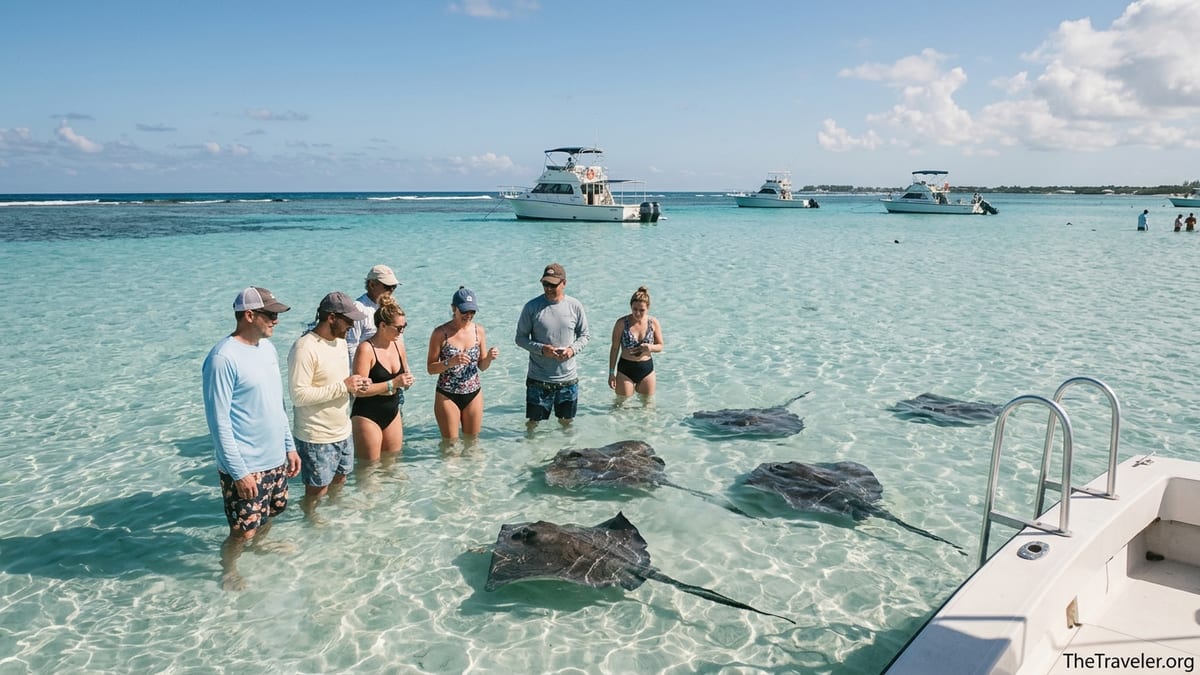
Stingray City is not a single dock or theme park. It is a cluster of shallow sandbars in the North Sound lagoon off the north side of Grand Cayman, a protected, reef-sheltered area about a 25 to 35 minute boat ride from marinas in George Town or along Seven Mile Beach. Here, wild southern stingrays have learned to congregate where fishers once cleaned their catch, and for decades they have been meeting boats that arrive with tourists and small pieces of squid. The two main areas you will hear about are the Stingray City Sandbar, where the water is about waist deep for most adults, and the slightly deeper original Stingray City dive site where certified divers kneel on the sandy bottom.
As a first-time visitor, you are almost certainly booking a sandbar trip. On these tours the captain anchors on a shallow sand patch and you climb down a ladder into roughly 3 to 4 feet of water. On calm days the bottom is powder-soft white sand and visibility can extend for many meters, giving you postcard views of rays cruising between people’s legs. The experience feels more like standing in a natural swimming pool than being out at sea, which is one reason families with children and older travelers often rate this as the highlight of their Caribbean trip.
Most tours also combine the sandbar with at least one snorkeling stop on nearby coral reefs such as Coral Gardens or Barrier Reef. These spots are a short ride from Stingray City and let you see schools of tropical fish, soft corals, and the occasional sea turtle in deeper water. If you want only the rays and no snorkeling, look for a “sandbar only” option when you search for tours or when you talk to an operator at your hotel or cruise pier.
The North Sound itself is a wide, calm lagoon protected by the reef line, which means waves are usually modest even when the open Caribbean is choppy. That said, conditions can change quickly with wind and rain. Captains regularly cancel or adjust trips when the sandbar becomes too rough or visibility drops, and reputable operators will either rebook you or refund you if safety or comfort cannot be guaranteed on the day.
Choosing a Stingray City Tour: Types, Durations and Typical Prices
Almost everyone reaches Stingray City on an organized boat tour. In 2026, a standard three-stop excursion from Grand Cayman that includes the sandbar, a reef snorkel, and a visit to Starfish Point typically runs in the ballpark of 70 to 120 US dollars per adult, depending on inclusions and group size. For example, a five-hour “grand tour” sold by local operators that covers Stingray City Sandbar, Coral Gardens, Starfish Point and a visit to the Turtle Centre might be advertised at around 100 to 120 US dollars including soft drinks and snorkel gear. Shorter two- to three-hour sandbar and reef trips tend to sit closer to the 60 to 90 US dollar range when booked directly with local companies.
Hotel guests along Seven Mile Beach often join small-group catamaran or powerboat tours that depart from beachside docks or nearby marinas. These can feel less crowded than the larger vessels geared heavily toward cruise passengers. A small catamaran sunset trip that hits the sandbar later in the afternoon, then sails back toward Seven Mile Beach as the sun sinks, might cost a bit more than a basic morning trip but rewards you with softer light, fewer boats, and cooler temperatures. Independent operators like family-run snorkel boats and boutique charter companies advertise these trips through hotel desks and island visitor centers.
Cruise travelers face a choice between excursions sold through their cruise line and independent tours. Cruise line packages are usually more expensive for a similar itinerary but offer the reassurance that your timing is coordinated with ship tenders. An example might be a three-hour “Stingray City Sandbar & Reef Snorkel” excursion that departs from near the George Town tender dock, including round-trip bus transfers and gear, priced higher than local street-side offers but with the “back to ship” guarantee. Independent tours booked online or dockside may save you 20 to 40 percent for a similar experience, but you must pay closer attention to meeting times and ship departure.
If you are traveling with kids, older relatives, or anyone anxious about the water, ask a few detailed questions before booking. Query the operator about maximum group size, whether there is a shaded upper deck or enclosed cabin, how many crew members will be in the water to help, and whether they provide child-sized life vests and snorkel sets. Many boats happily accommodate non-swimmers by providing life jackets or float belts so they can stand at the edge of the sandbar ladder and still feel rays glide by without needing to move far.
Stingray Safety, Wildlife Rules and How to Behave in the Water
The stingrays at Stingray City are wild but highly habituated animals protected by law in what Cayman calls Wildlife Interaction Zones. These zones at the sandbar and the original Stingray City site are the only places in local waters where people are allowed to feed or actively handle stingrays, and even here strict rules apply. Commercial operators must hold permits, and only approved foods such as small pieces of squid or ballyhoo can be offered by guides. Visitors are not allowed to bring their own bait, chase rays, or lift them fully out of the water. These guidelines exist to protect both people and animals and are enforced by conservation officers who patrol the area.
On the boat ride out, a good crew will walk you through a safety briefing that usually includes two key points: shuffle and stay low. Shuffling your feet along the sand instead of taking big steps reduces the chance of accidentally stepping on a resting ray. Southern stingrays are generally calm and uninterested in stinging when they see you coming, but any animal can defend itself if surprised. Keeping your body low in the water and your arms underwater, rather than reaching down from above, also makes interactions gentler for both parties. Guides often demonstrate how to gently place a flat hand on the ray’s back near the top, avoiding the tail and the area around the eyes and gills.
There are also clear “do nots.” Do not attempt to pick up or bear-hug a ray, sit on it, hold it out of the water for selfies, or pull on its tail. Do not feed other species such as fish or turtles on the sandbar, as this is not permitted in the Wildlife Interaction Zones. If you are offered a chance to feed a ray, keep your fingers together, curl them slightly under, and present the squid flat on your palm. Many guides joke that the ray’s mouth is like a gentle vacuum cleaner. You will feel firm suction, but losing a fingertip is extremely unlikely when you keep your hand flat and listen carefully.
For nervous visitors, it can help to watch a few other guests interact with a ray while you stand near the ladder. You will likely notice that the stingrays repeatedly circle the boat, brushing against people’s legs in search of snacks but ignoring them once they realize no food is offered. If you prefer not to touch or feed them at all, simply tell a crew member and they will make sure you have space to observe without pressure. No-touch observation is fully acceptable and is in many ways the least intrusive option for the animals.
Cruise Ship Timing, Crowds and How to Avoid Feeling Rushed
Grand Cayman is a tender port, which means cruise ships stay offshore while passengers ride small tender boats into George Town. That tender process can add 20 to 40 minutes each way to your outing and is a major reason cruise lines encourage guests to book their own excursions. If you choose an independent operator, pick a departure time that leaves at least an hour of buffer before your final “all aboard” time and confirm whether your tour includes pickup from the cruise tender terminal. Many local operators schedule their departures so that a staff member can meet you just outside the tender area and walk you to a bus or minivan that drives to the marina.
Most cruise calls run on a similar schedule, with ships in port roughly from early morning until mid-afternoon. The classic crowd pattern at Stingray City mirrors this. The sandbar can be busiest from about 9:30 am to 1:30 pm when multiple cruise excursions arrive in waves. Late-morning tours may find dozens of boats anchored around the same patch of sand, with hundreds of people in the water. If you are staying on island, ask about early-morning or late-afternoon departures. Locals often recommend trips that leave the dock around 8 am or after 3:30 pm, when day-tripper numbers fall and the experience feels far more relaxed.
For example, a family staying on Seven Mile Beach might book a 4 pm small-boat charter that reaches the sandbar by about 4:45 pm. With no cruise ships in port that evening, they may share the sandbar with only a handful of other boats and have long stretches where a ray glides between their legs with no crowding. Sunset cruises that stop at Stingray City on the way back in also tend to be quieter and deliver beautiful golden-hour light for photos. On the other hand, if your ship is scheduled to depart around 4 or 5 pm, a late-afternoon excursion might be risky; in that case it is safer to pick an early slot or stick with a ship-sponsored outing.
Keep in mind that weather and sea conditions can significantly affect timing and whether tenders operate smoothly. Very occasionally, rough seas in the harbor force the port to close to tenders and ships to skip Grand Cayman altogether, which automatically cancels all excursions that day. When booking independently from a cruise, check that your operator offers a full refund if your ship cannot tender. This is standard policy among reputable local tour companies and gives you peace of mind when planning ahead.
Snorkeling, Photos and Making the Most of Your Time on the Sandbar
Most Stingray City tours combine at least one snorkeling stop with the sandbar visit. Snorkeling sites such as Coral Gardens or the Barrier Reef usually offer depths in the 8 to 15 foot range, making them accessible even for beginners, provided the sea is calm. Basic snorkel gear is typically included in your tour price. If you are particular about fit or hygiene, consider packing your own mask and snorkel and using the boat’s fins. Guides often throw a small amount of fish food into the water during reef stops to concentrate fish life, so you can expect to see sergeant majors, parrotfish, and sometimes larger species such as tarpon cruising by.
At the sandbar itself, you can technically snorkel, but most people simply stand in the water without fins to avoid accidentally kicking other guests or rays. If you want underwater photos of the stingrays, a simple action camera in a waterproof housing held at arm’s length below the surface captures surprisingly good footage. The water is shallow enough that you do not need to dive to frame both the ray and your travel companions. Avoid sticking cameras directly into a ray’s face or repeatedly flashing bright lights; think of your photography as documenting a respectful wildlife encounter rather than a staged studio shoot.
Many tour operators employ a crew member whose unofficial job is “photographer,” moving around the sandbar with a waterproof camera and capturing each group’s interactions. After the trip, they may sell digital photo packages or individual images, either delivered by email or on a memory card. Prices vary, but a small package of 10 to 20 edited photos might cost something like 30 to 60 US dollars. If you are visiting for a honeymoon or special occasion and want guaranteed high-quality shots without juggling your own camera, these packages can be worth budgeting for.
For those wearing contact lenses or glasses, consider prescription swim goggles or a full-face snorkel mask if you already own one and are comfortable using it. Otherwise, ask your optician about swimming with contact lenses and bring a backup pair in case one is lost. Saltwater splashes are inevitable at the sandbar, especially when rays pass close and people react with sudden movements. A simple neoprene strap on your sunglasses and a secure wrist strap on your phone or camera can prevent expensive mishaps as you climb up and down the boat ladder.
First-Time Grand Cayman Tips Beyond Stingray City
Although Stingray City might be the main reason you booked Grand Cayman, the island offers far more to round out your day. If you are staying on island, a typical pairing for a morning sandbar tour is an afternoon on Seven Mile Beach, where you can rent loungers and umbrellas from beach clubs or enjoy casual lunches at waterfront restaurants. The stretch near Governor’s Beach provides public access, clear, often calm water, and small reef patches reachable from shore with a snorkel mask. Many visitors plan their Stingray City trip for one day and devote another to inland sights such as the Queen Elizabeth II Botanic Park or the Mastic Trail for a change from marine activities.
Transport is straightforward around the main tourist corridor between George Town and West Bay. Taxis queue at the cruise tender area and outside major resorts, and regulated fares are usually quoted per vehicle based on zones, rather than on meters. Shared minivans known locally as buses run fixed routes along the coast and can be an inexpensive way to get from the cruise terminal to Seven Mile Beach or Camana Bay, though they do not go directly to the Stingray City marinas. If you plan to rent a car, remember that Cayman drives on the left. Roundabouts are common, and local police strictly enforce speed limits, especially near schools and village centers.
From a safety standpoint, the Cayman Islands maintain a relatively low crime rate compared with many regional destinations, but normal precautions still apply. Take only what you need on the boat, use dry bags or waterproof phone pouches for valuables, and leave passports and spare credit cards in a hotel safe or ship cabin safe. Health-wise, emergency medical facilities on Grand Cayman are good for the region, but access from remote snorkeling spots or the sandbar involves boat rides and vehicle transports. If you have significant cardiac, respiratory, or mobility issues, talk with your doctor before booking marine excursions and let your tour operator know in advance so they can advise whether the trip is suitable.
Finally, plan for the Caribbean sun, which can be punishing even on overcast days. Lightweight long-sleeve sun shirts, wide-brimmed hats, and reef-safe mineral sunscreens applied at least 20 minutes before you enter the water help protect both your skin and the marine environment. Many operators increasingly emphasize reef-safe products because typical sunscreens containing certain chemicals can contribute to coral stress. Packing a thin microfiber towel, a dry change of clothes, and a plastic bag for wet swimwear makes it easier to transition from the boat back to town or your resort without feeling damp and salty for the rest of the day.
The Takeaway
For first-time visitors, Stingray City delivers exactly the sort of vivid, hands-on encounter with the sea that many people dream about when they picture the Caribbean. It is wild animals in their home environment, not a scripted theme park, yet the shallow sandbar, practiced guides, and clear rules make the experience accessible even for hesitant swimmers, children, and older relatives. With a bit of preparation around timing, tour choice, and wildlife etiquette, the realities on the day tend to match the dream: calm turquoise water, the soft brush of a ray against your legs, and the grin of someone who was nervous ten minutes ago and is now asking for “just one more” photo.
If you remember nothing else from this guide, focus on three things. First, give yourself enough time around ship schedules or island plans so you never feel rushed or tempted to cut corners on safety. Second, choose reputable, permitted operators who emphasize stingray welfare and clear briefings, even if their boats are less flashy than the cheapest offers in the harbor. Third, treat the rays as the wild, protected animals they are, not as props. Do that, and your first trip to Stingray City will likely become the story you tell every time someone asks what was most special about Grand Cayman.
FAQ
Q1. Is Stingray City safe for children and non-swimmers?
Yes, provided you choose a reputable operator, use life vests where needed, listen carefully to the crew’s briefing, and stay close to the guides on the shallow sandbar.
Q2. Will I get stung by a stingray at the sandbar?
Incidents are extremely rare when visitors shuffle their feet, avoid stepping on rays, do not grab tails, and follow the wildlife handling guidelines explained by the crew.
Q3. What should I wear and bring on a Stingray City tour?
Wear a secure swimsuit, reef-safe sunscreen, and a rash guard or sun shirt, and bring a towel, dry clothes, and a waterproof case for your phone or camera.
Q4. Can I visit Stingray City on my own without a tour?
Realistically, no. The site sits offshore in the North Sound, and local rules require permitted operators, so almost all visitors go with licensed tour boats.
Q5. How long does a typical Stingray City excursion last?
Most sandbar and snorkeling tours last between two and five hours door to door, with about 30 to 45 minutes at the sandbar itself and additional time at reef stops.
Q6. Are there any restrictions on touching or feeding the stingrays?
Yes. Only guides may handle food, only approved bait can be used, and lifting, sitting on, or roughly holding stingrays is prohibited under Cayman wildlife regulations.
Q7. What if I wear glasses or contact lenses?
You can still enjoy the sandbar by standing in the water without putting your face under, or you can use contact lenses with care and bring a backup pair or prescription mask.
Q8. Is Stingray City worth it if I have limited time in Grand Cayman?
Many visitors, including frequent cruisers, consider it the single most memorable activity on the island and prioritize it even during short daytime port calls.
Q9. Can I combine Stingray City with other activities in one day?
Yes. Popular combinations include a morning sandbar and reef tour followed by an afternoon on Seven Mile Beach or a visit to the Cayman Turtle Centre or Botanic Park.
Q10. Do I need to know how to snorkel before I go?
No. Basic instruction is usually provided on board, and at the sandbar you can stay in shallow water without a mask or fins and still have excellent views of the rays.