


Wedged between the Bosphorus and one of Istanbul’s busiest bridges, Ortaköy is where the city slows down just enough for you to watch it breathe. The neighbourhood’s compact waterfront square, landmark mosque, street food stands and long shoreline promenade make it one of the easiest places to sample daily life along the Bosphorus without leaving central Istanbul.
Get the latest updates straight to your inbox!
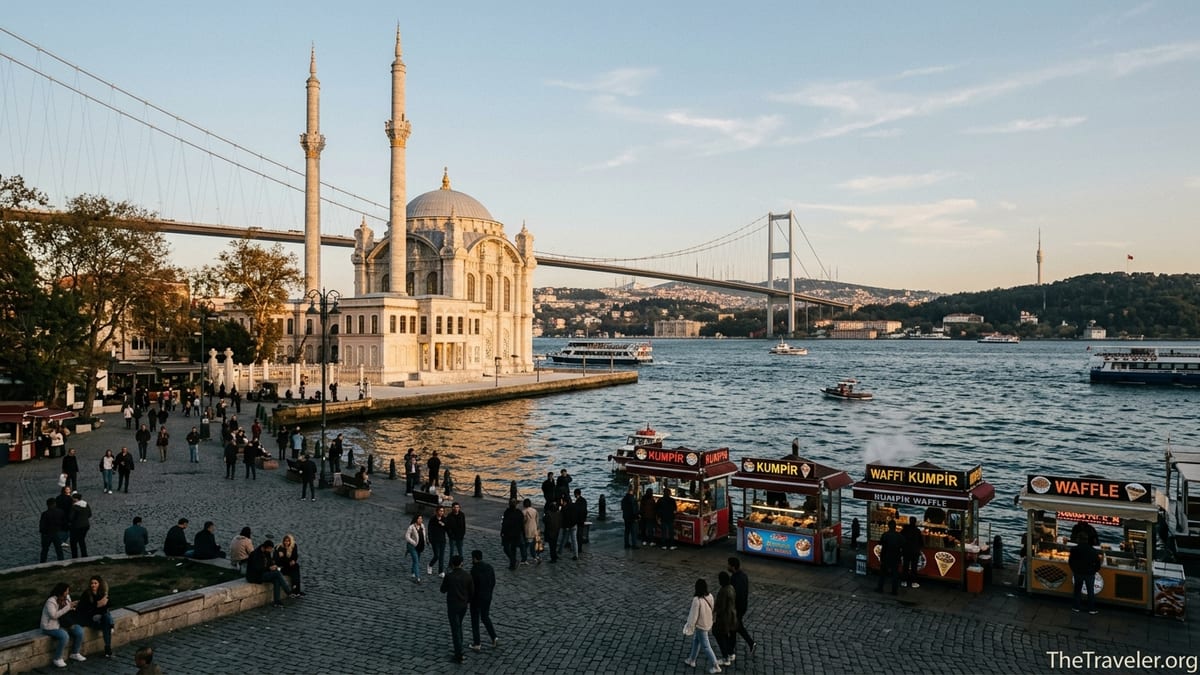
Ortaköy Square and the Atmosphere by the Water
Most visits to Ortaköy start in the main waterfront square, a broad cobbled plaza that opens directly onto the Bosphorus. On one side you have the Ortaköy Mosque, on another a row of cafes with outdoor terraces, and in the middle clusters of locals and visitors strolling, talking and feeding the ubiquitous Bosphorus gulls. Street musicians set up here in the late afternoon and early evening, and on weekends the square can feel like an open-air living room for the entire Beşiktaş district.
The square is at its most atmospheric around sunset, when the Bosphorus takes on a soft silver-blue and the lights of the 15 July Martyrs Bridge begin to glow above the water. On clear days you can see over to Üsküdar and Kuzguncuk on the Asian side, with ferries, commuter boats and small tour vessels crisscrossing between the shores. Even if you do nothing more than sit on one of the low stone walls or grab a bench facing the water, this is one of the few places in central Istanbul where you can truly feel the scale of the strait.
Getting here is straightforward from most central districts. From Taksim or Beşiktaş you can ride a public bus or shared minibus along the coastal road and get off at Ortaköy, then walk a couple of minutes down the side streets to the square. Many visitors also include Ortaköy as a stop between Dolmabahçe Palace and the northern Bosphorus neighbourhoods such as Arnavutköy and Bebek, since it lies roughly in the middle of that shoreline route.
Visiting Ortaköy Mosque and the Bosphorus Bridge View
Officially called the Büyük Mecidiye Mosque, Ortaköy Mosque is the visual anchor of the neighbourhood. Built in the mid 19th century during the reign of Sultan Abdülmecid I, it is a textbook example of Ottoman Baroque architecture, with an ornate white-stone facade, high windows that flood the interior with light, and two slim minarets. The mosque sits on its own platform that projects into the Bosphorus, so the building appears to float above the water when viewed from the square or from a passing boat.
The interior is relatively small but richly decorated with calligraphy panels, crystal chandeliers and pastel-coloured motifs. Non-Muslim visitors are welcome outside prayer times, though during Friday midday prayers and religious holidays access may be limited or briefly paused. Modest dress is required: shoulders and knees should be covered, and women are expected to cover their hair with a scarf. If you arrive without appropriate clothing, attendants usually have simple wraps available near the entrance for temporary use, and plastic bags are often provided for shoes.
The most famous photograph in Ortaköy combines the mosque with the vast span of the 15 July Martyrs Bridge in the background. The classic vantage point is from the low stone quay directly in front of the mosque, slightly off to the right so that the bridge pylons frame the minarets. Photographers often aim for the golden hour in the hour before sunset, when the mosque’s pale stone warms to soft orange and the bridge lights are just starting to shine. On busy days you may need to wait a few minutes for the view to clear of passing tour boats and fishing skiffs, but the constant traffic on the water is part of the scene’s appeal.
Kumpir Street, Waffles and Casual Waterfront Eating
Ortaköy is strongly associated with kumpir, the loaded baked potato that has become one of Istanbul’s most recognisable street foods. Just behind the mosque, a short lane is lined with neighboring kumpir counters, each with a glass display of toppings such as grated kaşar cheese, Russian salad, pickled red cabbage, olives, corn, sausage slices and spicy pickles. The vendors mash the potato with butter and cheese directly in the skin, then pile on as many toppings as you can manage. As of mid 2026, a generously filled kumpir typically costs the equivalent of a casual lunch in Istanbul, making it a filling and affordable option for budget-conscious travelers.
You can order your kumpir to go and carry it down to the waterside, or sit on the low walls and watch the ferries while you eat. Many locals, especially students, treat Ortaköy as a quick after-class escape and line the edge of the square with takeaway boxes and paper cups of tea. If you prefer something sweet, the same lane has waffle stands where made-to-order Belgian-style waffles are slathered with chocolate spread or tahini, then layered with sliced bananas, strawberries and nuts. Portions are large enough to share between two people if you just want a snack.
Those looking for a seated meal with table service will find several cafes and restaurants fronting the square and along the first couple of streets back from the water. These range from simple tea gardens serving simit and menemen to more polished spots offering grilled fish, meze platters, burgers or modern Anatolian dishes. Expect to pay a premium for front-row Bosphorus views compared with places one or two streets inland, but for many visitors the pleasure of eating while ferries slip by a few metres away is worth the mark-up.
Cafes, Terraces and People-Watching Spots
One of the best ways to experience Ortaköy is to claim a seat at a cafe and let the neighbourhood’s rhythm unfold around you. Several long-running institutions sit right on the square, with outdoor terraces shaded by umbrellas in summer and enclosed with heaters in winter. These places serve the usual Turkish cafe staples: tulip-shaped glasses of black tea, Turkish coffee, herbal infusions, simple breakfasts with white cheese, olives and tomatoes, and pastries like börek or simit.
Behind the first row of waterfront venues, side streets are filled with smaller cafes and dessert shops that attract a mostly local clientele. Here you can find third-wave coffee bars pulling espresso shots and pour-overs, patisseries selling pistachio baklava and sütlaç rice pudding, and small bakeries with shelves of poğaça buns fresh from the oven. Prices at these backstreet spots are often more modest, and the atmosphere is quieter than the square, making them good places to take a break after walking along the coast.
Because Ortaköy is part of the larger Beşiktaş district, which has several universities and office buildings nearby, the crowd in the cafes tends to be a mix of students, young professionals and visiting families. On weekday afternoons you will see laptops open and people working remotely over long coffees, while on weekends multigenerational families settle in for leisurely breakfasts that can stretch well into the afternoon. If you enjoy people watching, choose a table with a partial view of the square or the mosque, order a second glass of tea and let the scene play out.
Bosphorus Boat Tours and Short Cruises from Ortaköy
Ortaköy is a useful starting point for exploring the Bosphorus by boat. Several small operators line the waterfront with booths advertising short Bosphorus tours, sunset cruises and evening departures with music. These local boats typically run one to two hour loops that head north under the bridge, pass the waterfront mansions and historic yalıs toward Arnavutköy and Bebek, then turn back, giving you constant views of both the European and Asian shores. Departure times are usually clustered in the late morning, mid-afternoon and around sunset, and it is common to see prices posted on sandwich boards in front of each kiosk.
In addition to these private operators, Istanbul’s official city ferry company periodically includes Ortaköy as a stop on its short Bosphorus tours. These follow fixed timetables and use larger, multi-deck ferries with indoor and outdoor seating. Tickets are usually sold at the official ferry kiosks and are priced similarly to several standard ferry rides, making them good value if you prefer a more structured route with clear start and end times. Audio commentary is sometimes available, but many passengers simply bring a jacket for the breeze and spend the entire ride outside on the upper deck taking photographs.
If you would rather treat the Bosphorus as daily transport rather than a dedicated tour, watch for small commuter boats that call briefly at Ortaköy while running between nearby piers. These are less about commentary and more about getting from one neighbourhood to another, but they still offer the same views of the bridges, palaces and hillside streets. In all cases, aim to arrive at least 15 to 20 minutes before the departure you want, as boats can fill quickly on clear weekends and seats on the open deck are the first to go.
Market Stalls, Local Crafts and Evening Street Life
On most days, especially weekends and evenings, the streets behind Ortaköy Square fill with small stalls and pop-up stands selling an eclectic mix of goods. You will find costume jewellery, handmade bracelets, scarves, simple ceramics, souvenir magnets, calligraphy, and framed prints of Istanbul landmarks. Some vendors are independent artisans from the city who return regularly, while others are temporary traders, so the exact mix changes from week to week. This makes Ortaköy a good place for casual browsing rather than a targeted shopping trip.
Prices at these stalls vary and bargaining is common, although it is generally more relaxed than in the Grand Bazaar. For simple souvenirs like keychains and small prints, you can expect to pay a modest sum, while hand-painted ceramics and more intricate jewellery are priced higher. As always in busy tourist areas, keep an eye on your belongings and compare a couple of stalls before making a purchase if you are unsure of what constitutes a fair price.
As the sun sets, the market streets blend into Ortaköy’s evening street life. The air fills with the smell of grilled corn, roasted chestnuts in cooler months, and fresh waffles. Musicians sometimes position themselves at the edges of the square, and on warm nights groups of friends gather along the seawall with takeaway drinks and snacks. It is a lively but generally relaxed scene, more about conversation and the view than nightlife. If you prefer a quieter experience, consider visiting on a weekday morning, when the same streets feel almost like a different neighbourhood.
Scenic Bosphorus Walks toward Bebek and Beşiktaş
One of Ortaköy’s main appeals is its position on a long, walkable stretch of the European Bosphorus shore. From the square, you can walk north toward Kuruçeşme, Arnavutköy and Bebek, or south toward Beşiktaş and Dolmabahçe. The northern direction toward Bebek is especially popular and is often described in local guides as one of Istanbul’s most enjoyable coastal walks, with a mix of waterfront parks, fishing spots, grand old mansions and modern apartment blocks facing the water.
The route from Ortaköy to Bebek is roughly four kilometres depending on exactly where you start and finish, and it follows mainly flat pavement and dedicated pedestrian paths along the shore. Walking north, you will first pass Kuruçeşme’s small parks and club piers, then continue to Arnavutköy, a photogenic neighbourhood known for its wooden Ottoman-era houses and waterside fish restaurants. The final leg into Bebek passes small marinas and busy weekend fishing spots before opening into Bebek Park, where locals sit on the grass and along the low sea walls with coffee cups and picnic snacks.
If you turn south from Ortaköy instead, the path leads toward Beşiktaş, passing under the bridge and eventually connecting to the parks and promenades near Yıldız Park and Dolmabahçe Palace. This direction feels slightly more urban, with busier traffic on the road beside you and more frequent bus stops, but it offers long views toward the old city peninsula and the mouth of the Bosphorus. Either way, comfortable walking shoes and a light jacket for the breeze are advisable, and it is wise to carry a transport card so you can hop on a bus back if you decide you have walked far enough.
Photo Spots and Practical Tips for Enjoying Ortaköy
Ortaköy is dense with photo opportunities even if you are only carrying a smartphone. The classic shots include the mosque framed by the bridge, kumpir and waffle stalls glowing at dusk, the line of colourful chairs and cushions many cafes put out along the square, and the row of wooden houses in nearby Arnavutköy if you extend your walk north. For a slightly different perspective, look for the small viewing points on the steps and alleys just above the square, where you can photograph the scene from a little higher up while including the cobbled streets in the foreground.
Light conditions change quickly along the Bosphorus, so photographers may want to plan their visit with this in mind. Early mornings are generally quiet and soft, with fishermen already in place along the seawall, while late afternoons and the hour after sunset provide the richest colours and reflections on the water. In winter, Ortaköy can see cold winds and occasional rain, but the muted tones suit black-and-white images of the mosque and bridge. In summer, clear skies mean harsher light at midday, so if you are sensitive to heat you may prefer to schedule walking and shooting for earlier or later in the day.
On a practical level, Ortaköy is compact, but the cobbles and occasional curbs can be challenging for some visitors with mobility issues. Taxis are allowed to drop passengers relatively close to the square, and several cafes and restaurants have ground-floor seating without steps, but fully step-free access to the mosque platform and some parts of the promenade may not always be guaranteed. Public toilets are available near the square for a small fee, and most cafes are accustomed to visitors asking to use facilities when they order something to drink. As in the rest of Istanbul, carrying a small amount of cash is useful for street food and small purchases, although many larger venues accept cards.
The Takeaway
Ortaköy condenses many of Istanbul’s essential experiences into a walkable strip of waterfront. You can stand in front of a 19th century mosque that seems to float on the Bosphorus, watch one of the city’s busiest bridges stretch overhead, eat street food that has become a minor local institution, and then follow the shoreline into some of the city’s most photogenic neighbourhoods. It is a place that feels simultaneously famous and everyday, where tour groups and families from nearby apartment blocks share the same sea breeze.
Whether you treat Ortaköy as a quick stop on a Bosphorus cruise, an anchor for a half-day walk to Bebek or Beşiktaş, or simply a setting for tea and people watching, it rewards slowing down and paying attention. The details that linger are rarely grand gestures: a fisherman quietly re-baiting his line, the reflection of the mosque’s minarets in the wake of a passing ferry, the warm weight of a kumpir in your hands on a cool evening. In a city that can feel overwhelming, Ortaköy offers a clear, accessible slice of Istanbul life by the water.
FAQ
Q1. How do I get to Ortaköy from Sultanahmet or Taksim?
From Sultanahmet, take the tram to Kabataş and transfer to a bus or shared minibus heading toward Beşiktaş and Ortaköy, getting off at the Ortaköy stop and walking a few minutes down to the square. From Taksim, frequent buses run down to Beşiktaş and continue along the coastal road; travel time varies with traffic but is often around 25 to 40 minutes.
Q2. What is the best time of day to visit Ortaköy Mosque and the square?
Early mornings offer a quieter atmosphere with mostly locals and fishermen, while late afternoon and the hour around sunset provide the best light for photographs of the mosque and bridge. Evenings, especially on weekends, are livelier with street food, market stalls and buskers, but the square can become crowded.
Q3. Is there an entrance fee to visit Ortaköy Mosque?
As of 2026, entry to Ortaköy Mosque is generally free for visitors, although small donations are appreciated at the entrance. Rules and arrangements can change, so it is sensible to carry a little cash in case of a modest requested contribution or for renting scarves or wraps.
Q4. How long does it take to walk from Ortaköy to Bebek?
The walk from Ortaköy to Bebek along the Bosphorus shore usually takes about 45 minutes to an hour at a relaxed pace, covering roughly four kilometres. The route is mostly flat, but you will share parts of the path with joggers, cyclists and other pedestrians, so allow extra time for stops, photographs and short breaks in parks along the way.
Q5. Are Bosphorus boat tours from Ortaköy worth it compared with tours from Eminönü?
Boat tours from Ortaköy are typically shorter and more focused on the central and northern Bosphorus, often with smaller vessels and a more relaxed atmosphere. Larger tours from Eminönü usually cover a longer route and may include commentary on both the historical peninsula and the Bosphorus, so the best choice depends on whether you prefer a compact scenic cruise or a broader overview.
Q6. What should I wear when visiting Ortaköy Mosque?
Dress modestly in clothes that cover shoulders and knees, and women should bring a scarf to cover their hair while inside the mosque. Comfortable shoes that are easy to slip on and off are useful, since you will be asked to remove footwear before entering the prayer hall, and you may spend time walking on the cobbled streets of the neighbourhood before or after your visit.
Q7. Is Ortaköy suitable for families with children?
Yes, Ortaköy is popular with local families and has plenty of open space in the square and along the waterfront, as well as casual food options like kumpir and waffles that appeal to children. Parents should keep a close eye on young kids near the water’s edge and along the busy coastal road, but overall the area is relaxed, and many cafes are accustomed to hosting families.
Q8. Can I visit Ortaköy at night, and is it safe?
Ortaköy remains active into the evening, with illuminated views of the bridge and mosque, open cafes and a steady flow of people. Like most busy central neighbourhoods, it is generally considered safe if you take normal city precautions, such as staying in well-lit areas, keeping valuables secure and using licensed taxis or known ride services if returning late to a distant hotel.
Q9. Are there good vegetarian or pescatarian options in Ortaköy?
Vegetarians can easily make a meal from kumpir loaded with vegetable-based toppings, salads, meze plates and simple dishes like lentil soup in many cafes. Pescatarians have additional choices in the form of grilled fish sandwiches, seafood meze and fish restaurants in nearby Arnavutköy and Bebek, which are a short walk or quick ride away along the Bosphorus.
Q10. How much time should I plan for Ortaköy in my Istanbul itinerary?
If you are mainly interested in seeing the mosque, having a kumpir and strolling the square, two to three hours is often enough. To combine Ortaköy with a shoreline walk to Bebek or Beşiktaş, a short Bosphorus cruise or a long cafe stop, it is worth allocating at least half a day so you do not feel rushed and can enjoy the waterfront at a comfortable pace.