


More news on this day
North India’s long-discussed high-speed rail plans are gaining fresh momentum, with new travel-time projections suggesting Delhi–Agra journeys in just 58 minutes and Delhi–Varanasi trips in around three-and-a-half hours once a proposed bullet train corridor opens.
Get the latest news straight to your inbox!
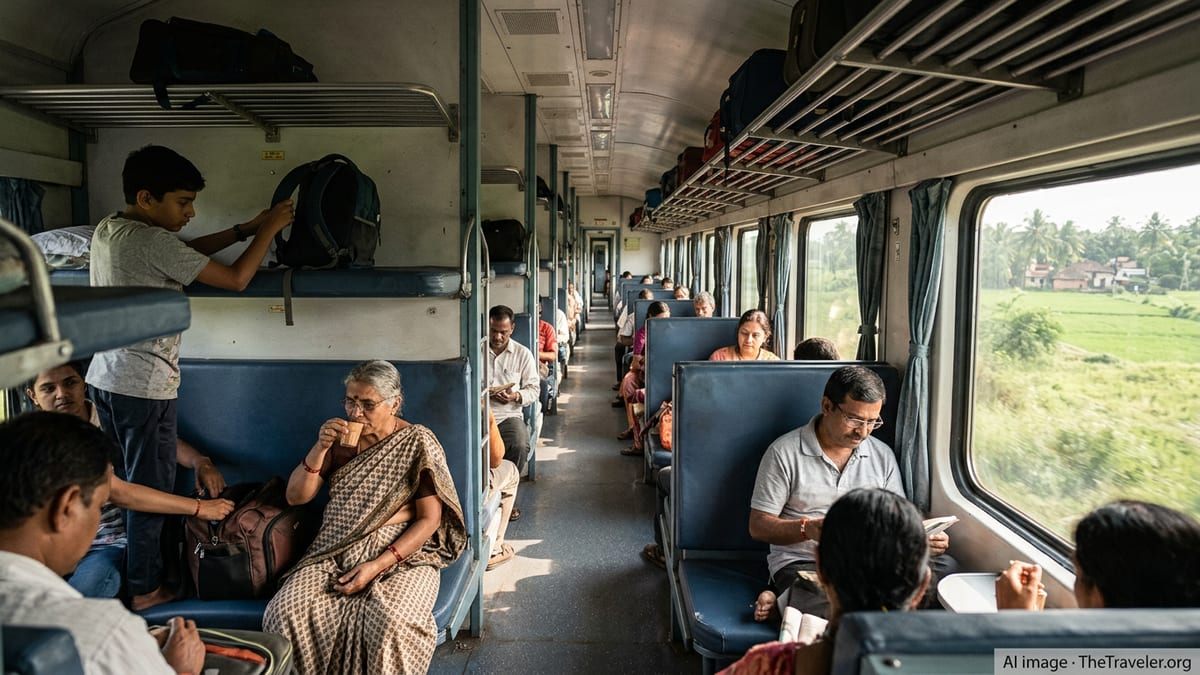
Delhi–Varanasi High-Speed Corridor Moves Up the Agenda
Publicly available planning documents and recent media coverage show the Delhi–Varanasi high-speed rail (HSR) corridor emerging as one of India’s most significant transport schemes in the north. The route is designed to connect the National Capital Region to key Uttar Pradesh cities, including Noida, Agra, Kanpur, Lucknow and Prayagraj, before terminating in Varanasi. Surveys and detailed project reports have been in preparation for several years, and the line now features prominently in the country’s long-term National Rail Plan and bullet train strategy.
The corridor is variously described as being around 813 to 865 kilometers in length, depending on alignment and spur inclusions, with design speeds in the 320 kilometer per hour range. According to coverage collating official and planning data, the line is expected to function as a trunk high-speed spine across the heart of North India, potentially linking later with other corridors toward Patna, Kolkata and the northeast.
Although India’s only sanctioned high-speed rail line under construction remains the Mumbai–Ahmedabad project, recent approvals for seven new corridors have brought the Delhi–Varanasi route firmly back into focus. Reports indicate that the government has endorsed the corridor in principle as part of a broader bullet train network, which aims to create a future-ready rail system by the early 2030s and beyond.
Timelines for construction and opening are still indicative rather than fixed, but planning sources suggest that the Delhi–Varanasi line is envisaged in phases, with priority attention likely on the Delhi–Agra section before extension eastward to Lucknow and Varanasi.
Projected 58 Minute Delhi–Agra Trips and Faster Agra Access
One of the most eye-catching figures to emerge from recent information releases is a projected Delhi–Agra travel time of just 58 minutes on the high-speed alignment. A press release summarising travel-time scenarios on the proposed corridor lists Delhi–Agra in under an hour, with trains operating at up to 300 kilometers per hour. This would be a sharp reduction from current premium rail and road options, which typically range from around two to three hours depending on service and traffic.
Earlier feasibility work and detailed project reports prepared for Uttar Pradesh’s investment promotion agencies envisaged a similar scale of time savings. Those documents indicated that frequent high-speed services between Delhi and Agra could run dozens of times per day, with the corridor designed for high capacity and rapid turnarounds. For Agra, home to the Taj Mahal and a central stop on India’s Golden Triangle circuit, the shift would represent a substantial upgrade in tourist and business connectivity.
Planning material suggests that the high-speed line is likely to parallel existing expressway infrastructure where practical. Analysts note that co-locating with the Delhi–Agra Yamuna Expressway and other major corridors could ease land acquisition and engineering challenges. Station zones for Mathura and Agra have reportedly been identified in more recent updates, indicating incremental progress on alignment and land planning for this stretch.
Should the projected sub-one-hour journey become reality, Agra would move firmly into “same-day commute” range from Delhi for a wider range of travelers. Tourism operators are already watching the corridor’s evolution closely, anticipating changes in how domestic and international visitors structure North India trips once high-speed services are available.
Three-and-a-Half Hour Delhi–Varanasi Journeys Across the Heartland
Beyond Agra, the Delhi–Varanasi corridor is being described in recent public communication as capable of cutting Delhi–Varanasi travel times to roughly three-and-a-half hours. A recent statement highlighting potential timelines for multiple city pairs on the route cites Delhi–Varanasi at about three hours and 33 minutes, once the bullet train is operational. That would be a dramatic reduction from conventional rail journeys that typically take 11 to 12 hours on existing tracks.
The corridor’s intermediate stops are planned to include dense urban and religious centers such as Lucknow, Prayagraj and Ayodhya, in addition to Agra and Mathura. Travel-time projections for these legs are similarly striking, with Delhi–Lucknow suggested at just over two hours and Lucknow–Varanasi in a little over one hour. The idea is to reshape how residents, pilgrims, students and business travelers move across the Ganga plain, bringing much of eastern Uttar Pradesh within a morning or afternoon ride of the capital.
Analysts point out that such times assume express or limited-stop services at full design speeds, with some trains likely to run slower all-stop patterns that serve more intermediate cities. Nevertheless, the overarching picture is of a regional rail map compressed dramatically in terms of practical travel times, potentially altering everything from weekend tourism patterns to how companies plan regional offices and logistics hubs.
Varanasi, already served by semi-high-speed Vande Bharat trains from Delhi, stands to gain an additional layer of connectivity. Those services run at up to around 160 kilometers per hour, whereas the planned bullet train corridor is designed for nearly double that speed, using dedicated high-speed infrastructure rather than upgraded legacy tracks.
Network Effects for North India’s Cities and Corridors
The Delhi–Varanasi bullet train is not being planned in isolation. Policy documents such as the National Rail Plan and subsequent corridor announcements indicate that the Delhi–Agra–Kanpur–Lucknow–Varanasi axis is intended to connect onward toward Patna and potentially Kolkata, while Varanasi is also slated as the origin for a separate high-speed route east to Siliguri.
Together with other proposed corridors from Delhi toward Amritsar, Jaipur and Kolkata, as well as the under-construction Mumbai–Ahmedabad line, the route forms part of a broader vision of an eventual high-speed grid linking India’s major metros and many state capitals. Commentators often refer to this as a modern interpretation of the “Diamond Quadrilateral” concept, extended with north–south and east–west spurs.
For North India, the network effect could be significant. Cities such as Kanpur, Lucknow, Prayagraj and Patna are large population and education hubs that currently rely on slower long-distance trains and highways. High-speed rail has the potential to integrate these markets more closely with Delhi, affecting real estate, labor mobility and regional tourism.
However, observers also point to the long gestation periods typical for large rail infrastructure. Even with corridor-level approvals, each route must pass through detailed design, land acquisition, financing and construction stages before high-speed services begin. As a result, the Delhi–Varanasi line is often discussed in medium- to long-term timeframes, with Mumbai–Ahmedabad serving as the country’s proving ground for bullet train technology and operations first.
Timelines, Fares and What Travelers Can Expect
While no firm launch date has been announced for bullet train operations in North India, recent approval of multiple new corridors and the identification of station zones in cities like Agra suggest that planning work is moving ahead. Industry commentary frequently underscores that lessons from the Mumbai–Ahmedabad project, including civil construction, signaling and rolling-stock deployment, will inform the rollout of the Delhi–Varanasi corridor.
On fares, public comments and coverage of policy discussions indicate an emphasis on keeping tickets broadly affordable relative to air travel, particularly for economy-class flyers. Earlier analyses of the Delhi–Ayodhya and Delhi–Varanasi sectors suggested that one-way fares could be set below typical airfares on the same routes, while being higher than current express train prices in exchange for much shorter journey times.
In operational terms, planning reports and media summaries point to a high-frequency timetable once the corridor is fully open, with dozens of trains per day envisaged between Delhi and Agra, and a significant number continuing through to Lucknow and Varanasi. High-speed stations are expected to be interlinked with existing railway terminals, metro networks and highways, in order to distribute passengers efficiently into surrounding urban areas.
For future travelers, the bullet train revolution in North India would mean that classic itineraries such as Delhi–Agra–Varanasi could be executed in far less time than today, with the possibility of same-day return trips that are currently impractical. For now, though, these 58 minute and three-and-a-half hour journey times remain projections on paper, with the next few years likely to determine how quickly they move from planning charts to passenger timetables.
Press Information Bureau summary of projected Delhi–Varanasi corridor travel times
Mint coverage of Delhi–Agra under one hour and wider bullet train plans
Indian Infrastructure report on station zones for Mathura and Agra
Times of India overview of newly approved high-speed rail corridors