


Stingray City is the headline excursion in Grand Cayman and one of the Caribbean’s most memorable wildlife encounters. For cruise passengers tendering into George Town, though, the logistics can feel intimidating: tight port times, tender tickets, independent operators, shifting weather and a lingering fear of missing the last boat back to the ship. This guide breaks down how to plan Stingray City specifically from a cruise ship, with practical timing examples, buffer strategies and real-world scenarios so you can book with confidence.
Get the latest updates straight to your inbox!
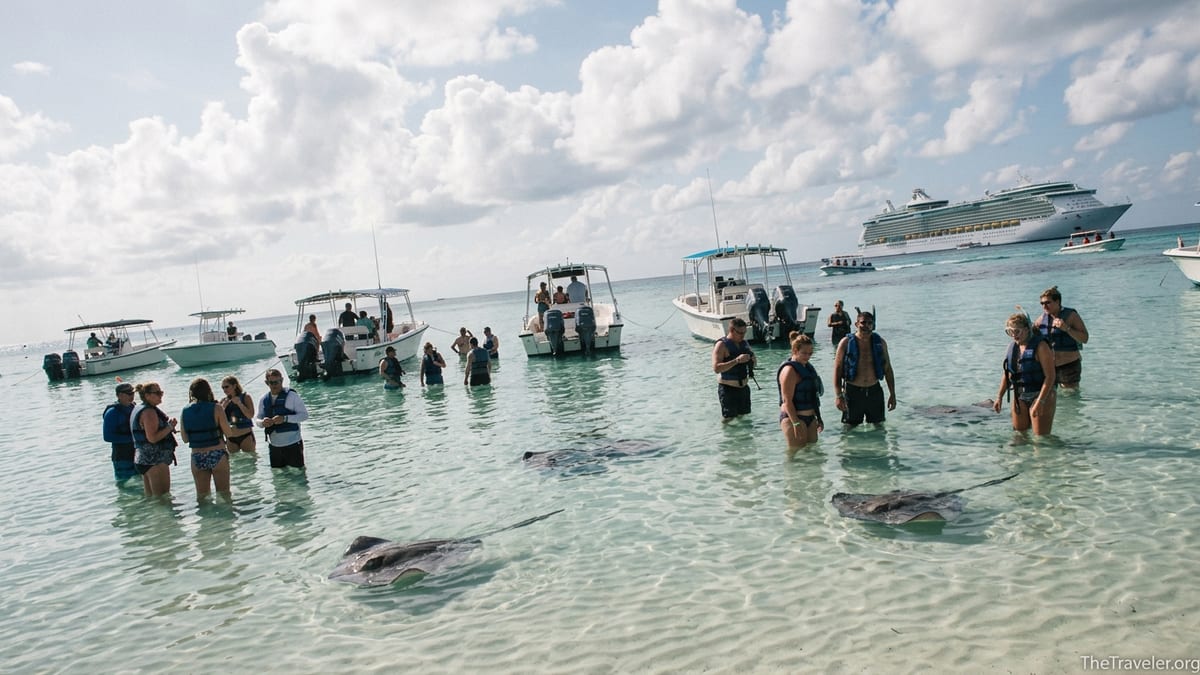
Understanding Grand Cayman’s Tender-Only Cruise Port
George Town, Grand Cayman is a tender-only port, which means your ship anchors offshore and passengers transfer to shore on smaller tender boats operated in coordination with local authorities. On a typical call, the ride from ship to tender pier takes about 10 to 15 minutes once your boat actually departs. What eats time is not the ride itself but the waiting: organizing passengers, scanning cards and loading tenders in waves, especially when several mega-ships are anchored at once.
The tender drops you at one of three adjacent terminals along Harbour Drive in George Town: North Terminal, South Terminal or the more modern Royal Watler terminal. All three are within a few minutes’ walk of each other, and most Stingray City tour shuttles and guides meet cruise guests just outside these gates. On a busy winter day it is common to see multiple independent operators holding signs for Stingray City, Starfish Point and Seven Mile Beach right across from the tender exits.
Cruise lines usually give a port arrival time such as 8:00 a.m., but that is when the ship expects to be anchored, not when you step onto the pier. In practice, the first ship-run excursions are often called about 30 to 45 minutes after arrival, and general tendering for independent explorers may not begin until after those groups. If your itinerary lists George Town from 8:00 a.m. to 3:00 p.m., a realistic earliest independent tour start is often around 9:00 to 9:30 a.m., depending on how assertive you are in getting an early tender ticket.
The other critical time is the last tender back to the ship. Many cruise lines in Grand Cayman schedule the final tender about one hour before the published sail-away. If departure is 3:00 p.m., crew may announce a 2:00 p.m. last tender. Treat that as your hard deadline and build your excursion timing backwards from there, allowing for traffic and the occasional slow-moving group ahead of you in the tender line.
Tender Timing: How Early Can You Realistically Get Ashore?
Because Stingray City tours are tightly scheduled around tides and boat slots at the sandbar, getting an accurate sense of when you can be on the pier is essential. On many mainstream lines, passengers booked on ship-sponsored excursions get priority tendering. They are given a meeting time and location on board, and staff escort them straight onto one of the first boats. If your Stingray City excursion is through the cruise line with a 9:00 a.m. departure, the operator expects you to arrive on time because the tender logistics are coordinated behind the scenes.
If you are booking independently, the process is more variable. Some ships distribute numbered tender tickets to anyone not on a ship tour, starting shortly before the scheduled arrival time. Guests then wait in a lounge or theater until their group number is called. On a full ship early groups can be called quickly, but later groups may wait 45 minutes or more. For example, passengers who reported arriving at 8:00 a.m. and not having a ship excursion have sometimes found themselves stepping off the tender closer to 9:00 a.m., while those who went to pick up tender tickets as soon as they were available often managed to be onshore around 8:30 a.m.
Independent tour operators that cater to cruise passengers understand this dynamic and usually schedule their first Stingray City departures around 9:00 a.m. or later. You will see tours advertised with 9:00 a.m. marina departures or 9:15 a.m. pickup near the cruise terminal, explicitly noting that they are “cruise friendly” and timed for ships that arrive before about 8:00 or 8:30 a.m. If your ship’s arrival is later, such as 10:00 or 11:00 a.m., most independent operators will either offer a later boat or advise you frankly if the timing is too tight.
As a rule of thumb, assume that from scheduled arrival time to standing on Harbour Drive takes about 45 to 60 minutes if you are proactive about tender tickets, and up to 75 minutes if you are relaxed or on a very full sailing. Plan your independent tour accordingly, and when in doubt choose a departure time at least one hour after the ship’s published arrival.
How Stingray City Tours Work from George Town
Every Stingray City excursion from George Town follows the same basic pattern: shuttle pickup near the tender pier, transfer to a marina on the west or north side of the island, boat ride out to the sandbar, water time with the rays and often one or two snorkel stops on nearby reefs or at Starfish Point. The complete loop typically takes between 2.5 and 5 hours depending on how many stops are included.
Shorter “Stingray City and Coral Gardens” tours aimed at cruise guests often advertise a 2.5- to 3-hour duration, which usually breaks down into roughly 25 minutes each way between marina and sandbar plus about 40 to 60 minutes actually in the water with the rays. A popular mid-length option, for example, might offer a 3.5-hour itinerary that includes Stingray City, Coral Gardens snorkeling and a visit to a shallow starfish location, with free shuttle service to and from the cruise terminal. Longer “grand tours” that add a beach stop or the Cayman Turtle Centre can run five hours or more and are best suited to itineraries with at least eight hours in port.
Most operators meeting cruise passengers will specify exactly where they pick up in George Town, often just across from the Royal Watler or North Terminal gates. Some ask you to walk a couple of minutes to a designated meeting point along Harbour Drive, which can be helpful if the immediate pier area is crowded. From there, the drive to marinas such as Safehaven Marina or the Cayman Islands Yacht Club is typically about 10 to 15 minutes in normal traffic, a bit longer on peak days when multiple ships are in port.
Importantly, nearly all tour companies build in return time specifically for cruise passengers. It is common to see notes stating that beach time or extra stops will be adjusted based on your ship’s last tender time, and that shuttle returns will be timed to get you back to George Town with a safety buffer. Always verify this when booking and again at check-in, and confirm the exact time the driver plans to have you back at the terminal.
Ship Excursion vs Independent Tour: Pros, Cons and Real Examples
Choosing between a cruise line excursion and an independent Stingray City tour is ultimately about your risk tolerance, budget and preferred group size. Ship-run tours are usually more expensive but come with one major advantage: if the excursion runs late because of issues on land or sea, the ship will wait or take responsibility for getting you back. This “we will not leave without you if you are on our tour” policy is a powerful safety net, particularly at a tender port where weather or tender delays can quickly compound.
Independent tours, on the other hand, are often significantly cheaper and more intimate. It is not unusual to find reputable local operators offering Stingray City and two snorkel stops for prices that are markedly lower than similar packages sold on board. Guests who have booked with well-known names such as small-group eco tour operators or long-established charter companies frequently report being with 20 to 30 people instead of the 80 or more who might fill a large ship-contracted catamaran on a peak day.
A practical example highlights the difference. Imagine your ship is in George Town from 8:00 a.m. to 3:00 p.m. A ship excursion might offer a four-hour “Stingray City Sandbar and Reef Snorkel” departing at 9:00 a.m., with a meeting time on board at 8:15 a.m. You walk directly from your lounge to the tender, board a large catamaran near the pier and are back in town around 1:00 p.m., leaving plenty of time to browse shops before the 2:00 p.m. last tender. An equivalent independent tour might depart a marina at 10:00 a.m., include Stingray City, a snorkel and starfish stop, and advertise a total duration of 3.5 hours. With a 9:15 to 9:30 a.m. pickup near the terminal and a planned return at 1:30 p.m., your margin is thinner but still workable if everything runs on schedule.
The trade-off is that independent operators cannot control unexpected ship or tender delays. If your cruise arrives late, holds tenders because of swells or changes its departure time on short notice, an independent booking may not be able to adjust. Many local companies explicitly advise cruise guests to book only if their ships arrive before a certain time, and some will cancel or rebook you if the schedule becomes too tight. It is worth reading those policies carefully and choosing a company that clearly states they work regularly with cruise schedules.
Building a Safe Return Buffer and Avoiding Missed-Ship Stress
The single best way to enjoy Stingray City without worrying about missing your ship is to build in a healthy buffer between your tour’s scheduled return and the last tender. In practice that means aiming to be back at the cruise terminals at least 60 to 90 minutes before the final tender time, especially if you are on an independent tour. This margin covers short traffic delays, a brief line for the tender and the occasional clock discrepancy between phone time, ship time and local time.
For instance, if your ship is scheduled to depart George Town at 3:00 p.m. and has announced a 2:00 p.m. last tender, you should target being at the terminal no later than 1:00 p.m., with 12:30 p.m. even more comfortable. That may sound conservative, but real-world anecdotes from Grand Cayman illustrate why: passengers have described last tenders being strictly enforced, with staff turning away those who show up at the pier just minutes after the announced cut-off. Others have noted that tender lines can snake along the waterfront when several ships are all retrieving guests at the same time.
When evaluating tour durations, remember to count from your meeting time on shore, not simply the boat departure from the marina. A “3-hour” tour that leaves the dock at 10:00 a.m. may require a 9:15 or 9:30 a.m. pickup in town, and you will not be dropped back at the terminal until 1:15 or 1:30 p.m. To be safe, many experienced cruisers will only book independent Stingray City tours on Grand Cayman if their port call is at least seven hours, or if the specific tour is clearly designed around their ship’s schedule and finishes well ahead of the last tender.
It is also wise to reconfirm your ship’s time-versus-local time with guest services, especially around daylight saving changes. Some lines stay on “ship time” that may differ from Grand Cayman’s local clock. If your tour operator is referencing local time while the ship runs on another, you will need to adjust your calculations. On the pier, set a single reference on your watch or phone and repeat it back to your driver when agreeing on the return time.
Weather, Sea Conditions and Cancellations at Stingray City
Grand Cayman has a tropical marine climate with a distinct dry season from roughly November through April and a wetter, more unsettled season from about mid-May through October. Typical days are warm and sunny, but localized showers, squalls and fresh trade winds are common, particularly in the wet season. Stingray City sits on a series of shallow sandbars in the North Sound, so even modest changes in wind and swell can affect how safe and comfortable it is to operate boats and let guests enter the water.
Two separate weather risks affect cruise passengers planning Stingray City. The first is whether the ship can tender into George Town at all. On days with strong winds or significant swells, particularly from the west, cruise lines sometimes cancel Grand Cayman calls outright because it is unsafe to run tenders to the open roadstead anchorage. This can happen even when the island itself is not experiencing extreme weather, as the exposed anchorage becomes too choppy for safe operations. When that occurs, all ship and independent tours are cancelled automatically and you stay at sea or divert to another port.
The second risk is localized conditions within the North Sound. It is possible for your ship to tender safely into George Town while independent operators decide that the sandbar or nearby reefs are too rough or turbid for a quality Stingray City experience. In these cases, reputable tour companies will either cancel and refund guests, reroute to more protected snorkeling spots, or abbreviate the itinerary. Some will make real-time decisions based on wind readings and sea state on the morning of your tour, informing cruise guests by email or at the pier.
During hurricane season, from approximately June through November, the chance of a full port cancellation or itinerary change rises, especially if a tropical storm is in the broader region. Cruise lines tend to adjust itineraries proactively when a named system forms, long before dangerous conditions reach the Cayman area. This built-in caution means that most passengers never experience the worst of the weather, but it also means that no Stingray City booking, ship or independent, can be absolutely guaranteed until the day of your call. Travel insurance that covers missed ports and excursion cancellations can soften the financial impact.
Managing Missed-Ship Concerns and What Operators Actually Do
The thought of watching your ship sail away without you is every cruiser’s nightmare, and tender ports heighten that anxiety. In practice, missed-ship incidents tied to reputable Stingray City operators are rare because both cruise lines and local companies structure their schedules conservatively. Most independent tours that cater to cruise passengers explicitly state that they are designed for cruise timetables, sometimes asking for your ship name and port hours at booking so they can advise if a time slot is unsuitable.
Many operators also maintain informal communication with port agents and pay close attention to ship movements. If a captain sees that tenders are being temporarily paused due to swell or that lines are growing unusually long, they may shorten a snorkel stop or skip a beach visit to get cruise guests back earlier. It is helpful to check in with your guide as you return from the sandbar and ask directly what time they expect to drop you at the terminal and how that compares with your last tender.
That said, the only arrangement that truly guarantees the ship will not leave without you is a tour sold through the cruise line. If a privately booked tour is delayed by factors that do not affect ship excursions, such as mechanical issues with the boat, unexpected traffic or a late departure from the marina, the captain is not obliged to wait. In that worst-case scenario you would be responsible for arranging your own travel to the next port, which can be difficult and expensive on short notice.
To keep your risk low, avoid booking the very last possible tour of the day, especially if your port stop is short or your ship is one of several large vessels in town. Prioritize morning departures, shorter itineraries and operators with strong reputations among cruise travelers. If your ship’s stay is extremely tight, such as a 6-hour window combined with a long tender process, it may be smarter to choose a shorter snorkeling or beach trip and save Stingray City for a future visit when you can enjoy it without watching the clock.
Practical Pickup and Return Tips in George Town
On the day of your Stingray City excursion, smooth pickup and return start with knowing exactly where you are supposed to meet your operator. The tender ramps at North, South and Royal Watler terminals all feed onto Harbour Drive, a busy waterfront road lined with shops, cafés and tour stands. Many operators will instruct you to exit the terminal, cross the street and look for a representative holding a specific sign near a recognizable storefront or shaded area. Before you sail, print or save these instructions and, if possible, a photo of the meeting point in case cell data is slow or unavailable.
When you step off the tender, give yourself a few minutes to orient. If you do not immediately see your operator, stay near the agreed meeting spot rather than wandering, and check whether your ship is on local or ship time. Independent tour vans typically depart promptly, since they are trying to align with marina departures and sandbar time slots. Guests who arrive 10 or 15 minutes late may find that their group has already left, especially on days with tight schedules.
On the return, ask your driver to confirm which terminal they are dropping you at and approximately how long the tender line looks. If there are several ships in port, lines for the tenders can extend along the waterfront promenade. This can be disconcerting, but staff generally work efficiently to move people along. Having built in a buffer means that even a longer line should still get you back to the ship comfortably before the last tender. Once you are in the terminal, follow crew instructions closely and be prepared to board any tender being filled for your ship rather than waiting for a specific boat.
If you happen to return to George Town significantly earlier than planned, consider that a bonus rather than wasted time. You can browse the shops along Harbour Drive, pick up Caymanite or rum cake souvenirs, or simply enjoy a drink with a view of the ships at anchor. Being back with a generous margin is far less stressful than cutting things close, and it lets you remember Stingray City for the friendly rays and turquoise water rather than for a frantic sprint along the pier.
The Takeaway
With thoughtful planning, Stingray City is entirely compatible with the constraints of a tendered cruise call in Grand Cayman. Understanding that tender times add 45 to 60 minutes on each end of your day, choosing a tour that fits comfortably within your actual shore window, and building in at least an hour of buffer before the last tender are the key ingredients to a relaxed experience. Whether you opt for the peace of mind of a ship-sponsored excursion or the intimacy and value of a small independent operator, you can structure your timing so that meeting rays on the sandbar is the focus, not watching the clock.
Pay attention to seasonal weather, especially during the wet and hurricane seasons, and be prepared for the possibility of port or tour cancellations that are ultimately in place for your safety. Communicate clearly with your operator about pickup points, return times and ship schedules, and do not hesitate to choose a shorter itinerary if your port hours are tight. Used wisely, these strategies turn a potentially stressful day into a highlight of your Western Caribbean cruise.
FAQ
Q1: How long does the tender from the cruise ship to George Town usually take?
It typically takes about 10 to 15 minutes of actual travel time each way, but you should allow 30 to 45 minutes total to account for waiting, loading and unloading, especially on busy days.
Q2: What is the minimum port time I should have to book an independent Stingray City tour?
A practical minimum is about seven hours in port, which gives room for tendering, a 3- to 3.5-hour tour and at least a 60- to 90-minute buffer before the last tender back to your ship.
Q3: Are ship-sponsored Stingray City excursions safer in terms of not missing the ship?
Yes. If you are on a tour sold by the cruise line and it runs late due to tour-related issues, the ship will wait or arrange your return, which is not guaranteed with independent operators.
Q4: Can I just take a taxi and visit Stingray City on my own without a tour?
No. Stingray City is located on sandbars in the North Sound, reachable only by boat. You need to join an organized tour or charter a boat; there is no way to access the sandbar independently from shore.
Q5: What happens if bad weather cancels my Stingray City excursion?
If the ship cancels the port call entirely, both ship and independent excursions are normally cancelled and refunded. If only sea conditions at the sandbar are poor, reputable tour operators may cancel, shorten or reroute the trip and typically offer refunds or credits according to their policies.
Q6: Is morning or afternoon better for a Stingray City tour from a cruise ship?
Morning is usually better for cruise passengers because seas are often calmer and you have a larger buffer before the last tender. Afternoon tours can work if your port time is long, but they leave less room for delays.
Q7: How can I improve my chances of getting an early tender for an independent tour?
Be ready before the first tender tickets are distributed, pick up your ticket as soon as they are offered, and wait in the designated lounge for your number to be called. Avoid scheduling a tour too close to the ship’s published arrival time.
Q8: Do independent Stingray City operators pick up directly at the cruise terminal?
Many do, meeting guests just outside the North, South or Royal Watler terminals along Harbour Drive, then shuttling them to a nearby marina. Others may ask you to walk a short distance to a specific meeting point; always confirm the exact location in advance.
Q9: How much buffer should I leave between the scheduled end of my tour and the last tender?
Plan to be back at the cruise terminal at least 60 minutes before the last tender, and 90 minutes if possible. This accounts for traffic, lines at the pier and small schedule slips.
Q10: Will my travel insurance cover costs if I miss the ship because of an independent tour?
Some policies cover missed connections or trip interruption, but coverage varies widely. You should review your policy details or speak with your insurer in advance to understand what is and is not covered in the event of a missed ship at a tender port like Grand Cayman.