

More news on this day
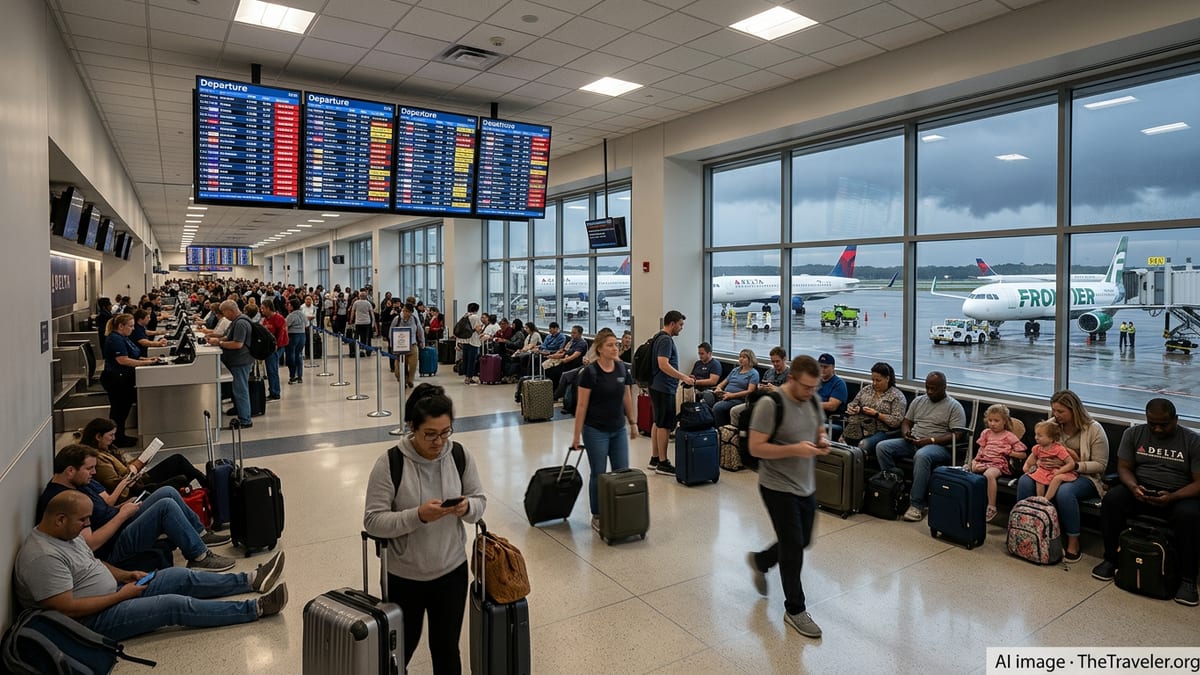
Passengers at Minneapolis–St Paul International Airport faced long lines, crowded concourses and mounting frustration on Friday as rolling delays and cancellations on Delta Air Lines, American Airlines, Southwest Airlines and other carriers rippled across major U.S. hubs, leaving many travelers stranded or scrambling to rebook.
Get the latest news straight to your inbox!
Weather and Congestion Ripple Across the Network
Operational data and live tracking services on Friday indicated that a band of unsettled weather and airspace congestion around key hubs contributed to at least 112 departure and arrival delays and 11 cancellations affecting Minneapolis–St Paul routes, particularly to and from Chicago, New York and Dallas. The disruption built gradually through the morning and early afternoon as aircraft and crews arrived late and turnaround times stretched.
Minneapolis–St Paul International Airport functions as a major connecting point in the upper Midwest, with Delta Air Lines operating one of its largest hubs there and American Airlines and Southwest Airlines maintaining significant schedules. When weather and traffic volume slow operations at other large hubs, such as Chicago O’Hare, New York’s LaGuardia and Dallas–Fort Worth, knock-on effects often appear in Minneapolis within hours as aircraft and crews move through the system.
Publicly available tracking information showed multiple flights between Minneapolis and those hubs holding departure slots, waiting for inbound aircraft, or being reassigned gates, contributing to queues at customer-service counters and self-service kiosks. Travelers reported through social platforms that some itineraries were pushed back in a series of short rolling delays before ultimately departing, while others were cancelled outright when crew duty-time limits or aircraft positioning made further delays impractical.
The pattern reflects broader national trends in which a relatively small number of weather cells or traffic-management initiatives can affect hundreds of flights as aircraft and staff rotate through multiple cities in a single day. For passengers in Minneapolis, that translated into extended waits in terminal seating areas and uncertainty about when, or if, their flights would depart.
Delta, American and Southwest Among Hardest Hit
Delta Air Lines, which accounts for the majority of scheduled seats at Minneapolis–St Paul, experienced a substantial share of Friday’s disruption as delays compounded across its hub network. Aircraft arriving late from the East Coast and upper Midwest led to subsequent late departures on Minneapolis–bound services, particularly from Chicago and New York, according to live schedule boards and tracking tools.
American Airlines and its regional partners, which route many Minneapolis passengers through Chicago and Dallas, also saw multiple services affected. A number of regional jets arriving from connecting markets missed their originally planned onward slots, forcing schedule reshuffles that left some travelers in Minneapolis with misaligned connections or overnight stays.
Southwest Airlines, which operates point to point routes through Minneapolis with a focus on Chicago and destinations farther south, faced its own share of delays as turn times stretched and aircraft arrived late from earlier segments in the network. Because Southwest relies on quick aircraft turns and tight scheduling, any slowdown at a single airport can reverberate through multiple later flights, including those touching Minneapolis.
Other carriers with smaller presences at Minneapolis, including low cost and ultra low cost airlines, experienced scattered delays and isolated cancellations as they navigated the same weather and congestion constraints, although the most visible impact for travelers in the terminal came from the larger network carriers and their regional affiliates.
Travelers Report Crowded Gates and Long Rebooking Lines
Accounts posted to social media platforms on Friday afternoon described crowded gate areas, floor seating near outlets and lengthy queues at airline service desks as passengers sought rebookings, hotel vouchers or meal assistance. Some travelers arriving in Minneapolis on delayed flights reported missing tight connections to Chicago, New York or Dallas and being automatically rebooked onto departures several hours later or the following day.
Others described being held on board aircraft at the gate or on taxiways while departure slots were reassigned, contributing to the perception of being stranded even when flights ultimately departed. Although federal tarmac delay rules limit how long airlines can keep passengers on aircraft without allowing them to deplane, shorter on aircraft waits combined with extended time in the terminal added up to full day disruptions for some itineraries.
Families traveling with children and international passengers facing long onward journeys appeared to be among the most affected, based on publicly visible posts from the airport. With hotel availability near Minneapolis–St Paul tightening as the day wore on, some travelers reported opting to remain in the terminal overnight in order to secure early morning departures once operations began to normalize.
Airport retail and food outlets experienced surges in demand as passengers looked for ways to pass the time. Lines at quick service restaurants and coffee stands grew during peak delay periods, further adding to congestion in public areas of the terminals.
Why a Handful of Cancellations Matters
While 11 cancellations may appear modest compared with the overall number of daily flights in and out of Minneapolis–St Paul, even a limited number of scrubbed departures can strand large numbers of passengers when aircraft are full and alternate options are constrained. Many Friday flights on Delta, American, Southwest and other carriers were already heavily booked at the outset of the busy summer travel period, leaving limited empty seats for rebooking.
When a flight cancels close to departure, passengers must compete for space on later flights that may themselves be delayed or vulnerable to subsequent cancellations if conditions worsen. In a hub environment, each cancellation affects both local Minneapolis passengers and travelers connecting through the airport from smaller regional cities or distant international origins.
Additionally, when disruptions are spread across several major hubs simultaneously, as was the case with Chicago, New York and Dallas on Friday, airlines have fewer opportunities to move aircraft and crews into position to protect schedules. The result is a cascading effect in which even airports experiencing relatively clear local weather, such as Minneapolis at times during the day, still see extensive delays because the broader network remains out of balance.
Operational statistics published by federal transportation agencies in recent months have also underscored how late arriving aircraft and air carrier related issues rank among the primary causes of delays and cancellations nationwide, particularly during the busy summer season. Friday’s events at Minneapolis–St Paul fit that pattern, with many disruptions tracing back to earlier legs in an aircraft’s daily rotation.
What Passengers Can Do When Disruptions Hit
For travelers caught up in the Minneapolis disruptions, publicly shared experiences on travel forums and social media illustrated a variety of strategies. Many passengers reported using airline mobile apps to rebook onto alternative services while still on board delayed aircraft or waiting in gate areas, often securing options more quickly than those standing in customer service lines.
Others attempted to re-route around the most affected hubs, trading direct flights to Chicago, New York or Dallas for itineraries connecting through less congested airports where seats remained available. Some travelers opted to switch to other airlines with open inventory, accepting additional connections or longer total travel times in exchange for a higher likelihood of same day arrival.
Frequent travelers also highlighted the importance of monitoring real time flight status tools, not only for individual flights but for the overall pattern of delays at key airports. When delays at a hub begin to rise sharply, passengers may be able to anticipate knock on effects on later connections and adjust plans before disruptions reach their peak.
For those with flexible schedules, shifting travel to early morning departures on the following day was another common choice, particularly when it became clear that evening operations would remain heavily impacted. While that approach extends the trip, it can sometimes reduce the stress of navigating a crowded airport during a systemwide disruption.