


More news on this day
Passengers at Baltimore/Washington International Thurgood Marshall Airport faced mounting frustration on June 15 as publicly available tracking data showed at least seven cancellations and 119 delays affecting departures and arrivals on major routes served by Southwest, Delta Air Lines, United Airlines and American Airlines.
Get the latest news straight to your inbox!
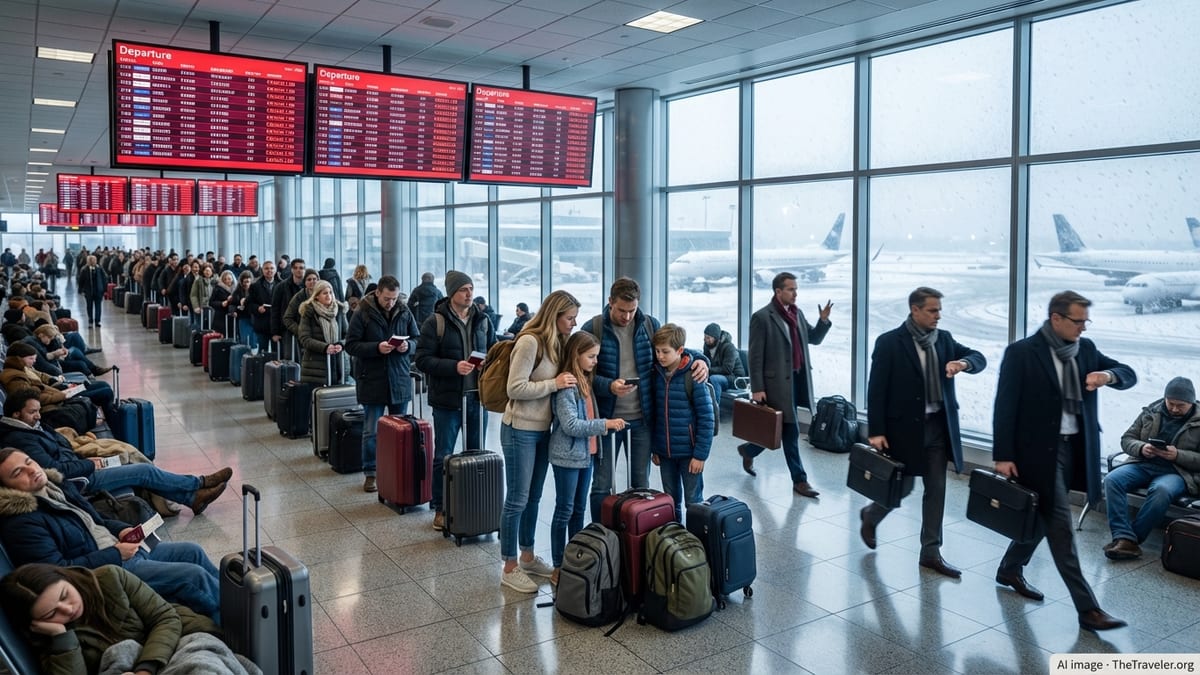
Severe Weather And System Strain Ripple Through BWI
Reports from flight-tracking platforms and regional news coverage indicate that a band of strong thunderstorms moving across the Mid-Atlantic triggered a ground stop at Baltimore/Washington International Thurgood Marshall Airport late Sunday, with disruption spilling into the morning and afternoon of June 15. The halt in departures created a backlog of aircraft and crews that continued to affect schedules after the immediate weather threat eased.
Operational data reviewed on Monday showed a pattern of rolling delays across multiple concourses, with some departures posting pushed-back times of one to three hours. The knock-on effect hit both originating flights from Baltimore and inbound services providing onward connections, a common challenge at BWI, which functions as a busy base for several U.S. carriers.
While the total number of affected flights remained modest compared with nationwide figures for the day, the concentration of delays and a cluster of outright cancellations at a single airport translated into crowded gate areas and long customer-service lines, particularly around the morning and late-afternoon peak periods.
Major U.S. Carriers See Cancellations And Rolling Delays
According to aggregated flight-status boards for June 15, Southwest Airlines, Delta Air Lines, United Airlines and American Airlines each logged disruptions at BWI, combining for at least seven cancellations and 119 delayed flights. The figures include both departures and arrivals and reflect conditions across the operating day rather than a single hour of disruption.
Publicly available historical statistics from the U.S. Department of Transportation show that these carriers collectively account for a significant share of BWI’s scheduled traffic, so even a limited number of cancellations has an outsized impact on total passenger movements. The delays recorded on Monday followed a pattern seen in earlier weather events this year, where airlines managed to keep overall cancellation numbers relatively contained while absorbing extended departure and arrival holds.
Operational experts note that airlines increasingly prioritize delaying flights rather than canceling them outright when there is reasonable expectation that weather and airspace constraints will improve later in the day. That approach can keep more itineraries technically intact but often leaves travelers facing late arrivals, missed connections and unplanned overnight stays.
Popular Leisure Routes To The Caribbean Hit Hard
The disruption at BWI was especially visible on high-demand leisure routes linking Baltimore to sun destinations such as Cancún in Mexico and island gateways in the Caribbean. Published schedules for the summer travel season show nonstop and connecting services from BWI to Cancún, Jamaica, Bermuda and Aruba operated across a mix of carriers and partner airlines, giving the airport an important role as a launch point for beach holidays.
Even when flights to these destinations were not fully canceled, extended delays in Baltimore risked causing travelers to misconnect at other hubs or arrive significantly later than planned at resort areas that rely on specific check-in and transfer windows. Passengers heading for cruises, all-inclusive packages or pre-booked excursions faced particular uncertainty as they weighed the cost of missed activities against the possibility of rebooking or seeking compensation.
Travel industry coverage has highlighted how weather-related congestion at a single origin airport can reverberate along entire vacation corridors. In this instance, late departures from Baltimore translated into delayed arrivals across Mexico and the Caribbean, placing additional strain on local ground-handling operations and hotel transfer services that already operate tightly timed schedules during peak season.
Domestic Links To Chicago, Seattle And New York Also Affected
In addition to the Caribbean and Mexico routes, the June 15 disruption at BWI affected several of the airport’s busiest domestic connections. Baltimore’s published route map includes frequent services to Chicago, Seattle and the New York area, with multiple daily departures spread across major carriers and their regional affiliates.
On Monday, flight-status boards showed staggered departure times to Chicago and New York, with some aircraft departing close to schedule while others remained at the gate awaiting updated wheels-up slots. The imbalance reflected the complex interplay between local weather, congestion at destination airports and broader air traffic control programs in effect across the national airspace system.
Routes to long-haul domestic destinations such as Seattle were particularly vulnerable, since extended delays on a single leg can displace aircraft and crews needed for subsequent transcontinental services. Industry analysis of previous disruption days suggests that such ripple effects can persist for 24 hours or more, even after weather improves, as carriers work to reposition aircraft and crew rosters.
What Stranded Passengers Are Told They Can Do
Consumer advice from travel-industry publications and government resources generally emphasizes that U.S. carriers are not required to provide compensation for delays or cancellations caused by weather. However, airlines may offer meal vouchers, hotel discounts or no-fee rebooking options on a case-by-case basis, particularly when delays stretch into overnight hours or when large groups of passengers are affected on the same route.
Guides for travelers caught in irregular operations recommend that passengers first check their airline’s mobile application or website for live rebooking options, which can sometimes display alternative routings and standby lists before they are announced at the gate. Travelers are also encouraged to keep receipts for food, ground transport and lodging costs in case carriers, credit card issuers or travel insurers later agree to reimburse all or part of the expenses.
At BWI, passenger forums and recent commentary point out that rail links and regional airports in Washington and Philadelphia can offer additional options for those willing to change their plans. In practice, though, many stranded travelers on June 15 appeared to have limited alternatives, given that the same weather pattern was affecting multiple airports along the Eastern Seaboard and into the Midwest, stretching airline and airport resources across a broad geographic area.