


More news on this day
Travelers moving through Phoenix Sky Harbor International Airport faced cascading disruptions after a wave of weather and air traffic issues across the United States led major carriers to cancel 14 flights and delay 226 more, snarling connections to Los Angeles, Dallas, Chicago, Denver, Seattle and other key cities.
Get the latest news straight to your inbox!
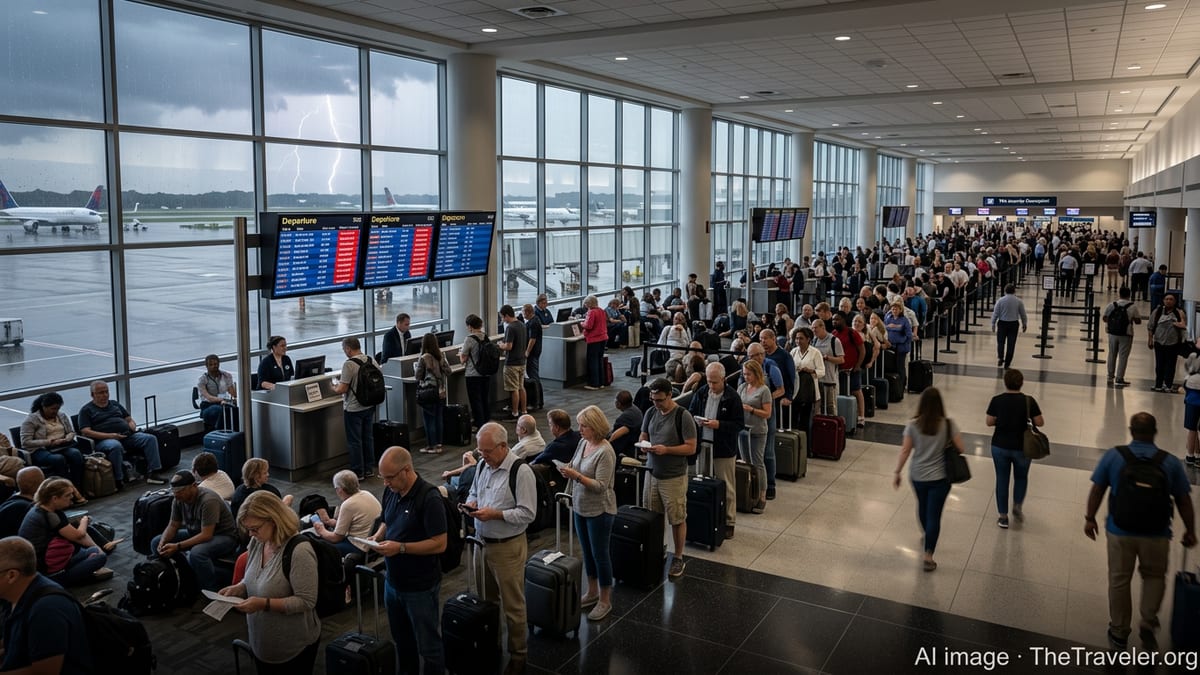
Ripple Effects Hit Major U.S. Hubs
Publicly available flight tracking data for Saturday, June 13, indicates that the disruptions at Phoenix Sky Harbor were largely the result of conditions along the broader national network rather than a localized shutdown in Arizona. While Phoenix itself reported normal operating status for much of the day, knock-on delays from storms and airspace constraints at other hubs translated into late arrivals, missed connections and rolling gate changes for passengers departing or connecting through Phoenix.
The 14 cancellations tied to Phoenix included services operated by American Airlines, Southwest Airlines, Delta Air Lines, United Airlines and Alaska Airlines. Many of the affected flights were scheduled to or from major domestic hubs such as Los Angeles International, Dallas Fort Worth, Chicago O’Hare, Denver International and Seattle Tacoma, amplifying the impact on travelers with onward journeys.
With 226 flights delayed, the disruption was felt across the airport’s busy midmorning and afternoon banks. Passengers reported extended waits at departure gates, long lines at customer service counters and congestion in concourse seating areas as delayed aircraft and crews cycled through tight turnaround windows.
Because Phoenix Sky Harbor functions as a critical connecting point for the southwestern United States, irregular operations at multiple hubs quickly translated into missed connections. Travelers on transcontinental and regional itineraries found themselves rerouted through alternate cities or rebooked for departures later in the weekend.
American, Southwest, Delta, United and Alaska All Affected
Operational data and published airline information show that all five of the large carriers with a significant presence at Phoenix were touched by the disruption. American Airlines and Southwest Airlines, which collectively account for a substantial share of Sky Harbor’s daily departures, were associated with the majority of delayed flights, reflecting both their extensive schedules and their dense networks across weather affected regions.
Delta Air Lines and United Airlines also recorded cancellations and notable delays on routes linking Phoenix with Midwest and Mountain West hubs. Some flights to Chicago and Denver operated well behind schedule after aircraft and crews arrived late from earlier segments held up by thunderstorms and congestion in other parts of the country.
Alaska Airlines, which relies on Phoenix for connectivity to West Coast and Pacific Northwest destinations such as Seattle, also experienced punctuality issues. Even a small number of cancellations and extended delays on those routes created challenges for travelers attempting to connect onward to smaller regional airports in Washington, Oregon and Alaska.
While each airline manages its own recovery strategy, the overlapping nature of the disruptions meant that rebooking options were limited at peak times. Full flights, constrained seat availability and crew duty time limits made it difficult to absorb stranded passengers quickly, prolonging wait times at service counters and kiosks.
Weather, Airspace Constraints and Tight Schedules
Analysts reviewing today’s operations point to a familiar mix of causes behind the Phoenix related disruptions. Storm systems over portions of the central and eastern United States prompted flow control measures, ground delays and reroutes that lengthened flight times and pushed many aircraft off schedule. Even when Phoenix remained under clear skies, flights arriving from or departing to affected regions encountered delays linked to traffic management initiatives and backup at busy hubs.
National performance data from recent Air Travel Consumer Reports highlight how even small percentages of cancellations can translate into thousands of disrupted travelers when applied across large networks. Carriers such as American, Southwest, Delta, United and Alaska typically keep cancellation rates below 1 percent systemwide, but sustained weather events at multiple hubs can cause cancellations and delays to cluster around particular airports and time periods, as seen at Phoenix today.
Industry observers note that tightly timed schedules, high aircraft utilization and strong summer demand reduce the margin for error when irregular operations occur. When an aircraft arrives late into Phoenix from an earlier leg, the delay can cascade into one or more subsequent departures, particularly if there is limited spare capacity to swap in backup aircraft or crews already near their duty limits.
Those network dynamics were visible in the uneven pattern of today’s delays. Some flights departed only a few minutes behind schedule, while others were held for an hour or more as airlines waited for inbound aircraft, completed required maintenance checks or rebalanced their fleets to cover newly cancelled sectors.
Impact on Passengers at Sky Harbor
For passengers, the operational complexity behind the numbers translated into a day of uncertainty at the terminal level. Travelers connecting through Phoenix from Los Angeles, Dallas, Chicago, Denver and Seattle faced a heightened risk of misaligned itineraries, with many forced to sprint between gates or accept last minute rebookings on alternate routes.
Families heading to vacations, business travelers bound for meetings and students returning home for the summer all encountered the same challenge: limited real time information about how quickly the situation would normalize. While airlines updated departure boards and mobile apps throughout the day, the rolling nature of delays made it difficult for some passengers to plan around longer waits or explore alternative options.
Airport services also came under pressure. Food outlets and seating areas in busy concourses remained crowded for prolonged periods as passengers rode out extended holds. Power outlets and charging stations saw heavy use as travelers relied on phones and laptops to monitor status changes and communicate with contacts at destination airports.
Despite the frustrations, airport operations at Phoenix remained largely stable, with security checkpoints and baggage systems functioning normally. The primary pain points for travelers centered on schedule reliability and the knock on effects of missed or heavily delayed connections.
What Travelers Can Expect Next
Based on published forecasts and national air traffic data, aviation analysts expect conditions to gradually stabilize over the next 24 to 48 hours, provided no new large scale weather systems develop over the country’s major hubs. Once the immediate wave of cancellations subsides, airlines typically focus on repositioning aircraft and crews to restore normal schedules, a process that can extend into the following day.
Passengers with itineraries through Phoenix Sky Harbor over the rest of the weekend are likely to see more routine operations than those who traveled during the height of today’s disruption, but some residual delays are possible as carriers clear backlogs and work to match aircraft to their scheduled rotations.
Publicly available guidance from consumer advocates suggests that travelers monitor their flight status frequently on the day of travel, build extra time into connections when flying through hubs with a recent history of thunderstorms or traffic programs, and retain documentation of significant delays or cancellations for potential use in compensation or refund requests under airline policies.
The events at Phoenix Sky Harbor underscore how quickly localized travel plans can be affected by conditions thousands of miles away. Even when skies remain clear over Arizona, the interconnected nature of the U.S. air transport system means that disruptions in cities like Los Angeles, Dallas, Chicago, Denver and Seattle can leave travelers in Phoenix unexpectedly stranded at the gate.