


More news on this day
A powerful late-summer storm system sweeping across southern Ontario on September 2, 2026, triggered a major wave of flight delays and cancellations at Toronto Pearson International Airport, disrupting travel plans for thousands of passengers at Canada’s busiest air hub.
Get the latest news straight to your inbox!
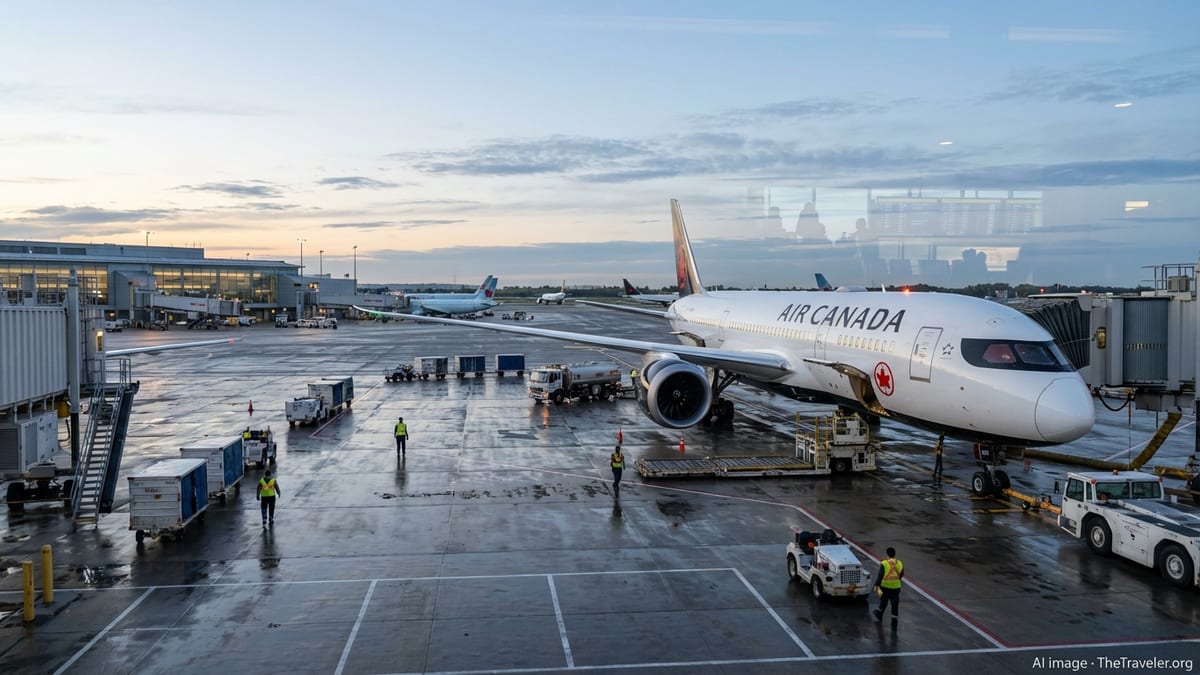
Severe Weather Slams Southern Ontario and Pearson’s Operations
The storm brought torrential rain, large hail and localized flooding to the Greater Toronto Area, darkening skies over the city and causing widespread power outages and infrastructure disruption. Reports describe hail falling on neighbourhoods across Toronto, with streets in some districts briefly transformed into fast-moving streams as runoff overwhelmed drainage systems.
According to published coverage of the event, the harsh conditions contributed to the activation of the City of Toronto’s emergency response mechanisms and created hazardous conditions on roads, with emergency services receiving multiple calls about downed trees and power lines. The same system swept over the airport precinct, introducing lightning risk and reduced visibility at a time when afternoon and evening traffic at Pearson is typically heavy.
Publicly available information from national and regional outlets indicates that the storm’s impact extended to Toronto’s broader transport and entertainment infrastructure, with venues closing early and events cancelled as the weather intensified. The combination of intense rainfall, hail and the threat of severe thunderstorms forced operators across the region to take a cautious approach, which in turn amplified knock-on effects for travellers moving through the city and its main air gateway.
Environment and operations summaries show that the system cut across key flight paths into Toronto, prompting air traffic managers to slow arrivals and departures as cells moved through the terminal area. In these situations, airport ground operations and airlines frequently restrict ramp activity when lightning is detected in the vicinity, which can halt boarding, deplaning and baggage handling until conditions improve.
Hundreds of Flights Delayed or Cancelled at Canada’s Busiest Hub
Data compiled from flight tracking and aviation operations platforms points to substantial disruption at Toronto Pearson on September 2. Industry analysis of air traffic management programs for that date notes that the airport experienced the highest peak average delay among a group of North American hubs affected by weather-related restrictions, with some flights facing delays of several hours as the storm moved through the region.
Specialist aviation coverage focusing on Pearson’s performance during the storm reports that, by the evening peak, more than 130 flights in and out of the airport had been cancelled and close to 400 had been delayed. Those figures reflect both departures and arrivals and are consistent with broader tracking tables that show an elevated number of early-morning cancellations on September 2, particularly on domestic routes linking Toronto with eastern Canadian cities.
These weather-related disruptions compounded pre-existing congestion risk at an airport that regularly handles more than a thousand flights per day. Operational statistics published by Toronto Pearson show that, under normal conditions, a large majority of flights operate on time, with a smaller proportion delayed or cancelled for various reasons. During the storm, however, the share of delayed and cancelled flights spiked significantly compared with typical daily baselines.
The storm’s timing also added complexity. Late-afternoon and evening are busy periods at Pearson, when transcontinental and transatlantic departures mix with short-haul domestic and U.S.-bound flights. As air traffic managers implemented ground delay and related flow-control measures to maintain safety amid thunderstorms and hail, aircraft and crews were held at gates or diverted, creating scheduling challenges that extended into the night.
Cascading Impacts on Airlines, Crews and Connecting Passengers
Public flight-status records from individual carriers and tracking services show a pattern of cancellations and lengthy delays on selected domestic and transborder routes touching Toronto. Some flights scheduled for early morning departure on September 2 were cancelled outright, while others operating later in the day recorded substantial arrival and departure delays as they navigated constrained airspace and weather-related holding.
Ground delay and flow-management programs can rapidly generate ripple effects throughout an airline’s network. When aircraft are held on the ground at origin airports or diverted to alternates to avoid severe weather, aircraft and crews may end up out of position for subsequent segments. According to sector-wide analysis of delay programs for September 2, those dynamics were visible across multiple North American hubs, with Toronto Pearson registering among the highest average delay figures for the day.
For passengers, the operational picture translated into missed connections, extended waits in terminal areas and rebookings onto later services. Traveller accounts shared publicly on social platforms referenced diversions, holding patterns and long queues at customer-service counters as airlines worked through backlogs of disrupted itineraries. While the most intense thunderstorm activity eased later in the evening, residual delays persisted as schedules gradually recovered.
Subsequent overnight and early-morning services on September 3 faced the task of absorbing displaced passengers from the previous day while also operating their planned schedules. Historical experience suggests that such recovery can take several operational waves, especially at a large connecting hub where a significant portion of traffic relies on tight transfer windows.
Operational Safeguards and Passenger Rights Framework
Operational standards published by Toronto Pearson outline how arriving flights and baggage are normally handled, with reference times for aircraft offloading and baggage delivery. These benchmarks explicitly exclude periods of disruptive weather or lightning events that restrict apron access, underscoring how quickly severe storms can alter normal performance expectations, even when airport and airline teams are functioning as designed.
During active thunderstorms or hail, apron safety protocols often require ramp personnel to halt outdoor work, including guiding aircraft, connecting ground power, unloading baggage and operating jet bridges in exposed areas. Such pauses can lengthen turnaround times and force aircraft to hold at remote positions or remain at gates longer than scheduled, reducing the capacity of the airport to process flights until conditions stabilize.
From a passenger perspective, the regulatory framework for delays and cancellations in Canada is shaped by the Air Passenger Protection Regulations and broader provisions under the Canada Transportation Act and international agreements. Guidance from consumer-rights organizations notes that compensation for delays or cancellations caused primarily by weather is more limited than for controllable disruptions, but travellers are still entitled to certain standards of care, such as communication about flight status and assistance with rebooking.
Advisories published by the airport and by travel-assistance services emphasize the importance of monitoring flight status directly with airlines during active weather. Many carriers and the airport itself provide mobile alerts, online trackers and real-time updates that can help passengers adjust arrival times at the terminal, explore alternative routings and confirm whether their flights are operating on revised schedules.
What Travellers Should Watch in the Days Ahead
In the immediate aftermath of the September 2 storm, operational data and airport messaging highlight that “active weather” remained a consideration for Toronto Pearson’s planning. While the most damaging cells moved east of the region overnight, residual weather bands, air-traffic-control flow measures and aircraft positioning continued to influence schedules into September 3.
Travellers scheduled to pass through Pearson in the days following the storm are being urged, through publicly available advisories and travel-industry coverage, to leave extra time for connections and to check flight information frequently. Schedules can change at short notice if further thunderstorms develop along common approach and departure routes or if recovery flights operate outside their typical time slots.
The episode also reinforces longer-term guidance for flying through major hubs during late-summer storm season. Travel experts and airline operational summaries commonly recommend booking longer connection windows, avoiding the last flight of the day on weather-sensitive routes where possible, and using airline apps or airport notification tools to receive real-time updates.
For Toronto Pearson, the September 2 storm will enter a growing body of operational case studies highlighting how severe weather can swiftly reshape the travel experience across an entire region. As climate patterns evolve and episodes of intense rainfall and hail appear with increasing frequency in some areas, airports, airlines and passengers are likely to face similar disruptions again, making preparation and flexible planning an ongoing priority.
Hailstorm Causes Significant Cancellations, Delays at YYZ - Open Jaw
FAA Delay Programmes Hit 19 Airports, With Peak Delays at YYZ
Toronto Pearson Flight Delays and Passenger Rights - AirHelp