


More news on this day
Passengers flying from the UAE are facing another round of disruption as Emirates and Etihad adjust schedules at Dubai International Airport and Abu Dhabi’s Zayed International Airport amid renewed regional tensions that are affecting Gulf airspace and pushing up delays and selective cancellations.
Get the latest news straight to your inbox!
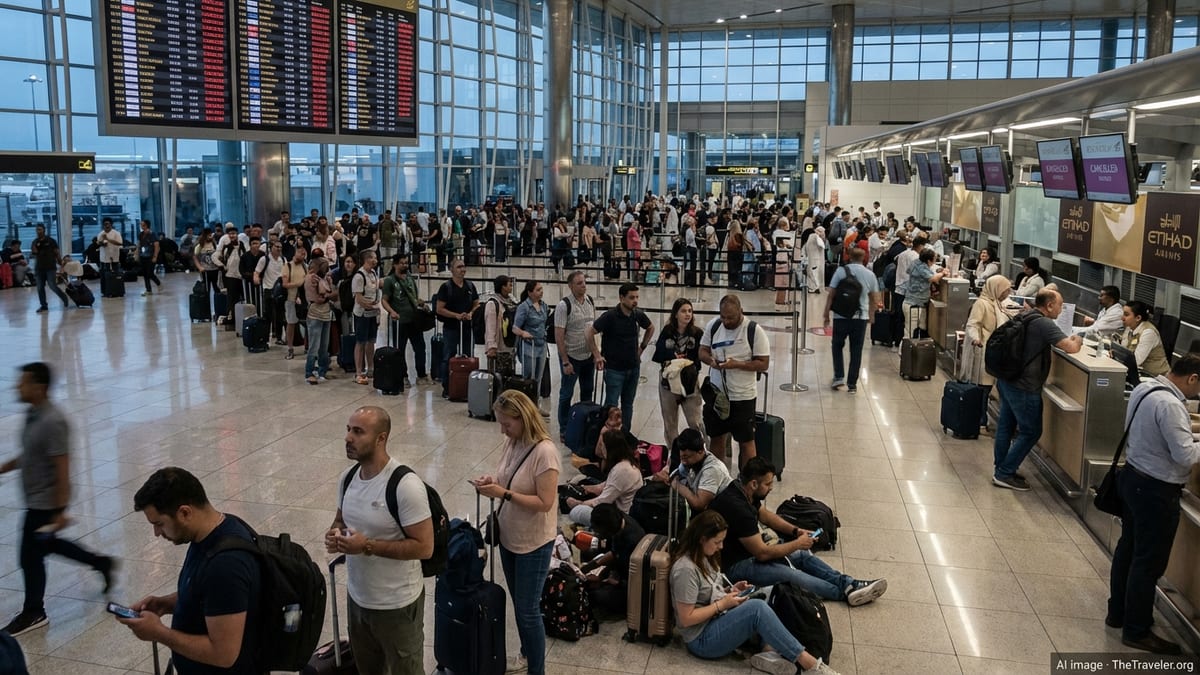
Fresh delays at Dubai and Abu Dhabi hubs
Published coverage indicates that flights at Dubai and Abu Dhabi are again running behind schedule, with aviation trackers and airport advisories showing a growing list of delayed departures and arrivals for Emirates, Etihad and several regional carriers. While most services continue to operate, the overall flow through the hubs remains under strain as airlines rework routings and departure times in response to evolving security conditions in surrounding airspace.
Reports from local media describe a mixed picture for travellers, with some flights operating broadly on time while others are pushed back by one or more hours, and a smaller number cancelled outright. According to recent summaries of airport operations, Emirates and Etihad continue to maintain the bulk of their long-haul networks, but schedules to and from nearby Gulf destinations such as Bahrain and Kuwait remain particularly vulnerable to late changes, reflecting heightened sensitivity around those corridors.
Despite the disruption, publicly available airport data suggests that the UAE’s major gateways are functioning and open, and that the delays are being managed within existing infrastructure. The impact is being felt most acutely by passengers with tight connections or complex itineraries, many of whom are having to accept rebooked routings, longer layovers or overnight stops when missed connections can no longer be protected.
Regional tensions reshape Gulf airspace
Recent reporting links the latest wave of schedule changes to renewed tensions between the United States and Iran, with strikes and retaliatory actions across parts of the region prompting airlines to adjust flight paths and timings. Aviation coverage notes that airspace over Iran, Iraq and parts of Lebanon remains constrained or subject to heightened risk assessments, forcing carriers to route around key corridors that are normally central to east–west traffic flows.
According to regional business outlets, Emirates, Etihad, flydubai and Air Arabia have all issued customer updates in recent weeks outlining cancellations or rerouting on services touching Bahrain and Kuwait, where local infrastructure has been impacted by the security situation. These advisories emphasize that operations to many long-haul markets in Europe, Asia and Africa continue, but acknowledge that flight times may be extended and that same-day connectivity is more fragile than usual.
Aviation analysts quoted in industry coverage point out that the Gulf carriers are accustomed to managing around airspace constraints, but that the current combination of security restrictions and peak-season demand leaves little slack in schedules. This amplifies the knock-on effect of each individual delay, turning short holds at departure into missed connections further down the line and contributing to the sense of rolling disruption for travellers.
How Emirates and Etihad are adjusting schedules
Publicly available information from airline websites and flight-status tools shows that both Emirates and Etihad are making targeted adjustments rather than across-the-board cuts. Emirates continues to operate its core trunk routes linking Dubai with major cities in Europe, Asia and Africa, while selectively cancelling or retiming some regional sectors where airspace or airport conditions are less predictable.
Etihad’s network displays a similar pattern, with an emphasis on maintaining connectivity from Abu Dhabi to its principal long-haul destinations while extending or adding cancellations on certain short-haul Gulf services. Earlier this summer, the airline temporarily halted selected Kuwait flights and reduced services to Bahrain, and recent travel updates and tracking data indicate that ad hoc delays and schedule changes on these routes remain a feature of daily operations.
Airport advisories from Abu Dhabi and Dubai highlight that both hubs are open and operational, with airlines responsible for communicating any changes directly to passengers. Travel guidance published for Abu Dhabi, for example, encourages visitors to check their flight status through airline apps or websites before leaving for the airport and to keep contact details up to date so that disruption alerts can be delivered promptly.
What passengers flying through the UAE should expect
For travellers, the immediate impact of these disruptions is most visible at check-in desks and departure boards, where revised timings and gate changes have become more common. Published coverage suggests that many delays are measured in one to several hours rather than in full-day blocks, but such shifts can still be significant for those relying on onward connections, particularly when minimum transfer times are already tight.
Consumer reports and travel forums show a wide range of experiences, from relatively smooth journeys with only minor schedule tweaks to more challenging itineraries involving missed connections and overnight stays. While airlines typically offer rebooking and, in some cases, accommodation or meal support in line with fare rules and local regulations, passengers are often advised by travel experts to build in extra time and to monitor their bookings closely.
Industry commentary also notes that pricing and capacity may remain volatile while airspace restrictions persist. Longer routings increase operating costs and reduce aircraft availability for additional frequencies, which can translate into higher fares on popular routes and fewer last-minute seats for travellers hoping to adjust plans after disruption has occurred.
Practical guidance for current and upcoming trips
Travel advisories focused on the UAE consistently recommend that passengers flying with Emirates, Etihad or other regional carriers take a proactive approach to managing their journeys. This includes checking real-time flight status before leaving for the airport, using airline mobile apps for notifications, and confirming that email and phone contact details within the booking are current.
Experts also suggest allowing extra buffer time for security and check-in at busy periods, especially on days when regional tensions spur further airspace adjustments. Where possible, travellers with onward connections may benefit from selecting slightly longer layovers to accommodate potential delays on the first leg, reducing the risk of missed connections and last-minute rerouting.
Those with travel in the coming days and weeks are being encouraged, via publicly available guidance, to stay informed through official airline and airport channels rather than relying solely on social media or informal commentary. While the situation remains fluid, the overarching picture from multiple sources is of UAE hubs that are still functioning as major global connectors, albeit with an elevated risk of changes at short notice that savvy travellers will need to factor into their plans.
TheTraveler.org: UAE flights disrupted as Emirates and Etihad face new delays
Gulf News: UAE flight update amid Iran tensions