


More news on this day
A powerful storm system sweeping across key air corridors has disrupted commercial aviation once again, with around 2,200 flights canceled or significantly delayed and tens of thousands of passengers stranded at airports across the United States and beyond.
Get the latest news straight to your inbox!
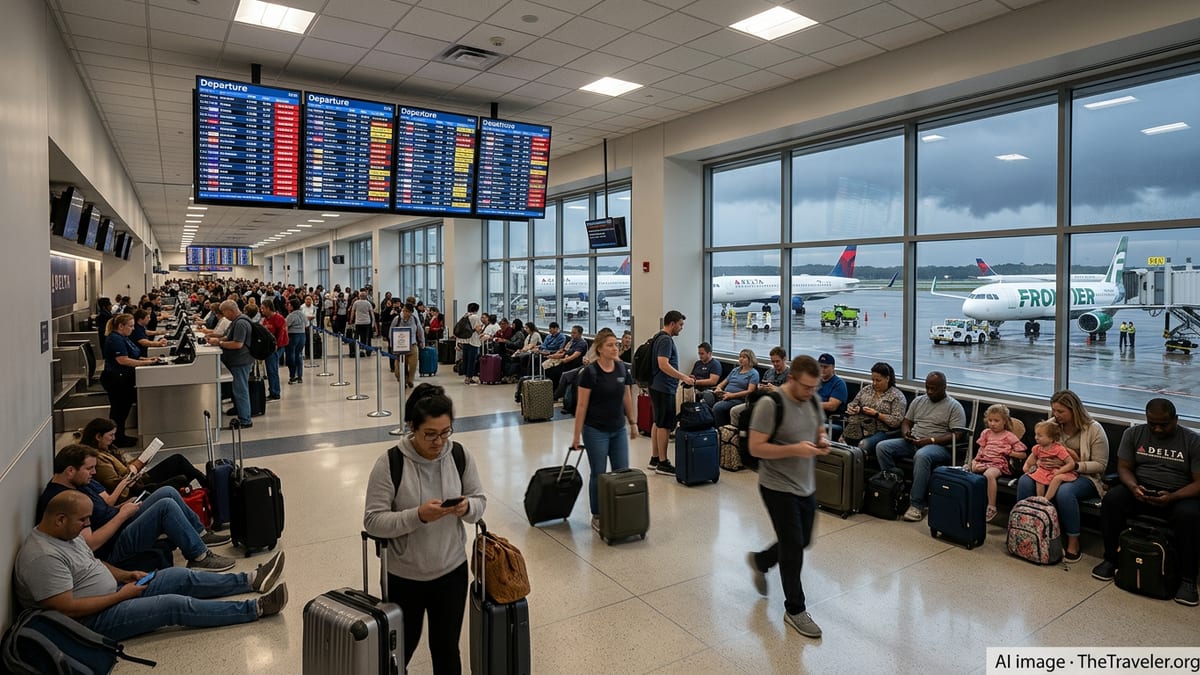
Where the storm hit hardest and why flights collapsed so quickly
Recent severe weather has underlined how vulnerable modern air travel remains to fast-moving storms. Winter storms earlier in 2026 triggered thousands of cancellations across North America, with major hubs in the Northeast and Midwest particularly exposed to snow, ice, and high winds. Published coverage of those events shows that once conditions deteriorate at a handful of large airports, knock-on effects ripple through the entire network, even in places with clear skies.
The latest round of disruption followed a similar pattern. When storms cross densely trafficked corridors, airlines must reduce the number of takeoffs and landings per hour for safety. That quickly creates a backlog of aircraft and crews, forcing carriers to cancel flights outright rather than shuffle delays indefinitely. Publicly available tracking data frequently shows secondary waves of cancellations the following day as planes and staff remain out of position.
Airports that serve as critical hubs feel the worst of it. When operations slow at a major connecting airport, passengers on multi-leg itineraries may see all subsequent segments fall apart at once. Even regional airports, which might only see a few cancellations listed on departure boards, can end up cut off for hours if inbound aircraft never arrive.
For travelers, the headline number of roughly 2,200 grounded flights means far more individual journeys affected. Each cancellation can displace hundreds of passengers, many of whom are competing for a limited number of alternative seats on already crowded routes.
First steps for stranded travelers at the airport
Once a storm-triggered cancellation hits a traveler’s itinerary, the first priority is securing a new way to reach the destination. Airlines often rebook passengers automatically, but those new flights may be days away or routed through already stressed hubs. Acting quickly can significantly improve the odds of getting a workable alternative.
Travel analysts recommend using multiple channels at once. Passengers can line up at a staffed service desk while also using an airline’s mobile app or website to search for open seats. Many carriers now allow customers to change canceled or heavily delayed flights online at no extra cost when disruptions are weather-related. For those already at the airport, seeking out smaller customer service counters away from the main hub of activity can shorten waiting times.
Contact centers may be overwhelmed during major storms, but calling an airline’s international help line, where available, is sometimes faster than dialing a domestic number. Some travelers also report success engaging with carriers through official social media accounts, which are often staffed by teams trained to handle rebookings during large-scale disruptions.
While working on rebooking, passengers should protect themselves from additional stress by securing basic necessities. That means confirming access to food, charging points, and a safe place to wait. Airport seating fills quickly when many flights are canceled, so it can be worth moving to less crowded concourses or gate areas once a new plan is in motion.
Know your rights on refunds, vouchers, and hotel coverage
One of the most confusing aspects of storm-related disruptions is the question of what airlines must do for stranded customers. In the United States, weather problems are generally categorized as outside an airline’s control, which limits formal obligations for compensation. However, publicly available information from consumer advocates shows that passengers still have important rights.
If a flight is canceled and a traveler decides not to take the trip at all, they are typically entitled to a full refund of the unused portion of the ticket, even on nonrefundable fares, when traveling on a U.S. carrier or from a U.S. airport. That refund usually covers any seat selection or baggage fees tied directly to the canceled segment. Opting for a refund instead of a rebooking can make sense for those whose plans no longer work after the disruption.
Hotel and meal vouchers are less straightforward. In weather events, airlines often state that they are not required to pay for accommodation or food because the cause lies beyond their control. Some carriers still provide limited assistance on a case-by-case basis, particularly for travelers who are far from home or facing overnight delays. Passengers who hold elite status, travel on flexible business fares, or carry certain premium credit cards may have better access to hotel coverage or travel insurance benefits.
Travel insurance can play a crucial role in longer disruptions. Policies that include trip interruption and delay coverage may reimburse hotel, meal, and ground transportation costs once delays exceed a specified threshold, often six to twelve hours. To claim these benefits, travelers should keep all receipts, document the airline’s cancellation notices, and note the length and cause of the delay as described in public airline communications.
Rebooking smartly: rerouting, nearby airports, and ground options
When tens of thousands of passengers are suddenly competing for new seats, flexibility becomes a valuable asset. According to industry data from previous major storms, travelers who accept creative itineraries are more likely to arrive near their original schedule than those who insist on direct, nonstop alternatives.
Flying through an alternate hub can open up new possibilities, even if it looks less direct on paper. For instance, a traveler originally booked on a route through a storm-affected northern hub might reach their destination sooner by connecting through a southern airport with minimal weather impact. In some cases, asking an agent to route via a partner airline can uncover seats that are not visible in basic online tools.
Considering nearby airports is another effective tactic. Large metropolitan areas often have multiple commercial airports, and seats may be available into or out of an alternative field when the main hub is sold out. Travelers willing to take a short train, rideshare, or bus ride can greatly expand their options by searching within a broad radius of their original origin or destination.
For shorter trips, abandoning the skies entirely may make sense. Bus and rail operators frequently add extra capacity during major storms once it is safe to operate, and rental car agencies sometimes relax one-way restrictions to help clear backlogs. Before committing to a long drive in winter weather, however, travelers must heed local advisories and avoid dangerous road conditions that may linger even after flights begin to resume.
How to prepare for the next storm-driven meltdown
While no traveler can control the weather, preparation can lessen the impact of future disruptions. Data from recent winter seasons shows that large holiday periods and peak school vacation weeks see the most severe cascading effects when storms hit, simply because flights are already full. Avoiding the busiest days where possible can improve the chances of finding alternative seats if conditions deteriorate.
Booking earlier flights in the day gives passengers a wider range of fallback options if cancellations begin. Once evening arrives, schedules tighten, crews time out under safety rules, and overnight delays become more likely. Selecting longer connection times between flights can also create extra margin when the first segment departs late due to deicing or air traffic control restrictions.
Travelers can also protect themselves by packing strategically. Keeping medications, chargers, a change of clothes, and essential toiletries in carry-on luggage reduces dependence on checked bags that might be stuck on a grounded aircraft. Portable battery packs and downloaded boarding passes help prevent technology failures from compounding weather issues.
Finally, monitoring forecasts and airline alerts in the days before departure allows travelers to adjust plans ahead of the crowds. When a major storm appears certain to hit, some airlines introduce flexible change policies that permit free rebooking in advance. Moving a trip by a day or two can mean the difference between a routine travel day and being stuck in an airport overnight as another wave of 2,200 grounded flights ripples through the system.