


More news on this day
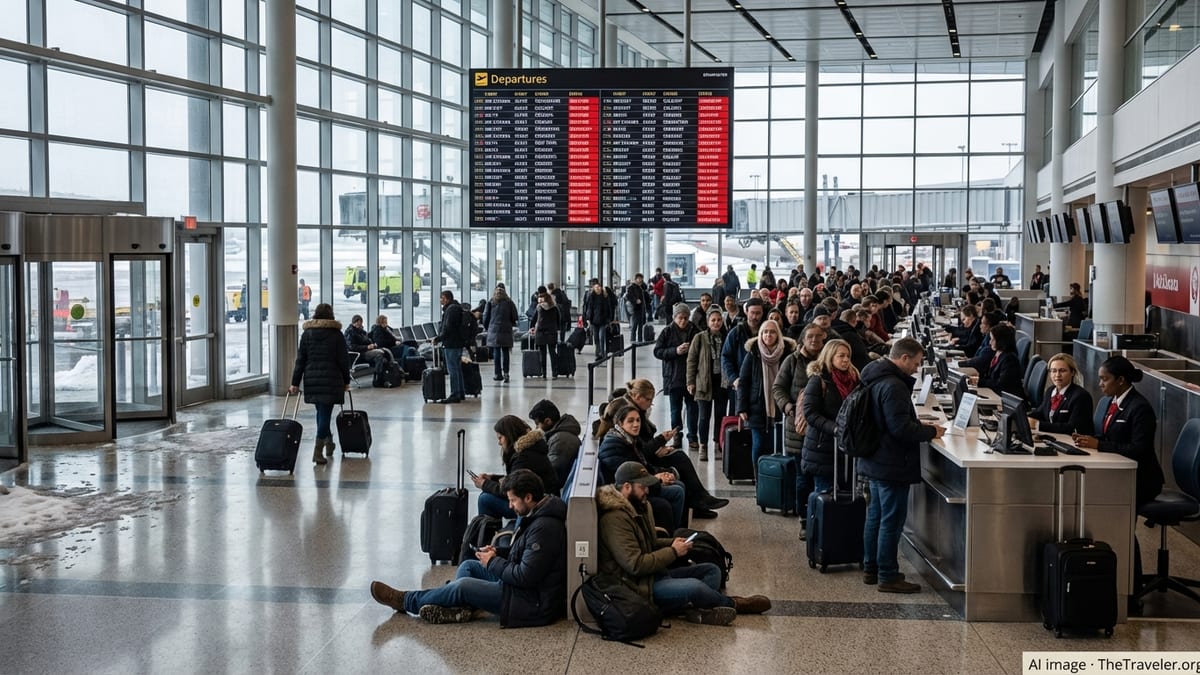
Thousands of airline passengers across Canada faced long lines, missed connections and overnight airport stays after a wave of cancellations and delays rippled through major hubs from Calgary to Montreal and Toronto.
Get the latest news straight to your inbox!
Weather And Operational Strains Trigger Widespread Disruptions
Publicly available flight tracking data for Saturday shows more than one hundred flights listed as cancelled and several hundred more delayed at Canadian airports, with the heaviest impacts concentrated in Toronto, Montreal, Calgary, Winnipeg and Quebec City. The disruption spans a mix of domestic and international services, affecting both mainline and regional routes.
Reports indicate that a combination of adverse weather systems and ongoing operational constraints has squeezed airline schedules. Winter-style conditions in parts of the country, including snow, freezing rain and strong winds earlier in the week, have forced crews to work through extended de-icing procedures and occasional ground holds, slowing airport throughput and leaving aircraft and personnel out of position for subsequent departures.
According to aggregated aviation data, Canadian carriers trimmed frequencies ahead of the worst of the conditions to preserve core operations, but knock-on effects have continued into the weekend. Once aircraft and crews fall out of their planned rotations, delays tend to compound through the day, ultimately contributing to outright cancellations when duty-time limits or airport curfews are reached.
The picture has been complicated further by the broader cost and capacity environment. Recent published coverage has highlighted how higher fuel prices and tight staffing have already pushed airlines to adjust schedules on certain routes, leaving less resilience when weather or technical issues arise.
Major Hubs From Toronto To Calgary Feel The Strain
Toronto Pearson and Montreal Trudeau, Canada’s two busiest international gateways, recorded the largest raw numbers of disrupted flights, with scores of departures and arrivals posted as delayed on terminal information boards. Travellers on popular transcontinental routes, as well as cross-border services to major U.S. cities, reported wait times stretching several hours beyond scheduled departure.
In Western Canada, Calgary International Airport faced a similar pattern as morning disruptions cascaded into the afternoon. Calgary is a key hub for both Air Canada and WestJet, and when operations there slow, the effects are quickly felt across secondary cities such as Winnipeg, Edmonton and smaller prairie markets that rely on connecting traffic.
Quebec City and Winnipeg, while smaller than the country’s primary hubs, also saw a disproportionate share of late-running flights relative to their usual daily volume. Passengers on regional services reported multiple schedule changes as airlines attempted to consolidate lightly loaded flights and free up aircraft for busier corridors.
Flight-tracking platforms show that many of Saturday’s disruption hotspots correspond to airports that have recently been operating near or at pre-pandemic traffic levels. Industry analysts note that high utilization of runways, gates and ground crews leaves limited margin when even minor weather or technical interruptions occur.
Air Canada, WestJet, Porter And International Carriers Affected
The disruptions have touched nearly every major airline operating in the Canadian market. Air Canada, the country’s largest carrier, recorded the highest number of affected flights simply by virtue of its scale, including delays and cancellations on transcontinental services and U.S.-bound transborder routes. Regional operations flying under partner brands have also experienced knock-on delays where aircraft and crews could not be repositioned on time.
WestJet’s network, heavily centered on Calgary, has been particularly sensitive to slowdowns at that hub. Previous schedule adjustments announced for later in the year highlight how the airline has been managing capacity amid higher fuel costs, and Saturday’s irregular operations show how delicate that balance can be when additional strain is introduced.
Porter Airlines, which has been in expansion mode from eastern Canadian cities including Toronto and Montreal, also appears among the list of carriers with disrupted operations. With a growing mix of short- and medium-haul routes, any delay early in the day can cascade across multiple round trips by evening.
International carriers serving Canadian gateways, including large transatlantic brands, have not been immune. Several long-haul services operated with delayed departures or arrivals as crews awaited connecting passengers and late-arriving aircraft, while a small number of flights were cancelled outright when schedules could no longer be recovered.
Knock-On Impacts For Stranded Passengers
For passengers, the operational statistics translate into crowded terminals, long customer-service queues and, in many cases, unexpected overnight stays. Social media posts from travellers in Toronto, Montreal and Calgary describe lines that stretched through check-in halls as customers sought rebooking options after missed connections or cancelled flights.
Publicly available guidance from airlines and consumer advocates reiterates that travellers affected by same-day cancellations or long delays should first verify whether their disruption is attributed to weather, air traffic control restrictions or airline-controlled issues such as crew or maintenance. The cause can influence what assistance is offered, ranging from meal vouchers and hotel stays to rebooking on alternative flights.
Airlines’ online and mobile tools have played a central role in easing pressure on airport counters. Many carriers encourage customers to confirm flight status before heading to the airport and to use digital channels to accept automatic rebooking or search for alternative itineraries. Nonetheless, for complex journeys involving multiple airlines or international destinations, in-person assistance can still be necessary.
Travel insurers and independent advisory services note that passengers on non-refundable tickets may still have avenues for recourse if their journey is significantly disrupted. Policy terms vary, but long delays and cancellations can in some cases trigger eligibility for reimbursement of additional accommodation, meals or replacement transport, especially when travel is for time-sensitive purposes.
What Travellers Can Expect In The Coming Days
Operational updates from airlines and airport authorities suggest that recovery efforts will continue into the next several days as carriers work to reposition aircraft and crews and clear backlogs of displaced passengers. Even as weather systems move on, the effects of one badly disrupted day can linger, particularly on routes with limited daily frequencies.
Industry observers note that Canadian carriers have recently been juggling several simultaneous challenges, including volatile fuel costs, evolving demand patterns on leisure and business routes, and ongoing staffing needs in pilot, cabin crew and ground operations roles. These factors make it more complicated to add spare capacity that could cushion the impact of extreme weather days.
For travellers planning trips in the near term, publicly available advice emphasizes building more flexibility into itineraries. This can include choosing earlier flights in the day where possible, allowing extra connection time at busy hubs, and monitoring weather forecasts for departure and arrival cities during seasons when storms or extreme cold are more common.
While Saturday’s figures of more than 100 cancellations and over 500 delays are significant, data from past travel seasons shows that such disruption spikes are not unprecedented when severe weather intersects with peak travel periods. The latest events serve as another reminder of how tightly coupled Canada’s air network has become and how quickly strain in a few key airports can ripple across an entire country.