


Plaça de Catalunya is where most Barcelona trips truly begin. It is the city’s transport hub, shopping crossroads, and meeting point between the Gothic Quarter and the elegant Eixample. It can also feel overwhelming: airport buses, metro lines, tour groups, street performers, pickpockets, and impatient taxis all compete for your attention. With a bit of planning, however, Plaça de Catalunya can be a relaxed anchor for your visit rather than a stressful blur you rush through on the way to somewhere else.
Get the latest updates straight to your inbox!
Understand Plaça de Catalunya’s Role in Your Trip
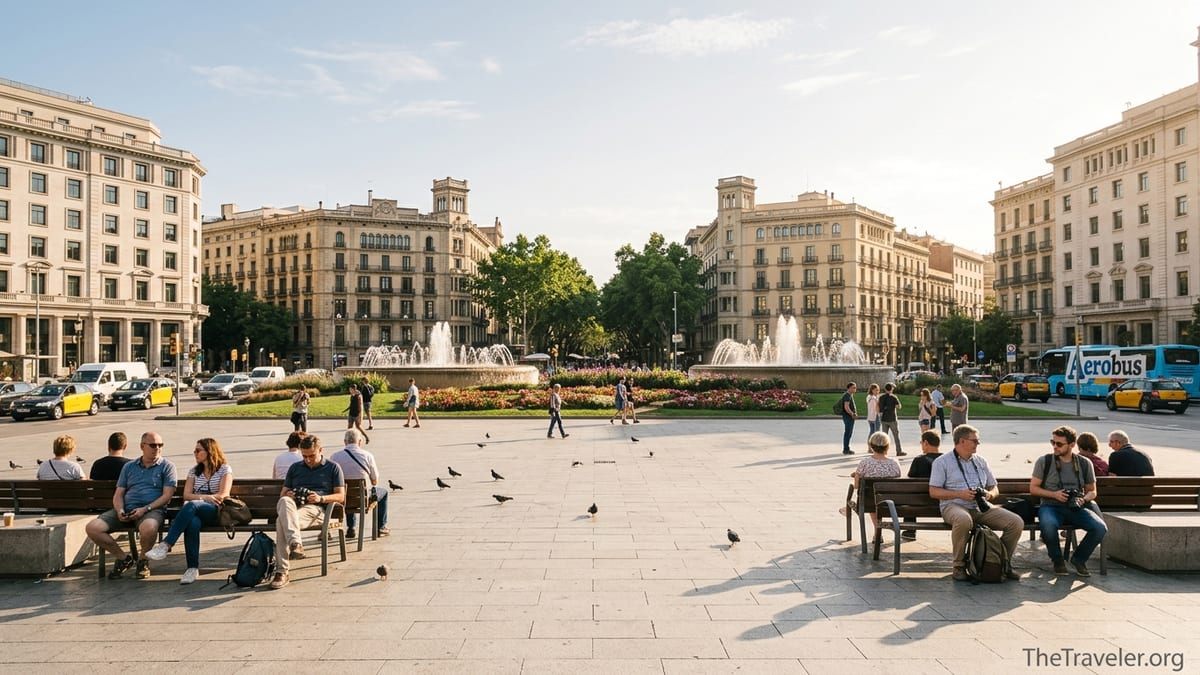
Plaça de Catalunya is widely considered the heart of Barcelona and the spot where the old city meets the 19th century Eixample grid. Major avenues like La Rambla, Passeig de Gràcia, Rambla de Catalunya and Portal de l’Àngel all radiate from this one space, which means crowds are almost constant. Going in with realistic expectations that this is a functional hub, not a quiet square, immediately lowers the pressure to “see everything” here in one frantic dash.
Think of Plaça de Catalunya as your orientation point rather than a standalone attraction. On a three day visit, you might pass through the square half a dozen times: arriving on the Aerobus from the airport, changing between metro lines L1 and L3, joining a city walking tour, or meeting friends before heading into El Raval or the Gothic Quarter. Accepting that you will naturally cross the plaza many times makes it easier to slow down each time and notice something new, instead of trying to cram every task and selfie into your very first visit.
Many travelers book hotels within a five to ten minute walk of the plaza, especially along Rambla de Catalunya or around Universitat. This means you can drop shopping bags at your room, take a short siesta, or change clothes for dinner without feeling that you are losing valuable sightseeing time. For example, staying in a mid range hotel just off Passeig de Gràcia often costs less than a luxury property on La Rambla, yet you still enjoy a quick stroll back to Plaça de Catalunya whenever you need a reset.
Time Your Visits to Avoid the Frenzy
The atmosphere at Plaça de Catalunya changes dramatically during the day. Early morning, roughly from 7:30 to 9:00, is when locals stream through on their way to work, but tour buses have not fully arrived and the sun is still low. If you walk the square at this hour you can photograph the fountains and statues with softer light and fewer people, then slip into a nearby cafe such as a traditional granja on Carrer de Pelai for a quiet cortado and a slice of Catalan coca before the rush begins.
Late afternoon, from about 4:30 to 6:30, often feels the most hectic. Shoppers pour out of nearby department stores like El Corte Inglés, commuters change lines in the underground station, and tour groups gather near the big fountains. If your schedule is flexible, use this time for something calmer slightly away from the plaza, like exploring the interior courtyards of the Eixample blocks along Rambla de Catalunya or enjoying a long merienda in a side street cafe. Come back to the square after 7:30 in summer, when the heat softens and families, skaters, and couples linger around the benches.
Nighttime at Plaça de Catalunya is not necessarily quieter, but it is more atmospheric. The fountains are lit, city buses still arrive, and the Aerobus continues late into the night, yet the mood is less rushed. If you land on a late flight, for instance, arriving around 11 p.m. on the Aerobus means you step into a square that is alive but not frantic. You can sit for ten minutes by the central flower beds to breathe and listen to the sounds of the city before heading to your hotel, instead of racing immediately through the crowds with your suitcase.
Use the Square as a Calm Transport Hub
One of the main reasons Plaça de Catalunya feels overwhelming is that so many journeys start and end here. The airport shuttle bus, Aerobus, runs between both terminals at El Prat and the square every day of the year, typically every 5 to 10 minutes during most daytime hours. A one way ticket costs under 10 euros and can be bought from machines at the stop or directly from the driver. Knowing this in advance helps you avoid scrambling for taxis, especially after a long flight, and turns your arrival into a predictable, almost relaxing routine.
The underground station beneath the plaza connects metro lines like L1 and L3 with various suburban railways. It is easy to feel lost in the maze of corridors and escalators if you dive straight in during rush hour. To keep the experience calm, look for the large color coded line maps at street level before you descend, and decide exactly which entrance matches your direction. For example, if you are heading to the Sagrada Família, entering at the corner closest to Passeig de Gràcia and transferring calmly to line L2 at Passeig de Gràcia station will usually be less stressful than improvising connections in crowded tunnels.
City and intercity buses also stop along the edges of the plaza. If you are planning a day trip to nearby towns like Montserrat or Girona using regional coaches, arrive 15 to 20 minutes early and locate the precise bay before the departure time printed on your ticket. That buffer allows you to stretch, buy a bottle of water at a kiosk, and use the public restrooms, rather than sprinting across the square at the last minute. A small time cushion is one of the simplest ways to transform Plaça de Catalunya from a chaotic obstacle into a smooth stepping stone.
Slow Down With Views, Cafes, and People Watching
Plaça de Catalunya rewards anyone willing to pause. One of the easiest ways to take a break is to head up to the cafe on the upper floors of El Corte Inglés. Even if you only order a coffee or a simple menu del dia lunch, you get a broad window view over the entire plaza, the beginning of La Rambla, and the distant hills of Montjuïc. Spending 45 minutes here between sightseeing stops can feel like a mini retreat above the crowds, giving you time to review your photos, plan your next walk, and enjoy the air conditioning on a hot day.
At ground level, move just a block or two off the main traffic flows to find calmer terraces. On Rambla de Catalunya, which begins at the plaza and runs uphill, you will find a central pedestrian strip shaded by trees and lined with cafe terraces. Prices here are often slightly higher than in more residential neighborhoods, but you are paying for the space and the calm. Ordering a seasonal juice or a glass of local vermut and spending half an hour simply watching Barcelonians walk their dogs or meet friends will anchor you far more than rushing from photo spot to photo spot.
The square itself also has plenty of seating if you know where to look. Benches ring the fountains and flower beds, and the wide central space fills with pigeons, skaters, and buskers. Choose a spot with a clear line of sight to your next destination, such as the entrance to Portal de l’Àngel if you plan to go shopping, and give yourself ten minutes to sit without an agenda. You may notice small details, like the modernist reliefs on nearby buildings or the rhythm of the traffic lights, which you would completely miss while moving at full speed.
Plan Short, Focused Walks From the Plaza
Because so many of Barcelona’s key streets radiate from Plaça de Catalunya, the temptation is to try to do everything in a single sprawling loop. A more relaxed strategy is to design short, focused walks that each have a clear theme and duration. For example, you might dedicate one morning to a gentle stroll down La Rambla from the plaza to the Columbus Monument, with planned stops at La Boqueria market and the side streets of the Gothic Quarter, then return to your hotel for a rest before tackling another area.
On another day, start again at Plaça de Catalunya and head up Passeig de Gràcia, where the first ten to fifteen minutes of walking bring you past flagship fashion houses, elegant modernist lampposts, and eventually two of Gaudí’s masterworks, Casa Batlló and La Pedrera. Instead of racing between them, choose just one to visit properly with pre booked tickets and allow time for a leisurely coffee in between, perhaps on a side street like Carrer de Valencia, which is generally calmer than the main avenue itself.
A third, more local feeling route runs along Rambla de Catalunya, parallel to Passeig de Gràcia but less formal. Here, the focus is on independent boutiques, wine bars, and neighborhood restaurants with outdoor terraces. You could easily spend a late afternoon walking only as far as Diagonal, stopping for tapas at a sidewalk table and then returning by the same route as the evening lights come on. Each of these walks starts and ends at Plaça de Catalunya, yet none requires more than two to three hours, which keeps your energy level steady and prevents the square from feeling like an exhausting transit point.
Take Advantage of Tourist Services Without Losing Time
Underneath one corner of Plaça de Catalunya you will find Barcelona’s main tourist information office, run by the city’s tourism board. The staff there can sell you transport passes such as the Hola Barcelona Travel Card, book official walking tours, and provide free city maps. Stopping here once, ideally early in your stay, allows you to gather everything you need in a single calm visit instead of queuing repeatedly at metro machines or last minute ticket counters across the city.
If you plan to use public transport heavily for two or more days, buying a transport card in the office before you start sightseeing saves both money and mental energy. For instance, instead of calculating single ticket prices each time you board the metro from Plaça de Catalunya to Sagrada Família, Barceloneta, or Sants, you simply tap your card and go. Over a typical three day trip, this can easily mean ten or more rides where you are not fumbling for coins or credit cards, which reduces that rushed feeling every time you enter the station.
The same office is also handy for making last minute adjustments to your plans. A staff member can advise you on current opening hours, events near the square, or temporary changes to bus routes that might affect your day trip. Imagine you had planned to take a regional train from the nearby Passeig de Gràcia station to Girona, but you wake up to rain and crowds. A quick stop at the tourist office might reveal a contemporary art exhibition a short walk away or a food tour leaving from the plaza within the hour, allowing you to pivot without stress while still basing yourself around Plaça de Catalunya.
Stay Safe and Present in a Busy Environment
As with any crowded urban square, Plaça de Catalunya attracts pickpockets who target distracted visitors, especially around the entrances to the metro and the airport buses. The goal is not to move through the area in fear, but to adopt calm, simple habits so you can stay present instead of constantly worrying. Use a cross body bag that zips fully, keep your phone in a front pocket when walking, and avoid spreading your belongings across benches or cafe tables while you check maps or take photos.
When you arrive with luggage, especially on the Aerobus, resist the urge to stand in the middle of the plaza with your bags wide open while you search for hotel details. Instead, roll your suitcase to a quieter corner or into the lobby of a nearby cafe and reorganize there. This makes you a less obvious target and also feels more composed. Many travelers remember their first half hour in Barcelona as a blur of taxi honks and hurried conversations, but a simple pause in a sheltered spot can turn that same moment into a deliberate start of the trip.
It is also worth setting expectations about demonstrations or public gatherings. As a central civic space, Plaça de Catalunya occasionally hosts rallies, cultural events, or celebrations that can increase noise and crowding. If you encounter one unexpectedly, treat it as part of the city’s living culture rather than a problem you must push through. Step back to a side street, observe from a comfortable distance for a few minutes, and then either join the activity if it interests you or detour via nearby streets such as Ronda de Sant Pere or Carrer de Fontanella to continue your day in a calmer frame of mind.
The Takeaway
Experiencing Plaça de Catalunya without feeling rushed is less about discovering hidden secrets and more about changing how you use the square. See it as your compass point, not a checklist item. Build in small buffers of time around your arrivals and departures, use services like the tourist office and airport bus strategically, and let yourself enjoy pauses in cafes, on benches, and along the tree lined side streets that radiate from the plaza.
With this mindset, the constant movement around Plaça de Catalunya becomes part of the charm rather than a source of stress. You will remember not just crossing the square on your way somewhere else, but sitting above it with a coffee, setting out from it on slow themed walks, and returning to it as a familiar landmark at the end of each day. In a city famous for leisurely late dinners and long seaside strolls, even its busiest square can become a place to breathe.
FAQ
Q1. What is the best time of day to visit Plaça de Catalunya to avoid crowds?
Early morning, roughly between 7:30 and 9:00, and later in the evening after about 7:30 tend to feel calmer, with softer light and fewer tour groups.
Q2. Is it better to stay in a hotel directly on Plaça de Catalunya or a few blocks away?
Many travelers find it more relaxing to stay a five to ten minute walk away, for example along Rambla de Catalunya or near Universitat, where streets are quieter but the plaza is still very close.
Q3. How long should I plan to spend in and around Plaça de Catalunya?
You do not need to dedicate a full day to the square itself. Plan one or two short visits of 30 to 60 minutes for photos and people watching, then use it mainly as a base for walks to nearby neighborhoods.
Q4. Is Plaça de Catalunya safe, especially with luggage?
The area is generally safe, but pickpocketing can occur in crowds. Keep bags zipped, stay aware around metro entrances and bus stops, and step to a quieter corner before checking your phone or documents.
Q5. What is the easiest way to get from Barcelona airport to Plaça de Catalunya without stress?
The Aerobus airport shuttle runs frequently between both airport terminals and the square, with a journey of around 35 minutes and simple ticket purchase from machines or the driver.
Q6. Are there good viewpoints of Plaça de Catalunya without paying for an attraction?
Yes. The cafe and food court areas on the upper levels of the nearby department stores offer broad window views of the square in exchange for the price of a drink or snack.
Q7. Which walking routes from Plaça de Catalunya feel the least rushed?
Strolling up Rambla de Catalunya or Passeig de Gràcia at a comfortable pace, with planned cafe stops and just one major sight per walk, usually feels calmer than trying to cover multiple neighborhoods at once.
Q8. Is there a tourist information office at Plaça de Catalunya?
Yes, the main city tourist information office is located beneath the square. It is a convenient place to buy transport passes, pick up maps, and ask staff for current advice before you start exploring.
Q9. Can I find quiet places to sit near Plaça de Catalunya?
Beyond the benches around the fountains, you will find quieter terraces on nearby side streets and along Rambla de Catalunya, where you can linger over a coffee away from the heaviest foot traffic.
Q10. How can I avoid feeling rushed when transferring between metro lines at Plaça de Catalunya?
Check your route before entering the station, follow the color coded signs carefully, and allow an extra ten minutes for transfers so you can walk the corridors calmly instead of hurrying through the crowds.