


More news on this day
Severe thunderstorms sweeping across southern England have led to hundreds of delayed and cancelled flights at London Heathrow and Gatwick, disrupting peak summer getaway plans for thousands of passengers and placing additional strain on already busy airport operations.
Get the latest news straight to your inbox!
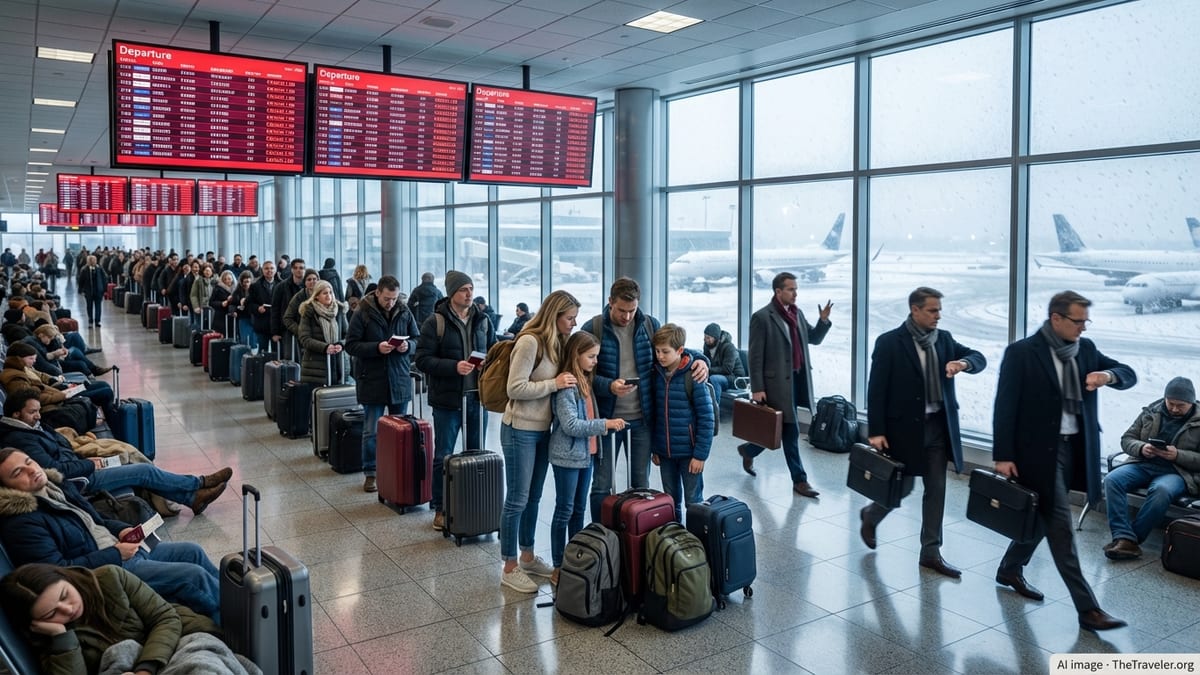
Thunderstorms Trigger Wave of Flight Delays
Thunderstorm cells moving across the London area on Saturday 27 June have caused significant disruption to air traffic at the United Kingdom’s two busiest airports. Heavy rain, lightning and rapidly changing wind conditions prompted temporary ground stops, reduced arrival and departure rates, and a build-up of aircraft waiting both on the ground and in holding patterns.
Published operational updates and live tracking data indicate that Heathrow experienced extended departure queues from the early morning as storm activity built over the capital, with knock-on delays spreading across European and long haul routes. At Gatwick, similar weather conditions forced adjustments to runway use and arrival spacing, leading to mounting delays for short haul leisure services heading to Mediterranean destinations as well as selected long haul departures.
Industry data providers tracking same-day performance suggest that the combined impact at Heathrow and Gatwick amounts to several hundred delayed flights, together with a smaller number of cancellations and diversions as airlines adjusted schedules around the most intense storm periods.
The disruption follows several weeks of heightened operational pressure across the UK aviation network, during which previous weather episodes and airspace constraints have already reduced punctuality and left schedules more vulnerable to further shocks.
Airlines Cut Speeds, Hold Aircraft and Divert Traffic
In response to the thunderstorms, airlines and air traffic managers introduced a series of safety-driven measures that inevitably slowed the flow of aircraft through the two London hubs. Lightning activity over airfields can temporarily halt refuelling and ramp operations, while strong convective weather in the vicinity of the airport often requires increased separation between aircraft on approach and departure.
Flight tracking services on Saturday showed multiple Heathrow arrivals entering extended holding stacks west of London as storm cells passed across the approach paths. Some services were rerouted to alternative airports when weather conditions and runway capacity made diversions the more reliable option for completing the flight. At Gatwick, aircraft waiting for departure faced longer ground holds as controllers balanced runway use against passing storm bands.
Operational reports from previous seasons at Heathrow indicate that this type of convective weather is among the most disruptive categories of extreme conditions, because it can develop quickly and affect both ground handling and airspace capacity at the same time. With summer schedules already running close to full, even short periods of reduced throughput can generate delays that ripple across the day’s programme.
For airlines, the challenge is compounded by tight aircraft and crew rotations. A long delay on one sector can easily destabilise subsequent flights, particularly on short haul networks built around multiple daily turns.
Passengers Face Long Queues and Rebooking Challenges
For travellers passing through Heathrow and Gatwick, Saturday’s storms translated into extended time on board waiting for take off, long queues at departure gates and rebooking desks, and uncertain connections. Social media posts and passenger forums described travellers being held on aircraft after pushback while airports managed spacing in the departure sequence, as well as reports of missed onward flights from London to long haul destinations.
Published guidance from passenger rights organisations notes that thunderstorms and similar severe weather are generally treated as extraordinary circumstances under UK and European compensation rules. This typically means that while airlines retain a duty of care to provide assistance such as meals, refreshments and hotel accommodation where required, cash compensation for delays and cancellations linked directly to the storm is unlikely to be payable.
Travel advisers recommend that passengers affected by weather-related disruption keep boarding passes and booking confirmations, monitor airline apps and airport information screens closely, and avoid rebooking independently unless clearly necessary. In many cases, carriers automatically rebook disrupted passengers onto the next available services, although peak-season load factors can limit same-day options from London’s main hubs.
Those making self-connecting journeys between Heathrow and Gatwick are considered particularly exposed when severe weather hits, as delays at one airport can quickly eat into transfer time to the other, especially when surface transport networks are also affected by heavy rain and localised flooding.
Ongoing Vulnerability to Summer Storm Patterns
The latest disruption underlines the growing operational challenge that increasingly volatile summer weather poses for major hub airports. Aviation performance reports for recent years show that thunderstorm activity, heavy rainfall and associated lightning are playing a rising role in delay statistics across northwestern Europe, including at Heathrow and Gatwick.
Industry analyses highlight that modern hub operations are finely balanced, with tightly timed arrival and departure waves designed to maximise connectivity. When capacity is temporarily reduced by storms, there is limited slack in the system to absorb delays, particularly at airports constrained by runway and airspace limits.
Heathrow and Gatwick have both incorporated extreme weather scenarios into their long term planning and risk assessments, including specific procedures for lightning events and severe convective storms. These plans typically involve close coordination between air traffic services, airport operators and airlines to sequence flights safely through weather disruptions while seeking to protect long haul and critical connectivity where possible.
However, high utilisation of runways and stands, combined with continued growth in leisure demand during peak summer weekends, means that even well rehearsed contingency plans are likely to result in widespread delays when major storm systems pass close to London.
What Travellers Should Expect in the Coming Days
Weather forecasts for southern England suggest that further showers and possible storms may affect parts of the region in the coming days, although the precise timing and intensity around Heathrow and Gatwick remain uncertain. Airlines typically adjust schedules and crew plans when prolonged unsettled conditions are predicted, but sudden changes in storm development can still trigger new disruptions at short notice.
Passengers due to travel through either airport are being advised in public guidance to check their flight status frequently on the day of departure, arrive in good time, and be prepared for longer than usual queues at check in, security and boarding. Those with tight onward connections may wish to consider building in additional contingency time or, where possible, protecting their itinerary with through tickets rather than self-connecting arrangements.
Travel industry observers note that the combination of peak season traffic, ongoing infrastructure projects around London’s airports and an active summer storm pattern is likely to keep punctuality under pressure. For now, Saturday’s widespread delays at Heathrow and Gatwick stand as a reminder that even short lived thunderstorms can significantly disrupt some of Europe’s most heavily used air corridors.