


More news on this day
Severe thunderstorms and reports of significant turbulence near Denver International Airport led to 22 passenger flights diverting to Colorado Springs on Tuesday, straining the smaller airport’s capacity and disrupting travel across the central Rocky Mountain region.
Get the latest news straight to your inbox!
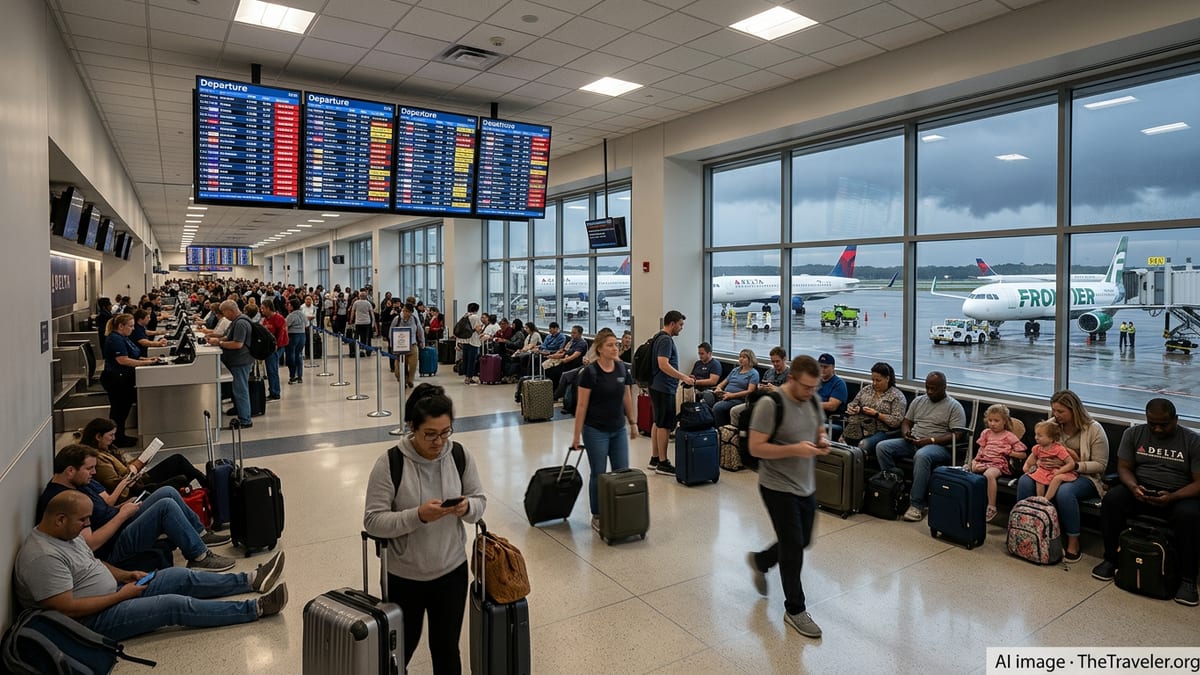
Rocky Mountain Weather Triggers Widespread Diversions
Published coverage and live flight-tracking data indicate that a fast-building line of afternoon storms over the Denver metropolitan area prompted extended arrival delays and holding patterns for inbound aircraft. As conditions deteriorated, multiple airlines began diverting flights away from Denver International Airport toward alternate fields with more favorable weather.
Colorado Springs Airport, located roughly 70 miles south of Denver, emerged as a primary diversion point. Publicly available information from aviation tracking platforms shows at least 22 flights that had been scheduled to land in Denver instead touching down in Colorado Springs over several hours, creating an unusual surge of mainline and regional jets at an airport that typically sees a more modest traffic volume.
Passengers posting on social media and flight-tracking forums described long periods in holding patterns, abrupt changes in flight paths, and eventual unscheduled landings at Colorado Springs as thunderstorms intensified near Denver. Many travelers reported that their aircraft refueled on the ground while crews awaited updates on weather and traffic-management programs for Denver.
The diversions coincided with reports of convective storms in the Front Range corridor, where intense summer heating frequently generates powerful updrafts, sudden wind shifts, and strong turbulence, particularly in the late afternoon and early evening hours.
Colorado Springs Faces Unusual Operational Strain
The influx of 22 diverted flights significantly tested the operational flexibility of Colorado Springs Airport. Public flight data and traveler accounts suggest that, at one point, more than a dozen diverted aircraft were parked on ramps and at remote stands as available gates quickly filled.
Airlines responded by prioritizing basic ground services such as refueling and limited catering, while passengers often remained on board during relatively short technical stops. In some cases, travelers disembarked to the terminal to await further instructions as airline operations centers evaluated whether to continue to Denver, reroute passengers through other hubs, or allow them to end their journey in Colorado Springs.
Published local coverage indicates that airport staff coordinated with airline ground handlers to manage the compressed arrival wave, directing aircraft to overflow parking areas and arranging space for additional buses, baggage carts, and fuel trucks. The episode illustrated how a mid-sized regional facility can rapidly become congested when it assumes a temporary relief role for a major hub.
Despite the volume of traffic, there were no immediate reports of injuries or significant on-the-ground safety incidents related to the diversions, according to publicly available information.
Turbulence Concerns Add to Passenger Anxiety
The same storm systems that made approaches into Denver challenging also heightened concerns about in-flight turbulence. Social media posts from passengers on diverted flights referred to “rough air” and pronounced bumps during descent phases as aircraft navigated near towering storm cells and strong upper-level winds along the Front Range.
Weather and aviation specialists frequently note that Denver’s location east of the Rocky Mountains exposes aircraft to a combination of convective turbulence from thunderstorms and mountain-wave turbulence generated as winds flow over the high terrain. During active storm periods, these effects can overlap, increasing the likelihood of moderate or greater turbulence in popular arrival and departure corridors.
Recent storm summaries from meteorological agencies highlight a broader pattern of intense convective activity across parts of the western and central United States this summer, with strong updrafts capable of producing hail, microbursts, and hazardous wind shear. While modern airliners are designed to withstand such conditions, crews typically reroute or delay flights to avoid the most severe cells, sometimes resulting in abrupt last-minute diversions.
Reports from the Denver area over recent weeks describe multiple instances of bumpy approaches and extended route deviations around storm clusters, reinforcing the perception among frequent travelers that warm-season flights into the region can be particularly unpredictable.
Ripple Effects Across Airline Networks
The diversions to Colorado Springs created knock-on effects well beyond Colorado. When aircraft and crews end up at unscheduled airports, airlines must rework rotations, secure new gate and ground slots, and, in some cases, reposition planes without passengers to restore normal schedules.
Publicly visible timetables on airline and airport platforms showed subsequent delays and cancellations on some routes that relied on aircraft originally scheduled to pass through Denver. Passengers with tight connections were especially affected, with some rebooked onto later flights through alternative hubs and others provided overnight accommodation while waiting for seats to become available.
According to industry analysts quoted in recent aviation coverage, diversion-heavy days are particularly disruptive because a single storm system can simultaneously affect hub operations, aircraft positioning, and crew duty limits. Once flights are scattered across alternate airports such as Colorado Springs, Cheyenne, or cities in neighboring states, it can take many hours, and sometimes into the next day, for network operations to stabilize.
Travelers caught in the disruption reported spending several additional hours on the ground or in terminals while airlines awaited confirmation that Denver’s arrival rates and ground stops had eased enough to clear the backlog of rerouted traffic.
What Travelers Can Learn From the Denver Disruptions
The concentration of 22 Denver-bound flights at Colorado Springs serves as a reminder of how quickly conditions can change in convective seasons, particularly in mountainous regions. Aviation safety data and expert commentary consistently emphasize that diversions are a precautionary measure, reflecting conservative decision-making by flight crews and operations centers rather than an indication that an aircraft is in immediate peril.
Travel guidance published by airlines and pilot associations encourages passengers flying through weather-prone hubs such as Denver to anticipate potential delays during peak storm months, especially for afternoon and early-evening departures and arrivals. Suggestions often include selecting earlier flight times when possible, allowing generous connection windows, and monitoring flight-status tools that can provide early indications of ground stops or rerouting.
For Colorado Springs and other regional airports, the episode underlined the importance of contingency planning and close coordination with larger hubs. While such surges are relatively rare, the ability of a smaller facility to temporarily absorb large numbers of diverted flights plays a critical role in keeping passengers and crews safely out of the most hazardous storm zones.
As airlines and airports review the operational data from the latest Denver disruptions, they are expected to refine diversion strategies, air-traffic coordination, and passenger communication practices ahead of future storm cycles in the central Rockies.