


More news on this day
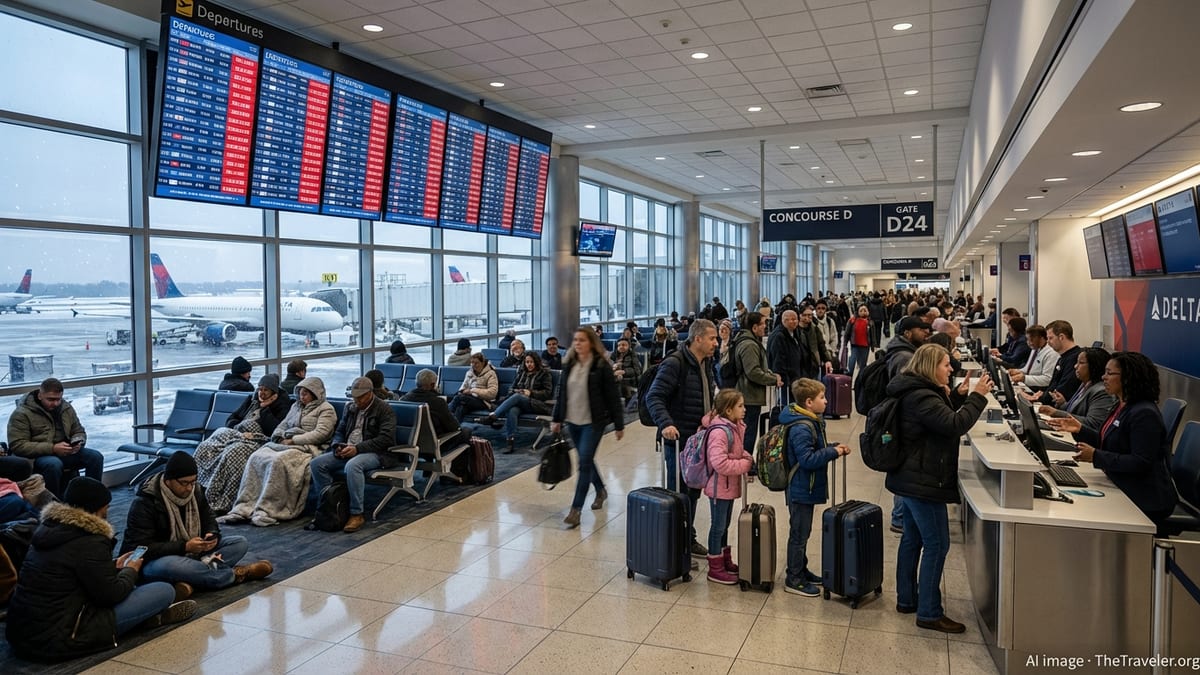
Travelers moving through Baltimore/Washington International Thurgood Marshall Airport faced hours of uncertainty today as a wave of weather-related disruption and knock-on system delays left passengers stranded, with at least seven cancellations and more than one hundred delays affecting major routes across the United States and popular Caribbean and Atlantic leisure destinations.
Get the latest news straight to your inbox!
Severe Weather Compounds Existing Strain on BWI Operations
Publicly available tracking data and aviation reports indicate that a line of strong thunderstorms sweeping the Mid-Atlantic region has been the primary trigger for the latest operational snarl at Baltimore/Washington International Thurgood Marshall Airport. Storms moving across the Washington–Baltimore corridor have repeatedly forced temporary pauses in departures and slowed arrivals, creating a backlog of aircraft and crews that cascaded into the afternoon and evening schedule.
Coverage focused on regional aviation conditions shows that weather-sensitive hubs along the East Coast have been grappling with rolling delays and ground stops since Sunday, with BWI added to the list as thunderstorms intensified over central Maryland. The pattern mirrors wider disruption seen at other major airports, where convective weather has prompted airlines to reduce takeoff and landing rates, stretching turnaround times and limiting options for rebooking stranded passengers.
Historical data from federal transportation statistics underscores how vulnerable BWI is to this kind of event. Southwest dominates the airport’s traffic, with significant additional volume from Delta Air Lines, United Airlines and American Airlines. When weather limits runway capacity, even a modest number of affected flights can ripple rapidly across the network, especially during peak summer travel periods when most aircraft are already heavily utilized.
Airport-facing guidance emphasizes that during weather disruptions, airlines retain control over their own schedules and must juggle aircraft, crews and gate assignments in real time. As conditions fluctuated over the region, the result at BWI was a patchwork of pushed-back departure times, aircraft waiting for clearance, and a small but impactful cluster of outright cancellations.
Seven Cancellations and 119 Delays Snarl Key U.S. and Leisure Routes
Flight-status aggregators tracking operations at BWI today show at least seven cancellations and roughly 119 delays tied to departures and arrivals for major carriers, including Southwest, Delta Air Lines, United Airlines and American Airlines. While the raw tally is modest compared with the airport’s full daily schedule, the disruptions are concentrated on some of the most in-demand routes and connection banks of the day, magnifying the impact on travelers.
Services to major domestic hubs such as Chicago and Seattle were among those hit by extended delays, according to real-time monitoring platforms. Chicago connections are particularly important for distributing BWI-originating passengers across the Midwest and West, so delays there can strand travelers en route to secondary destinations. Longer-haul flights to the Pacific Northwest, including Seattle, are more vulnerable to crew-timing and aircraft-rotation issues, increasing the risk that a delay can later tip into cancellation.
At the same time, a core group of leisure routes drew outsized attention as delays mounted on departures to New York and onward services to sun destinations. Published flight schedules list BWI as a significant gateway to Cancun, Jamaica, Bermuda and Aruba, served primarily by large U.S. network and low-cost carriers. When disruptions strike on peak departure days, even a limited number of delayed or canceled flights to these destinations can leave hundreds of beach-bound travelers stuck in terminals instead of on the sand.
Travel industry coverage notes that, in similar recent events at other hubs, clusters of cancellations have often been tied less to a single weather cell over one airport and more to the cumulative effect across several hubs simultaneously. With weather affecting multiple East Coast and southern gateways, aircraft and crews that would normally rotate cleanly through BWI instead arrived late, compressing turn times and leading some airlines to trim the schedule to reset their operations.
Impact on Passengers: Missed Connections and Overnight Stays
The immediate human impact at BWI has been felt in long lines at check-in counters, customer service desks and food concessions as travelers waited for new departure times or sought alternative routes. Passengers booked on multi-leg itineraries through Chicago, New York or other connecting hubs faced especially difficult choices, with some forced to accept overnight stays or extended layovers when onward flights were already heavily booked.
Accounts shared on travel forums during similar disruptions indicate that missed connections can quickly compound the stress of an initial delay. Families heading to Cancun, Jamaica, Bermuda or Aruba often book tightly coordinated itineraries to align with resort check-in times or cruise departures, leaving little margin when flights are pushed back by several hours. Once a key connection falls apart, rebooking onto later services can be challenging during high season, particularly for larger groups that need multiple seats on the same flight.
In addition to missed vacations, business travelers using BWI to reach financial and technology centers like New York and Chicago face lost meeting time and added hotel and transportation costs. Some choose to abandon air travel altogether and reroute by train or car when delays extend well into the evening, especially on the busy Northeast Corridor where rail alternatives are available but may also sell out quickly in response to large-scale flight disruptions.
Consumer advocates regularly remind passengers affected by delays and cancellations to document their additional expenses and to keep boarding passes, receipts and screenshots of flight-status updates. While airlines generally have limited obligations in the case of weather-related disruption, travelers may still be able to secure meal vouchers, hotel support or partial refunds depending on the circumstances and the specific carrier’s customer-service policies.
How BWI’s Role as a Low-Cost and Leisure Hub Shapes Disruption
Federal and airport statistics show that BWI functions as a major base for low-cost travel in the Mid-Atlantic, with Southwest carrying a large share of passengers and other carriers such as Delta, United and American using the airport to connect regional flyers into their broader domestic and international networks. This mix gives BWI a dual identity as both a commuter gateway and a launch point for budget-friendly trips to beach destinations.
The airport’s route map includes a robust roster of flights to Cancun and multiple Caribbean islands, along with frequent connections to East Coast and Midwestern hubs like New York and Chicago. When irregular operations strike, this combination can make disruptions more visible and emotionally charged, as stranded passengers include both time-sensitive business travelers and vacationers heading to long-planned getaways in Jamaica, Bermuda or Aruba.
Analysts often point out that low-cost carriers tend to operate tighter schedules with fewer spare aircraft, an approach that helps keep fares low but can leave limited slack when thunderstorms or system outages hit. If a single aircraft rotation into or out of BWI runs significantly late, there may be no readily available backup plane to step in, increasing the likelihood of rolling delays across multiple departures tied to that aircraft.
At the same time, the concentration of traffic on a handful of large carriers means that even a localized problem at BWI can affect a broad swath of passengers. With tens of thousands of travelers typically moving through the airport on a busy summer day, a few dozen delayed flights can quickly translate into thousands of disrupted journeys, especially when connecting itineraries and crew-positioning flights are factored in.
What Travelers Can Do If Their BWI Flight Is Disrupted
Travel experts recommend that passengers scheduled to fly through BWI during periods of stormy weather or system strain check their flight status frequently via airline apps and text alerts. Publicly available flight-tracking tools can provide additional context on whether delays are isolated to one carrier or spread across multiple airlines and destinations.
When a delay appears likely, early action is often the best strategy. Some airlines allow same-day confirmed changes to earlier or later flights on the same route, which can help travelers avoid the worst of a disruption if taken before a storm intensifies. Others may issue travel waivers that permit passengers to rebook without change fees when forecasts indicate severe or prolonged weather impacts.
For those already stranded at the airport, information desks, self-service kiosks and mobile apps are typically the fastest avenues for rebooking, as telephone call centers may experience long hold times during major disruptions. Travel commentators also suggest monitoring nearby airports in Washington and the broader region for possible reroutes, though shifting to another airport can introduce its own logistical challenges.
With summer travel demand already high, today’s disruption at Baltimore/Washington International Thurgood Marshall Airport is a reminder that even a relatively small cluster of cancellations and delays can have significant repercussions when the broader system is under stress. As storms and operational strains continue to affect multiple U.S. hubs, passengers planning trips through BWI in the coming days are being urged by travel industry observers to build extra time into their itineraries and to stay flexible about routing and timing.