


More news on this day
Passengers at Baltimore/Washington International Thurgood Marshall Airport faced mounting frustration on June 15 as a fresh wave of weather disruptions and congestion left travelers stranded, with seven cancellations and 119 delays reported across major carriers including Southwest Airlines, Delta Air Lines, United Airlines, and American Airlines.
Get the latest news straight to your inbox!
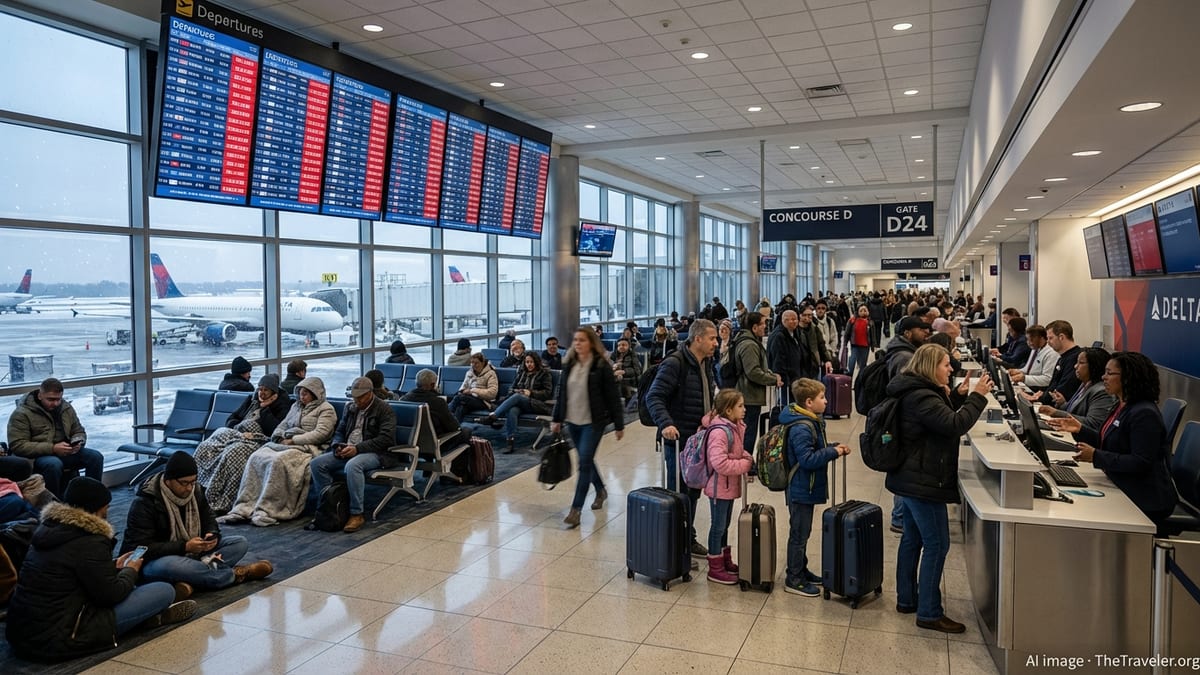
Weather Disruptions Converge on a Busy Summer Weekend
Publicly available flight-tracking data and local coverage show that thunderstorms sweeping across the Mid-Atlantic triggered significant operational challenges at Baltimore/Washington International Thurgood Marshall Airport on Sunday into Monday, as airlines struggled to keep tightly scheduled summer operations running on time. Reports indicate that a temporary ground stop at BWI on Sunday evening halted departures and forced incoming aircraft into holding patterns, creating a backlog that spilled into the next day’s schedule.
The timing of the storms coincided with one of the busiest travel periods of the early summer season, when families, cruise passengers, and international vacationers typically funnel through BWI for connections to beach destinations and major U.S. hubs. As aircraft and crews missed their planned positions, airlines resorted to rolling delays and selective cancellations to restore some order to their networks.
Data from aviation analytics platforms suggest that the combination of convective weather, air-traffic flow restrictions, and congested ramp areas sharply reduced the number of flights that could operate per hour. Even after the strongest storms moved out of the immediate area, residual spacing requirements and the need to reposition aircraft left many travelers facing hourslong waits in terminal gate areas.
Major U.S. Carriers Hit: Southwest, Delta, United, American
The disruption at BWI has been particularly visible because of the outsized presence of several major U.S. airlines at the airport. Monthly statistical reports from the airport identify Southwest as the dominant carrier by passenger volume, with Delta, United, and American each operating substantial schedules that connect BWI to domestic hubs and international gateways.
On June 15, publicly accessible flight boards and tracker dashboards showed a combined tally of seven cancellations and 119 delays affecting flights operated by these four airlines at BWI. The delays ranged from modest schedule slips of 30 to 45 minutes to multi-hour disruptions for some late-evening departures and early-morning turnarounds whose aircraft arrived behind schedule the previous night.
Because many BWI flights on these carriers feed into complex hub networks, any delay at the origin can cascade across the system. Several of the affected flights were scheduled to connect onward through major hubs such as Chicago, New York, and other large cities, complicating rebooking options for travelers bound for international destinations in the Caribbean and beyond.
The available operational information suggests that crews also reached duty-time limits on some sequences, requiring airlines to substitute staff or cancel individual legs when replacement crews were not readily available. This is a common pinch point during prolonged weather events, when flight attendants and pilots may already be operating at or near their maximum allowable hours.
Beach Routes to Cancun, Jamaica, Bermuda, and Aruba Disrupted
The most visible impact for leisure travelers at BWI has been on routes to popular vacation destinations. Flight schedules and tracking data show that services from BWI feed into or directly serve major resort markets, including Cancun in Mexico’s Yucatan Peninsula, Jamaica’s north coast, Bermuda in the Atlantic, and the Dutch Caribbean island of Aruba.
According to publicly available information, several of the day’s delayed or canceled flights involved aircraft and crews that would normally connect through hubs onto these sun-and-sand destinations. Late flights from BWI to key U.S. gateway airports reduced connection windows for travelers holding through-tickets to Cancun and Jamaica, forcing missed connections and unplanned overnight stays in intermediate cities.
For nonstop and quasi-nonstop services operating from BWI to the Caribbean and Mexico, rolling departure pushes meant that passengers spent extended periods at the gate without clear departure times while ground and flight operations evaluated weather and air-traffic constraints. Travel forums and social media posts from the day describe long lines at customer service counters as travelers tried to salvage holiday plans and arrange alternative routes on already full mid-June flights.
The knock-on effects are likely to continue into the early part of the week, as aircraft that typically rotate between domestic and international leisure routes start the next day out of position. In such situations, even a small number of cancellations can force airlines to consolidate passengers onto remaining services, leaving limited slack for new disruptions.
Domestic Networks to Chicago, Seattle, and New York Feel the Strain
Beyond vacation itineraries, the disruption hit core domestic routes linking BWI with major business and technology centers. Schedules for Southwest, Delta, United, and American from BWI include flights to Chicago, Seattle, and multiple airports in the New York region, which in turn serve as key hubs for transcontinental and transatlantic connections.
On June 15, flight-status boards showed numerous BWI departures to Chicago and New York operating behind schedule, some by more than an hour, as aircraft arrived late from earlier legs affected by the storms. For travelers counting on tight turnarounds to make cross-country flights to the West Coast or onward international departures, even moderate delays at BWI translated into missed onward segments.
Services touching the Pacific Northwest were also affected. While some flights from the East Coast to Seattle managed to depart, reports from tracking platforms indicate that crews and aircraft departing BWI faced shifting departure slots and ground movement restrictions. Passengers connecting in other hubs before continuing to Seattle encountered heavier-than-usual congestion at Midwest and East Coast hubs coping with the same weather pattern.
Airlines typically respond to such situations by issuing flexible travel policies, waiving change fees and fare differences for affected routes on specific dates. Travelers who were able to adjust their departure to later in the week often found more stable operations, while those needing to travel on June 15 itself reported limited rebooking options on already full flights.
BWI Capacity Constraints and Passenger Options in Ongoing Disruptions
The current disruption has unfolded against the backdrop of ongoing construction and capacity adjustments at BWI. Federal aviation planning documents describe phased work that temporarily reduces available gates and taxiway capacity in certain concourses, particularly in areas heavily used by Southwest. These changes can amplify the effect of weather-related delays by limiting the number of aircraft that can be parked, turned, and dispatched at peak times.
When severe weather intersects with constrained ramp space, aircraft may wait longer for open gates, and deplaning can be slowed, further tightening the window for quick turnarounds. On days like June 15, when thunderstorms and summer demand collide, even relatively modest infrastructure limitations can translate into visible disruptions for passengers inside the terminal.
For travelers caught in such irregular operations, consumer advocates often recommend a few strategies based on publicly available guidance and past events. Monitoring flight status through airlines’ mobile apps and independent trackers, staying alert for automated rebooking notices, and proactively requesting rerouting through less congested hubs can improve the chances of reaching a destination the same day.
As summer progresses, aviation analysts expect weather-driven disruptions to remain a recurring feature across U.S. airports, including BWI. While the seven cancellations and 119 delays recorded across Southwest, Delta, United, and American at BWI on June 15 stand out for the number of passengers affected, they also reflect a broader pattern in which increasingly volatile weather, full flights, and tight schedules leave travelers with less margin when the system comes under stress.