


More news on this day
American Airlines is accelerating a multi year cabin overhaul that will add more premium seats and faster WiFi across its mainline and regional fleets, reflecting a broader industry shift toward higher yielding travelers and tech focused onboard amenities.
Get the latest news straight to your inbox!
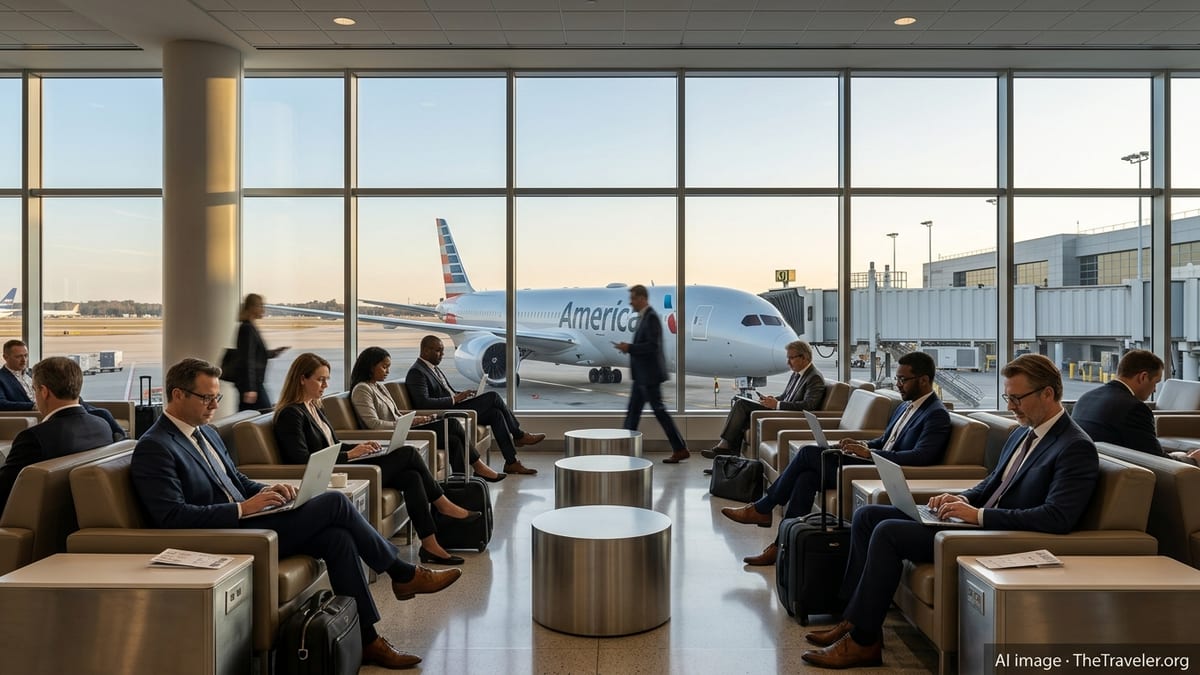
More premium seats across a massive fleet
Publicly available fleet information shows that American Airlines operates one of the largest mainline fleets in the world, with more than a thousand aircraft spread across Airbus A320 family jets and Boeing 737 and 787 variants. Against that backdrop, relatively small changes to seating layouts translate into tens of thousands of seats being retuned toward premium cabins.
Published coverage of recent fleet plans indicates that American is increasing the ratio of premium seating on several aircraft types as cabins are refreshed. Long haul aircraft such as the Boeing 787 9 and incoming Airbus A321XLRs are being delivered with new suites in business class and expanded premium economy sections, shifting capacity away from standard economy toward higher revenue seats.
Industry analysis suggests that this strategy mirrors a trend across major U.S. carriers, with demand for extra space and enhanced service holding up even as basic economy remains tightly packed. For American, the scale of its order book and refurbishment pipeline means that more routes will see aircraft with larger premium cabins deployed over the next few years.
Domestically, configuration updates reported for narrow body jets point to more first class and extra legroom seating, responding to strong demand from frequent flyers and corporate customers. While the airline has not detailed every seat map change publicly, network watchers note that a growing share of popular business routes are scheduled with aircraft featuring expanded premium sections.
Regional jets upgraded to match mainline comfort
In addition to widebody and transcontinental aircraft, American is focusing attention on its extensive regional fleet. According to airline communications and aviation industry reporting, the carrier is rolling out refreshed interiors on dual class regional jets, aiming to align the look and feel more closely with its mainline cabins.
The upgrade program, highlighted in recent interior design presentations, encompasses new seat coverings, updated color schemes and improved materials in both first class and the main cabin. The intention is to offer a more consistent premium experience for travelers who may connect between regional and mainline flights on the same itinerary.
Reports also indicate that American is working with manufacturers to introduce larger overhead bins on certain regional types, which could reduce the need for gate checking bags. For premium customers in particular, the combination of a dedicated front cabin, improved storage and better connectivity is positioned as a significant quality of life improvement on shorter routes.
Travel industry observers note that upgrading regional jets is a key part of American’s competitive response on smaller city pairs, where rivals have already invested in more comfortable cabins and higher levels of onboard service. Bringing regional interiors closer to mainline standards supports the airline’s broader premium push without adding new aircraft types.
Faster satellite WiFi and power at every seat
Connectivity sits at the center of American’s cabin strategy. Publicly available information on the retrofit program describes a continued rollout of high speed satellite WiFi across both mainline and regional fleets, replacing or supplementing older air to ground systems. The goal is to provide more consistent bandwidth capable of supporting video streaming and heavy work use.
New and refurbished cabins are being fitted with power at every seat, typically through a combination of AC outlets and USB A or USB C ports. This is particularly important in the expanded premium cabins, where travelers increasingly expect to be able to charge multiple devices while using WiFi for work during flights.
Industry reports underscore that American views connectivity as a differentiator on transcontinental and long haul routes, where business class suites and premium economy seats are marketed alongside promises of reliable in flight internet. On shorter domestic and regional trips, the airline is emphasizing the move toward complimentary or simplified access in premium cabins, while maintaining paid options elsewhere in the cabin.
Customer feedback gathered in public reviews suggests that experiences with WiFi performance can still vary by aircraft and route, reflecting the complexity of upgrading such a large fleet. Nonetheless, the trend in new installations and refits points toward faster systems and more ubiquitous access over time.
Competitive pressure in the race for premium travelers
American’s cabin investments are unfolding amid intensifying competition with Delta Air Lines and United Airlines, both of which have also committed to increasing premium seating and upgrading connectivity. Aviation analysts note that the three major U.S. carriers are converging on a model that places a greater share of capacity in high yield cabins, aiming to capture spending from frequent business travelers and affluent leisure passengers.
According to financial commentary on the airline sector, revenue from premium cabins has remained resilient even as the broader market faces cost pressures and shifting travel patterns. For American, adding more suites, lie flat seats and enlarged premium economy sections is seen as a way to lift average fares and improve margins without expanding the overall fleet as aggressively.
The push to enhance onboard technology is equally shaped by competition. Delta has publicized ambitions around free WiFi for loyalty members, while United has showcased upgraded cabins and connectivity on key domestic and international routes. American’s continued rollout of satellite WiFi and universal power is designed to keep pace with these initiatives and to prevent high value customers from defecting.
Observers also point out that premium cabin expansion can influence loyalty program dynamics. More premium seats create additional upgrade and redemption opportunities for frequent flyers, making elite status and loyalty points more valuable and encouraging travelers to consolidate their flying with a single carrier.
What travelers can expect in the coming years
For passengers, the practical impact of American’s cabin strategy will appear gradually as older interiors cycle out of service and more upgraded aircraft enter the schedule. On long haul routes, travelers can expect newer business class suites with doors on selected aircraft, expanded premium economy cabins and upgraded in flight entertainment paired with improved WiFi.
On domestic and regional flights, the most noticeable changes will be an increased number of first class and extra legroom seats on specific routes, refreshed interiors with updated materials and more reliable access to power and connectivity. Travelers flying through key hubs are likely to see the new configurations first, as airlines typically prioritize high traffic markets for refitted aircraft.
While there may be a period of inconsistency as mixed fleets operate side by side, the direction of travel is clear. American is betting that a cabin footprint with more premium seats and robust connectivity will appeal to customers willing to pay for comfort and productivity in the air, and that this bet will help support its financial performance in a competitive U.S. market.
As the reconfiguration program advances over the next several years, travelers booking American Airlines flights will increasingly need to check aircraft type and seat maps to understand which version of a cabin they are likely to encounter. For those who value space and WiFi, identifying the upgraded layouts could make a noticeable difference in the onboard experience.