


More news on this day
Hundreds of air travelers moving through Chicago O’Hare International Airport are facing a difficult start to the week after storms and congestion triggered 17 cancellations and 252 delays, disrupting flights operated by Republic, American, United, SkyWest, Jazz, Etihad and other carriers across the United States, Canada, Europe, the Middle East and Asia.
Get the latest news straight to your inbox!
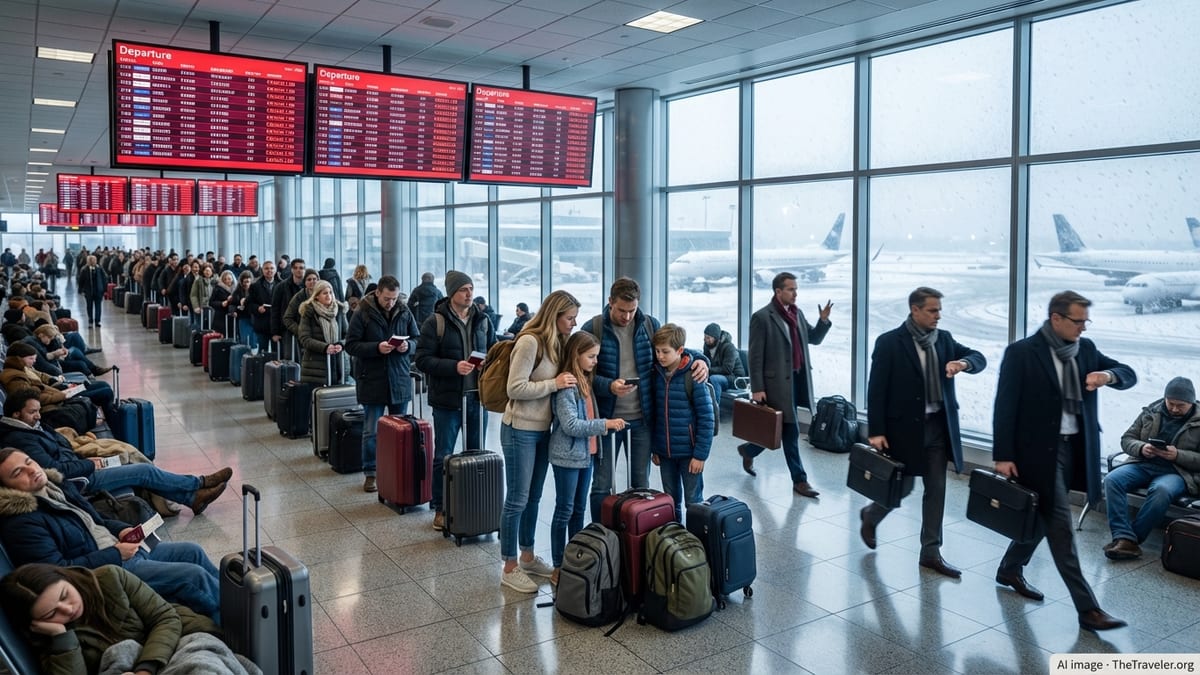
Weather, Congestion And Tight Schedules Converge At O’Hare
Operational data from aviation tracking services and airport dashboards indicates that a fresh round of summer storms over the US Midwest combined with already stretched schedules at Chicago O’Hare to produce widespread disruption. Ground-delay programs and flow restrictions reduced the number of arrivals the hub could safely accept per hour, creating a knock-on effect for departing flights and connecting banks.
The latest figures showing 17 cancellations and 252 delays linked to O’Hare come on the heels of several days of unsettled weather and capacity constraints across the national airspace system. Industry briefings describe O’Hare as operating near its limits at peak times, leaving little room to absorb thunderstorms or air traffic control restrictions without schedules quickly backing up.
Reports from delay tracking platforms suggest that even modest numbers of outright cancellations can mask the true scale of disruption when large volumes of flights operate well behind schedule. Long taxi times, extended waits for gates and missed runway departure slots all contribute to the elevated delay count now being recorded on O’Hare operations.
The problems at Chicago are also unfolding against the backdrop of regulatory pressure on airlines to trim schedules at the airport. Earlier this year, federal regulators ordered a double-digit percentage reduction in planned O’Hare departures to improve safety margins and reduce chronic congestion, but heavy summer demand continues to test the revised timetables.
Regional Feeders And Global Flag Carriers Among Worst Hit
The latest disruption has affected a broad mix of airlines using Chicago as either a primary hub or an important connecting point. Regional operators such as Republic Airways, SkyWest and Jazz, which fly under the brands of larger network carriers, appear to be among the most exposed because their short-haul flights are closely tied to onward long-haul connections.
Publicly available operational summaries show Republic handling a significant share of the cancellations, while American and United record the highest raw number of delays. These regionals typically operate dense schedules of short sectors into O’Hare from midsize US and Canadian cities, so any hold-ups quickly cascade into missed connections and aircraft rotations later in the day.
At the same time, major international carriers are seeing their Chicago operations squeezed. Tracking data and airline information show Etihad Airways and partner airlines relying on O’Hare to feed long-haul services to the Middle East and beyond, meaning delayed inbound flights from US and Canadian cities can jeopardize connections onto overnight departures to Abu Dhabi and other hubs.
Jazz and other regional partners feeding transatlantic and transpacific services have also reported extended taxi and gate waits at connecting airports when aircraft arriving from Chicago miss their planned arrival windows. These issues add further complexity to crew scheduling and aircraft positioning across multiple time zones.
Ripple Effects Spread Across North America, Europe And Beyond
Although the immediate disruption is concentrated at O’Hare, the impact is being felt across a wide swath of destinations linked to Chicago’s global network. Delay and cancellation data compiled for this latest episode points to knock-on problems at airports in the Northeast corridor, the US South and key Canadian hubs, as airlines work to reflow aircraft and crews.
Connections through Toronto, Montreal and other Canadian gateways have been particularly sensitive to timing issues on regional services operated by Jazz and other feeder airlines. When those flights depart Chicago late, they often arrive too close to long-haul departures for Europe or western Canada, forcing some passengers to be rebooked or overnighted.
In Europe, long-haul routes between O’Hare and major hubs such as London, Frankfurt and Zurich are vulnerable to day-of-operation shifts. Data from disruption trackers in recent days shows that even when transatlantic segments ultimately depart, late-arriving inbound aircraft and crews from earlier US domestic sectors can reduce turnaround buffers and prompt schedule changes down the line.
Flights linking Chicago with Middle Eastern and Asian hubs, including services by Etihad and codeshare partners, face similar pressures. High summer load factors mean there are few empty seats on later departures, limiting options for same-day reaccommodation when passengers misconnect at O’Hare.
Passengers Report Long Taxi Delays And Crowded Terminals
Accounts shared on social media and public forums describe passengers sitting on parked aircraft for extended periods around Chicago as ramp congestion worsened. Several travelers reported lengthy taxi times on arrival, with aircraft waiting for available gates while departure queues continued to build at the runway thresholds.
Inside the terminals, images posted by travelers show crowded gate areas and long customer service lines as passengers sought rebooking options. Many reported missed connections to evening departures to the East Coast and to overnight flights to Europe and the Middle East after their inbound regional services from smaller US cities arrived significantly behind schedule.
Some travelers also noted that real-time information screens struggled to keep pace with rolling delays, leading to uncertainty over whether flights would depart on time, be rescheduled or ultimately be canceled. This information gap added to frustration among those trying to make onward connections or coordinate ground transportation at their final destinations.
Despite the disruption, publicly available data and traveler reports indicate that most flights eventually operated, albeit off schedule, reinforcing the pattern of relatively low cancellation numbers but a high proportion of delayed departures and arrivals across the O’Hare network.
What Travelers Can Do If Their O’Hare Flight Is Affected
Consumer aviation services and passenger rights organizations advise that when severe weather and air traffic restrictions are the primary causes of disruption, financial compensation is often limited under US rules. However, published guidance emphasizes that airlines are generally expected to assist with rebooking, meal vouchers and, in some cases, overnight accommodation when passengers are stranded away from home.
Travel experts recommend that passengers booked through Chicago during periods of unsettled weather monitor their flight status frequently using airline apps and airport dashboards, rather than relying solely on original itineraries. Same-day schedule changes, equipment swaps and revised departure times are common as carriers attempt to rebalance their networks.
For those yet to travel, industry briefings suggest favoring early-morning departures, which are less exposed to the cascade of late-running aircraft that tends to build throughout the day. Allowing longer connection times at O’Hare and other major hubs can also improve the chances of completing an itinerary if delays occur on the first leg.
Travel planners also highlight the value of maintaining flexibility on routings during peak summer months. When disruptions at Chicago intensify, passengers with tickets that permit changes may benefit from rerouting via alternative hubs, potentially avoiding the worst of the congestion while O’Hare operations work back toward normal levels.