


More news on this day
A EUR 302 million contract for a new railway bridge over the Vistula River is set to transform a strategic section of Poland’s rail network, signalling a fresh phase of investment in cross-country and international passenger and freight connections.
Get the latest news straight to your inbox!
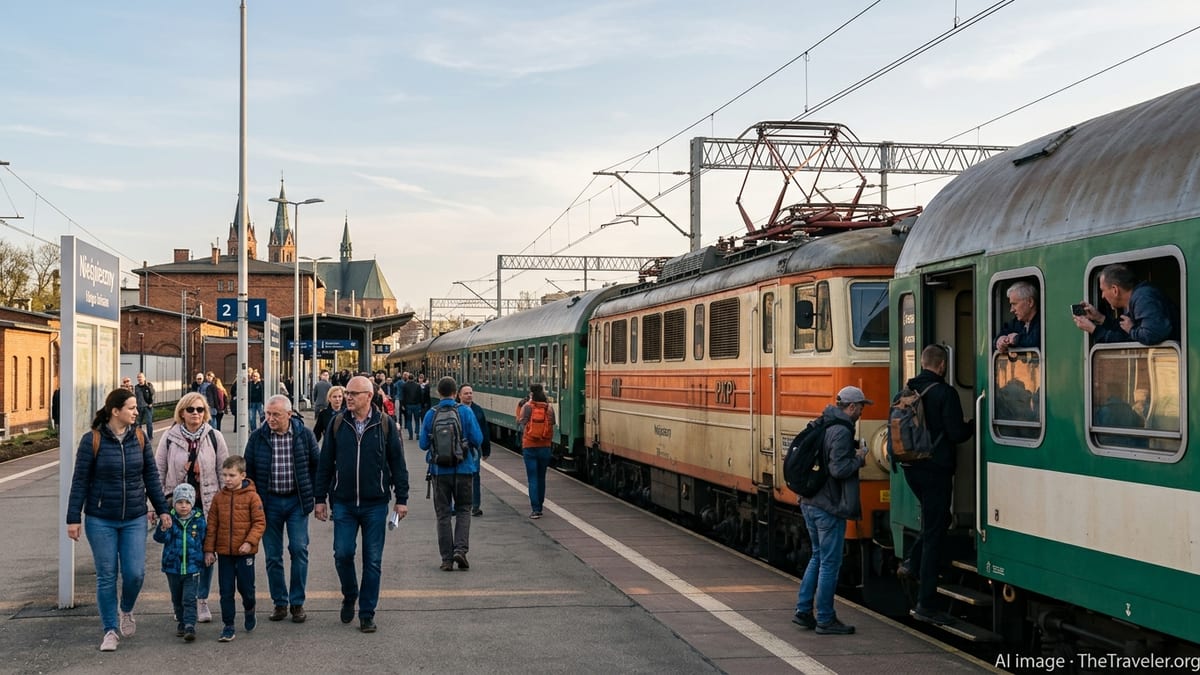
Major contract underpins upgrade of line C‑E20
Publicly available information indicates that the bridge contract forms the core of a broader programme to modernise railway line C‑E20, an important east west corridor across Poland. The overall package covers track, signalling and civil works along the route, with the bridge over the Vistula emerging as its most technically demanding single structure.
The contract value of about EUR 302 million reflects both the scale of the bridge itself and the complexity of integrating it into an active main line. Reports describe a multi span steel and concrete structure designed to accommodate higher speeds, heavier axle loads and denser traffic than the existing crossing, which has long been a capacity bottleneck.
According to published coverage, the project scope includes rebuilding approach embankments, renewing access roads and adapting adjacent railway facilities so that services can continue during the construction period. This integrated approach is intended to limit disruption while still delivering a long term uplift in performance along the C‑E20 corridor.
Industry observers note that line C‑E20 also forms part of significant international freight flows, linking western Europe with hubs in central and eastern Poland. The new bridge is therefore seen as a vital component in Poland’s wider effort to strengthen its role as a logistics gateway.
New Vistula crossing designed for capacity and resilience
The Vistula River is Poland’s longest waterway, and existing crossings already carry some of the country’s heaviest rail traffic. The new bridge is planned with twin tracks, modern track slab or ballast structures and upgraded overhead electrification to support higher speeds and more frequent services.
Engineering outlines in technical publications describe a structure optimised for resilience, with foundations and piers designed to withstand variable river levels and ice flows. Designers are also reported to be targeting reduced maintenance requirements through the use of corrosion resistant materials and improved inspection access, an important consideration for a bridge expected to remain in service for many decades.
Operationally, the new crossing is intended to increase timetable flexibility. With additional capacity across the river, infrastructure managers are expected to be able to separate faster passenger trains from slower freight flows more efficiently, cutting delays and improving punctuality on one of Poland’s busiest axes.
The project is also expected to improve safety, as modern signalling, train protection systems and new engineering structures replace a legacy arrangement that has been incrementally upgraded over many years. This fits with a wider national emphasis on raising safety standards on core rail corridors.
Timeline, contractors and funding structure
Reports indicate that the Vistula bridge contract sits within a multi year investment plan supported by European Union funds and national co financing. The EUR 302 million allocation for the bridge aligns with recent trends in European bridge megaprojects, where higher design standards and construction costs are reflected in larger contract values.
Specialist rail and bridge builders active on the Polish market are understood to be involved, drawing on experience from earlier crossings of the Vistula and other major rivers. Publicly available corporate materials highlight a growing portfolio of technically complex railway bridges in Poland, suggesting that the local supply chain is well positioned to deliver the new structure.
The construction schedule is expected to be phased so that one alignment can be built and commissioned before the full decommissioning of older elements, limiting interruptions to long distance passenger and freight traffic. Once the new bridge is fully operational, remaining legacy structures on the crossing are likely to be demolished or repurposed, depending on their condition and operational value.
Financing has been framed as part of a broader package of rail upgrades across Poland, which includes new lines, tunnels and junctions. Observers point out that projects of this size typically draw on multiple EU instruments supporting cross border and green transport investment, reflecting the role of rail in wider climate and connectivity policies.
Strategic impact for passengers, freight and tourism
Travel and transport analysts view the new Vistula bridge as more than a local capacity enhancement. By addressing a longstanding bottleneck on line C‑E20, the project is expected to shorten journey times on key intercity routes, making rail more competitive with road transport for medium distance trips across Poland.
For freight operators, the modernised crossing promises higher reliability and additional train paths, particularly important for intermodal flows moving between Baltic ports, inland logistics hubs and industrial centres further west and south. Improved punctuality and capacity can make rail a more attractive option for shippers seeking lower carbon transport solutions.
The project is also expected to support tourism, as better connections across the Vistula enable smoother travel between historic cities and regional attractions along the corridor. Enhanced rail links typically encourage visitors to extend their itineraries beyond capital cities, spreading economic benefits more widely.
Local communities near the bridge site may see secondary benefits, including new or improved access roads, noise protection measures and landscaping around the reconstructed riverbanks. While short term construction impacts are likely, long term gains in connectivity and safety are presented in planning documents as outweighing temporary disruption.
Part of a broader wave of Polish rail investment
The EUR 302 million Vistula bridge contract is being interpreted by sector observers as one element in a broader wave of rail modernisation across Poland. Recent months have brought announcements of major corridor upgrades, new intercity links and expanded freight capacity, all aimed at accommodating rising demand for rail transport.
Plans presented in policy documents point to thousands of kilometres of lines to be modernised or built over the coming years, including high speed sections and new connections to a planned central airport hub. Within this landscape, the Vistula bridge stands out as a visible symbol of the shift toward higher performance infrastructure.
Poland’s central geographic position between western Europe and the Baltic states makes such investments particularly significant. Infrastructure specialists note that each new high capacity bridge, tunnel or junction can remove constraints that previously limited the efficiency of international services, creating a cumulative effect across the network.
For travellers and the wider tourism sector, the bridge project represents another step toward a denser, faster and more reliable rail map. As construction advances, attention is expected to turn from engineering milestones to the practical benefits that the new Vistula crossing will bring to everyday journeys across Poland and beyond.