


More news on this day
Thunderstorms sweeping across North Texas on Sunday triggered widespread disruptions at Dallas Fort Worth International Airport, with more than 250 flight cancellations and nearly 300 delays rippling through one of the nation’s busiest hubs.
Get the latest news straight to your inbox!
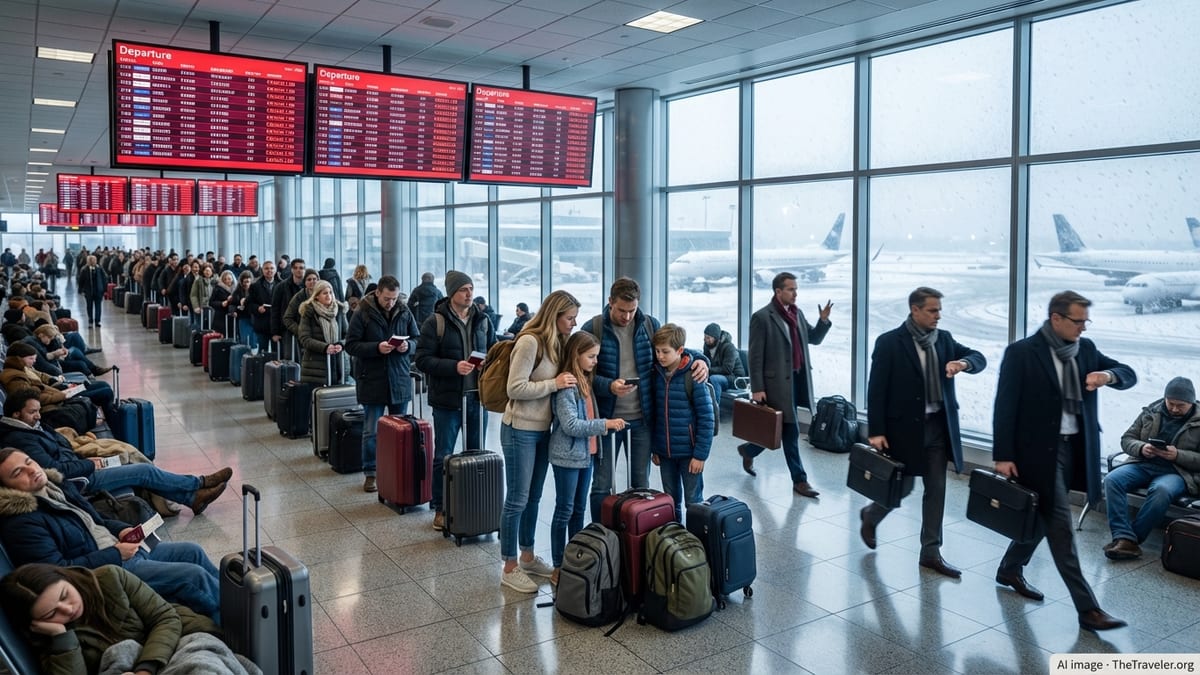
North Texas Storms Turn Busy Travel Day Into Marathon Wait
The severe weather moved through the Dallas Fort Worth area on July 12, bringing heavy rain, lightning and low clouds that sharply reduced the airport’s ability to safely move aircraft. Publicly available data compiled on July 13 indicates that DFW International recorded over 250 canceled flights and close to 300 delayed services Sunday, affecting both departing and arriving traffic.
Coverage from local outlets describes long lines at customer service counters and crowded gate areas as travelers tried to rebook or wait out the storms. With Dallas Fort Worth serving as the primary hub for American Airlines and a major connecting point for numerous domestic and international routes, the interruptions quickly spread across the carrier’s network, impacting itineraries far beyond North Texas.
Flight tracking services showed delays stacking up through the afternoon and evening as aircraft waited for departure slots and arriving flights were sequenced through storm cells in the region. Some services diverted to alternate airports, while others remained on the ground for extended periods until conditions improved and traffic programs were gradually relaxed.
Ground Delay Programs and Ground Stops Slow Traffic Flow
Federal aviation advisories for July 12 show that Dallas Fort Worth was placed under a formal ground delay program as thunderstorms moved across North Texas. These programs meter the rate at which flights are allowed to depart for an affected airport, spacing inbound traffic to match reduced arrival capacity when storms limit runway use or require greater separation between aircraft.
Advisory notices also reference ground stops at DFW during the height of the storms, temporarily halting certain departures bound for the airport. Ground stops are typically issued when weather conditions or airspace constraints make it difficult to accept additional arrivals safely, and they often lead to cascading delays as aircraft and crews are held in place.
According to publicly posted information on the national airspace system, average delays into Dallas Fort Worth at one point approached an hour as the thunderstorms persisted. Even after the most intense cells moved away, disruption lingered while airlines worked through backed up traffic and repositioned aircraft and crews that were out of place.
Passengers Face Missed Connections and Overnight Disruptions
The timing of the storms on a busy summer Sunday meant many travelers at DFW were in transit between other cities, increasing the likelihood of missed connections. Reports from passengers and online forums describe travelers facing multi hour waits, rebooked itineraries for the following day and unexpected overnight stays in the Dallas Fort Worth area.
When severe weather drives cancellations at a large hub airport, flights scheduled for later in the day can be affected even after conditions improve. Aircraft and crews arriving late from earlier flights can force additional delays or cancellations, creating a rolling impact that extends into the next travel day. Observers noted that some early Monday services were operating with residual delays tied to Sunday’s thunderstorms.
Summer storms are a recurring challenge for Dallas Fort Worth, which sits in a region prone to fast developing thunderstorms that can form along frontal boundaries or within hot, humid air masses. Travelers passing through the airport during peak summer months frequently encounter weather related disruptions, and the latest outbreak reinforced the importance of building extra time into tight connections.
DFW’s Role in the National Air Travel Network Amplifies Impact
Dallas Fort Worth International consistently ranks among the world’s busiest airports by passenger volume and movements, handling hundreds of departures and arrivals daily for American Airlines and its regional partners, along with other domestic and international carriers. When operations slow due to thunderstorms, bottlenecks at DFW can quickly affect flights across the United States.
Industry data and previous studies of extreme weather impacts on aviation highlight how disruptions at major hubs can propagate through the national air transportation system. Delays and cancellations at a single large airport often translate into missed connections, aircraft reassignments and schedule changes at outlying stations, magnifying the reach of a localized storm event.
In this latest episode, travelers flying between cities that were not directly affected by severe weather nonetheless encountered delays because their itineraries routed through DFW. The event underscored how closely interconnected the network has become and how storms in one region can upend travel plans for passengers scattered across the country.
What Travelers Can Expect as Summer Storm Season Continues
Forecasters note that the peak of summer convection in Texas typically extends through July and August, suggesting that Dallas Fort Worth and other major hubs in storm prone regions may see additional weather related disruptions in the weeks ahead. Aviation planners often prepare for these periods by coordinating traffic management strategies, including ground delay programs and rerouting options, to keep traffic flowing as safely and efficiently as possible.
Publicly available guidance for air travelers emphasizes flexibility and preparation during storm season, particularly for those connecting through large hubs. Recommendations from travel industry analysts include booking longer connection times when possible, monitoring flight status throughout the day, and considering earlier departures to reduce the risk of late day storms causing missed flights.
The recent round of cancellations and delays at DFW illustrates how quickly thunderstorms can transform a routine travel day into a complex logistical challenge for both airlines and passengers. As volatile summer weather persists across much of the United States, travelers relying on Dallas Fort Worth as a gateway are likely to remain attentive to forecasts and schedule updates whenever storms appear in the North Texas outlook.