


Landing at or departing from Seoul Incheon International Airport is usually a smooth experience, but only if you know which terminal you need. With two large terminals, a remote concourse and several different ways to transfer between them, it is easy to lose time or even miss a flight if you head to the wrong building. This guide breaks down Incheon’s terminal layout in plain language, with current airline examples and real transfer scenarios so you can find the right terminal quickly and confidently.
Get the latest updates straight to your inbox!
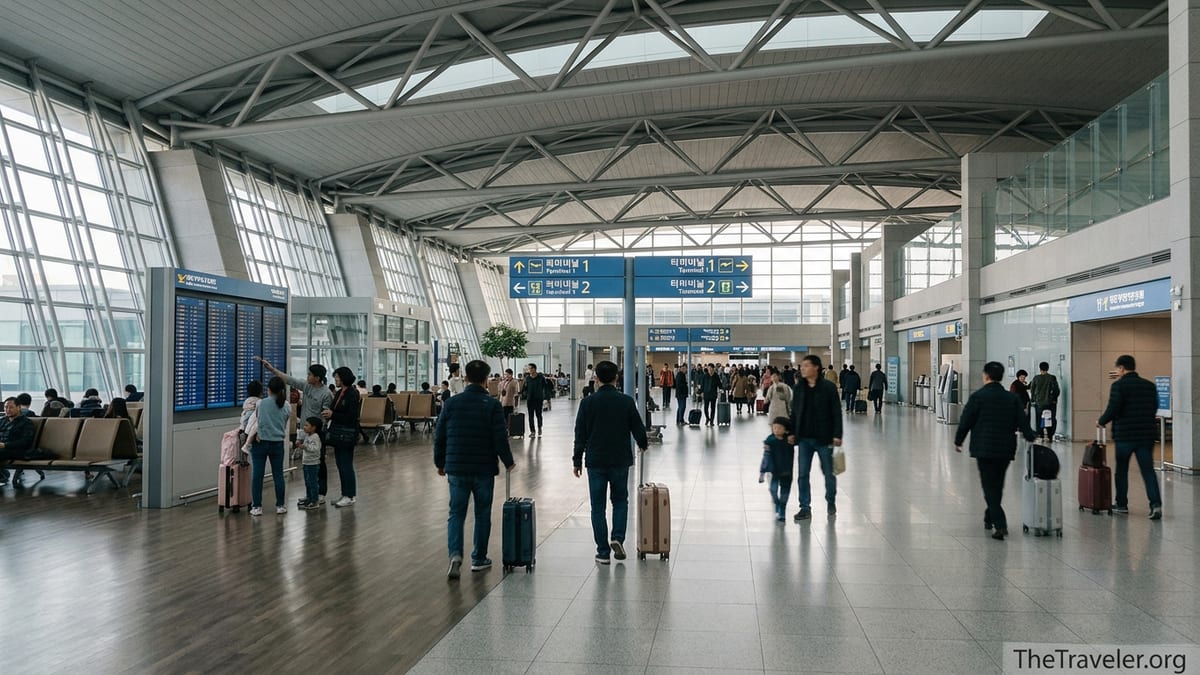
Understanding Incheon’s Layout in One Glance
Incheon International Airport is organized around two main passenger terminals: Terminal 1 and Terminal 2. Terminal 1 is the original and larger building, handling most international airlines plus many low cost carriers, while Terminal 2 is newer and home base for Korean Air, Asiana Airlines and several SkyTeam partners. A satellite concourse is attached to Terminal 1 and reached by an underground shuttle train, but passengers still check in and clear security in Terminal 1 itself.
The two terminals sit several kilometers apart on the airport island. You cannot simply walk from one to the other in a few minutes the way you might move between terminals at smaller airports. If you arrive at the wrong building, you will need to use a shuttle bus, taxi or train to reposition, and that typically adds at least 20 minutes to your journey once you factor in walking and waiting times.
Most long haul travelers first notice the split when they look at their ticket. A passenger flying Korean Air from Los Angeles to Seoul, for example, will arrive and depart from Terminal 2, while a passenger flying United from San Francisco to Seoul will use Terminal 1. Both flights land at “ICN” in the booking systems, but the experience on the ground is completely different, from check in counters to lounges and even some transport options.
Because the terminals are so distinct, the single best habit for any traveler is to confirm the terminal on your booking or airline app the day before travel. Schedules and airline allocations do occasionally change, and the airport signage at both ends of your trip uses “T1” and “T2” heavily. Knowing that number in advance will make everything else at Incheon far easier.
Which Airlines Use Which Terminal
As of mid 2026, Korean Air and Asiana Airlines both operate out of Terminal 2. This reflects the two carriers’ merger progress and gives their passengers easy same terminal connections on many routes. Several SkyTeam partners such as Delta Air Lines, Air France, KLM, Aeromexico, China Airlines, Garuda Indonesia and XiamenAir also use Terminal 2, making it the primary hub for those alliance connections.
Terminal 1 hosts a wide mix of airlines from other alliances and independent carriers. Major examples include United Airlines, American Airlines, Lufthansa, Singapore Airlines, Cathay Pacific, Qatar Airways, Emirates, ANA, Japan Airlines and British Airways. Many low cost carriers such as T’way Air, Air Seoul and others also operate from Terminal 1, along with a number of regional Asian airlines serving nearby destinations.
To understand how this plays out in practice, imagine a traveler from New York flying to Bangkok with a self arranged connection in Seoul. If they choose Korean Air all the way, both flights will use Terminal 2 and the connection is straightforward. If they instead book a combination like United from New York to Seoul and Thai Airways from Seoul to Bangkok on separate tickets, they will stay entirely in Terminal 1. But a mix such as a budget carrier from Southeast Asia into Terminal 1 and a long haul Korean Air or Delta flight out of Terminal 2 requires an inter terminal transfer, which is where many travelers lose time.
Because airline allocations can change, particularly for low cost carriers, always double check on the airline’s website or mobile app, and then verify again when you check in. The departure board at your origin airport will usually show “ICN T1” or “ICN T2” next to Seoul, and printed or mobile boarding passes will repeat the terminal number so you can follow the correct signs on arrival.
How to Move Between Terminal 1 and Terminal 2
When you do need to move between terminals, you have two main situations to consider: staying airside during a protected connection on one ticket, or exiting through arrivals and transferring landside. If your entire journey is on one booking and both flights are checked through, you can usually follow the purple “Transfer” signs after landing without going through immigration. In that case, you will use the inter terminal shuttle train or airside transfer route, which typically takes around 20 minutes door to door.
Landside transfers are more common for travelers on separate tickets or for those who have to collect and recheck luggage. In this case you will clear immigration, collect your baggage, pass customs and enter the public arrivals hall. From there you can take the free inter terminal shuttle bus, which runs roughly every 5 to 10 minutes during the day and takes around 15 minutes of driving time between terminals. By the time you include walking to the stop and waiting, most travelers find that the transfer adds about 20 to 30 minutes.
For example, if you arrive on a low cost carrier into Terminal 1 at 08:00 and have a Korean Air flight out of Terminal 2 at 11:00 on a separate ticket, you should expect something like this: 30 to 45 minutes to clear immigration and collect bags during a normal morning, 20 to 30 minutes to reach Terminal 2 by shuttle bus, and then another 30 to 45 minutes to check in and clear security. That means a three hour gap is workable but not generous, and any delays to the first flight will quickly cut into your margin.
Taxis and ride services are available as a backup if you want to avoid the shuttle. They can be useful late at night when shuttle frequency has decreased, or if you are traveling with a lot of luggage. However, given that the roadway distance between terminals is relatively short and the official shuttle is free, most passengers prefer the bus or airside train whenever operating hours and ticket conditions allow.
Minimum Connection Times and How Much to Allow
Incheon Airport publishes minimum connection times for different combinations of flights, but these figures assume your entire itinerary is on one ticket and your baggage is checked through. For typical international to international connections within the same terminal, the minimum is often around one hour, and many airlines will sell itineraries with layovers as short as 60 to 75 minutes. When your incoming and outgoing flights are both at Terminal 2 on one booking, a one hour connection can be tight but realistic if everything runs on time.
Connections that cross between terminals require more time. Even when you can stay airside, you should plan on at least 90 minutes, and closer to two hours is far more comfortable. The airside shuttle train ride itself is short, but queues at transfer security and the time needed to walk between distant gates quickly add up. When you factor in real world delays, it is wise to treat two hours as a soft floor unless your airline is explicitly selling you a shorter connection on one ticket.
Self connecting on separate tickets is where travelers most often underestimate the time they need. If you must enter South Korea, collect your bags, change terminals and then recheck, three hours is a realistic minimum on a typical day, and closer to four hours is more comfortable. Consider a traveler arriving from Europe on a full service carrier at Terminal 1 at 16:00, then connecting to a low cost flight from Terminal 1 to a nearby Asian city at 18:30 on a separate ticket. They have a two and a half hour gap, but still need to clear immigration, collect bags, check in again, clear departure security, and possibly change concourses. Any delay at immigration or a late arriving inbound flight can turn this into a sprint.
If you are also changing airports, for example connecting from an international flight into Incheon to a domestic flight out of nearby Gimpo Airport, you should allow at least three and a half to four hours, as you will need to use the AREX train or an airport limousine bus between the two hubs. For most travelers, building in extra time is far cheaper and less stressful than dealing with a missed onward flight on a separate ticket.
Arriving in Seoul: Transport Options From Each Terminal
Once you have found the right terminal, getting from Incheon into Seoul is straightforward, but the exact route you choose can depend on which terminal you arrive at. Both Terminal 1 and Terminal 2 have direct access to the Airport Railroad Express, known as AREX, which runs to Seoul Station. The journey on the non stop express service takes around 40 to 45 minutes from Terminal 1, with the all stop commuter version taking a bit longer as it serves intermediate stations.
From Terminal 1, you reach the AREX platforms by going down to the basement level, following signs for “Airport Railroad.” Travelers arriving at Terminal 2 do the same, heading to the lower basement level where the AREX station is located beneath the terminal. A visitor staying near Seoul Station might take the express train directly, while someone staying in Hongdae could use the all stop service and get off at Hongik University station, avoiding a transfer on the city subway with heavy luggage.
Airport limousine buses are another popular choice from both terminals, especially for travelers staying in central neighborhoods like Myeongdong, Gangnam or Jamsil. These buses depart from clearly marked bays outside the arrivals level and run along fixed routes into the city. For example, a bus from Terminal 1 to hotels around Myeongdong typically takes about an hour to an hour and a half depending on traffic, but drops passengers closer to their hotel than the train would.
Taxis are widely available at both terminals and are a good option for families or anyone with oversized luggage. A regular taxi from Incheon to central Seoul usually costs the equivalent of around 40 to 60 US dollars, depending on time of day and traffic, with premium “deluxe” taxis costing more. Ride hailing apps often simply connect you to regular taxis rather than private cars, so the experience and pricing are similar. Whatever mode you choose, watching for your terminal number when you buy a ticket or stand in line is important, as some bus routes and train platforms are specific to either Terminal 1 or Terminal 2.
Departing From Incheon: Check In, Security and Extra Services
When departing South Korea, your terminal determines not just where you check in, but also which lounges, shops and facilities you can use. At Terminal 2, passengers on Korean Air, Asiana and their partners will find airline branded lounges located after security, along with a concentration of duty free shops and food choices tailored to long haul travelers. Terminal 1 also offers a wide range of amenities, including multiple lounges run by airlines and independent operators, nap zones with reclining chairs, shower rooms and quiet seating areas for early morning travelers.
Check in counters open on different schedules depending on airline and destination, but a common pattern is for desks to open around three hours before departure for regional flights and around four hours before departure for long haul flights. At busy times of year, such as summer holidays and major Korean festivals, lines at check in and security can be significant, especially in the mornings at Terminal 1 when many flights to North America and Europe depart within a short window.
To reduce airport stress, many travelers use airline mobile apps to check in in advance, then drop bags at dedicated baggage counters on arrival. Some carriers also participate in city check in facilities in Seoul, where you can check in bags several hours before your flight, pass through an airline style security screening and then take the train to the airport with only your hand luggage. For a business traveler working near COEX in Gangnam, this can mean finishing meetings in the afternoon, checking in at the city terminal, enjoying an early dinner nearby and then heading to the airport knowing the most time consuming formalities are already complete.
Regardless of terminal, you will pass through outbound immigration after security, which is normally a quick process but can build up at peak times. Electronic gates for passport holders from certain countries help to keep queues moving. Once airside, large overhead screens will show your boarding gate; these can change relatively close to departure, so it is wise to confirm on the screens or your app one more time before settling in at a cafe or lounge.
Real World Terminal Scenarios and How to Handle Them
Because so many travelers now build their own itineraries with a mix of budget and full service airlines, understanding common terminal scenarios at Incheon can save you real stress. One frequent pattern involves a traveler arriving on a low cost airline from Japan or Southeast Asia into Terminal 1, then connecting to a Korean Air or Delta long haul flight in Terminal 2 on a separate ticket. In this case, the traveler must fully enter South Korea, collect luggage, take the landside shuttle to Terminal 2 and then check in again, effectively treating Incheon as their destination and origin on the same day.
Another scenario is a protected connection sold on one ticket that still crosses terminals. For instance, a passenger might fly from a regional city into Seoul on Asiana at Terminal 2 and then connect to a partner airline in Terminal 1. Because the ticket is through checked, their bags will be transferred automatically and they simply follow “Transfer” signs instead of entering the country. Even then, time can be tight if the inbound flight is delayed, so it pays to walk briskly and avoid long detours for shopping until you know your gate and boarding time.
A third practical example involves travelers who misread their booking and go to the wrong terminal in Seoul before departure. It is not uncommon for visitors staying near Seoul Station to take the AREX train to Terminal 1 out of habit, only to realize on arrival that their Korean Air flight actually leaves from Terminal 2. In this situation, they must either take the inter terminal shuttle bus or the train onward to Terminal 2, adding 20 to 30 minutes of travel plus walking time. If you are catching a morning long haul flight and arrive only the recommended two to three hours early, that half hour detour can create unnecessary anxiety.
By contrast, travelers who pay attention to their terminal on the booking and set it as a reminder on their phone usually experience Incheon as a calm, organized hub. They know whether to follow signs for T1 or T2 when buying transport tickets in Seoul, they step off the train or bus at the right building, and inside the airport they follow consistent English and Korean signage guiding them to check in areas, security, immigration and boarding gates.
The Takeaway
Incheon International Airport is consistently rated as one of the world’s most efficient and pleasant hubs, but enjoying that smooth experience depends heavily on one simple detail: knowing which terminal you need and how to move between them. Because Terminal 1 and Terminal 2 are separate buildings with different airlines, facilities and transport links, treating “ICN T1” and “ICN T2” as almost separate airports in your planning is often the safest approach.
If you are flying with Korean Air, Asiana or their close partners, you will almost certainly use Terminal 2. If you are flying with most other major international airlines or low cost carriers, expect Terminal 1. For direct transfers within one terminal on a single ticket, published minimum connection times are realistic, but for inter terminal or self made connections, building in extra time is essential. Finally, always verify your terminal on the airline app and departure boards before you travel, and pay attention to the T1 or T2 label whenever you choose trains, buses or taxis to the airport.
With these practical details in mind, Incheon shifts from a potentially confusing two terminal maze into a very manageable and even enjoyable gateway to South Korea and the wider region. A few minutes of planning now will save you long walks, rushed security lines and frantic shuttle rides later, leaving you free to focus on your trip instead of your terminal.
FAQ
Q1. How do I know if my flight uses Terminal 1 or Terminal 2 at Incheon?
Check the terminal listed on your airline booking, e ticket or mobile app, and confirm again on the departure board at your origin airport, which should show “ICN T1” or “ICN T2” next to Seoul. If you are flying Korean Air, Asiana or a close SkyTeam partner such as Delta, Air France or KLM, you will generally use Terminal 2, while many other international and low cost airlines use Terminal 1.
Q2. How long does it take to transfer between Terminal 1 and Terminal 2?
Plan on about 20 to 30 minutes from door to door during the day. The actual shuttle bus or airside train ride is around 10 to 15 minutes, but you need to add walking to the stop, waiting for the next vehicle and walking again at the other end. When making a connection, build this time into your plans as well as any queues for security or immigration.
Q3. Is a one hour layover enough at Incheon?
A one hour connection can be enough if both flights are on one ticket, your bags are checked through and you stay in the same terminal, especially at Terminal 2. However, it leaves little room for delays. If your connection involves changing terminals or collecting and rechecking luggage, treat one hour as insufficient and aim for at least two hours on a through ticket or three hours on separate tickets.
Q4. What should I do if I arrive at the wrong terminal before departure?
Stay calm and head immediately for the inter terminal shuttle bus or train. Follow signs marked for the other terminal and allow at least 20 to 30 minutes to reposition, including walking time. When you reach the correct terminal, go straight to your airline’s check in counters and explain that you accidentally went to the wrong building so staff understand why you may be arriving close to the cut off time.
Q5. Can I transfer between terminals without entering South Korea?
Yes, if your flights are on a single booking and your baggage is checked through, you can usually follow the “Transfer” signs and use the airside shuttle route between terminals without clearing immigration. You will still need to pass through transfer security, and you should allow at least 90 minutes, as queues and walking distances can be longer than expected during busy periods.
Q6. How early should I arrive at Incheon for an international flight?
For most travelers, arriving two and a half to three hours before an international departure is reasonable, and three to four hours is safer during peak seasons or holidays. If you are unfamiliar with the airport, traveling with children or luggage that may need special handling, you may appreciate the extra time to find your check in area, clear security and immigration, and reach your gate without rushing.
Q7. What are the main differences between Terminal 1 and Terminal 2 for passengers?
Terminal 1 is larger and serves a wider variety of airlines, including many low cost and non alliance carriers, while Terminal 2 is newer and focuses on Korean Air, Asiana and their partners. Facilities such as lounges, shopping and dining are strong in both, but the layout and atmosphere differ slightly. From a practical perspective, the biggest difference for most travelers is which airlines operate there and which ground transport routes are most convenient.
Q8. How do I get from Incheon Airport to central Seoul from each terminal?
From both terminals you can use the Airport Railroad Express (AREX) to reach Seoul Station, choosing between a non stop express service or an all stop commuter train. Airport limousine buses run from outside each arrivals hall to major areas such as Myeongdong and Gangnam, and taxis are available from designated ranks. The best choice depends on where you are staying, your budget and how much luggage you have.
Q9. What happens to my bags if I change terminals on a single ticket?
If your flights are on one ticket and your final destination is correctly entered when you check in, your bags will usually be checked through and transferred automatically between terminals by the airport’s baggage system. You will not see your luggage during the connection. You only need to collect and recheck bags when you are on separate tickets or when local regulations require you to reclaim luggage at your first point of entry.
Q10. Are there places to rest or shower in each terminal?
Yes, both terminals offer rest areas, showers and lounge options. In Terminal 1, you can find nap zones with reclining chairs and pay per use shower facilities near some transit areas. Terminal 2 also has quiet seating zones and airline or independent lounges that provide showers and light refreshments, which can be especially useful during long layovers or after overnight flights.