


More news on this day
Royal Caribbean’s cabin line‑up has stretched from basic inside rooms to three‑storey townhouses on its newest ships, creating a widening gap in space, style and perks between the line’s cheapest and most cutting‑edge accommodation.
Get the latest news straight to your inbox!
Older Interior Cabins Remain the Entry Point
For many Royal Caribbean passengers, the experience still begins in a no‑frills interior stateroom on the line’s older ships. On vessels such as the Vision class, editorial reviews indicate that standard interiors measure around 135 to 150 square feet, with no natural light and a compact bathroom and wardrobe. The layout is typically straightforward, with two twin beds that convert to a queen, a small desk and limited seating.
These cabins are designed to maximize capacity rather than wow with design. Décor can feel traditional by current industry standards, with fewer built‑in shelves and less clever storage than on the brand’s newest vessels. Reported noise levels and motion can be more noticeable in lower, more forward or aft interior locations, which are often where the very cheapest “guarantee” categories are assigned.
Pricing reflects that simplicity. Publicly available examples on mainstream booking sites show that interior “guarantee” fares on older ships can undercut balcony and suite categories by hundreds or even thousands of dollars per sailing, particularly on off‑season and shorter itineraries. For budget‑focused travelers, that gap remains a primary reason to opt for the smallest, darkest rooms in the fleet.
The trade‑off is that guests in these cabins receive few, if any, differentiated perks. Access to dining, entertainment and pools is shared with all other passengers, and services such as concierge lounges, priority boarding and included specialty dining are reserved for higher cabin tiers or loyalty program levels.
Icon Class Cabins Push Size and Design Upward
At the opposite end of the spectrum are cabins on Icon of the Seas, the flagship introduced in 2024 as the first of Royal Caribbean’s Icon class. Company guidebooks and independent cabin overviews show that the line expanded both the number of categories and the baseline comfort in each, even at the lower end of the price ladder. Interior rooms on Icon are reported to be somewhat roomier than many older‑ship equivalents, and the line has emphasized design details such as larger showers and family‑friendly layouts.
Across the ship, there are more than two dozen cabin types, ranging from standard interiors to new Surfside Family View interiors and an array of balcony and suite options. Many cabins are clustered around themed neighborhoods like Surfside, Central Park and the AquaDome, with views and configurations tailored to each area. This neighborhood approach marks a shift away from the more uniform deck plans common on earlier ships in the fleet.
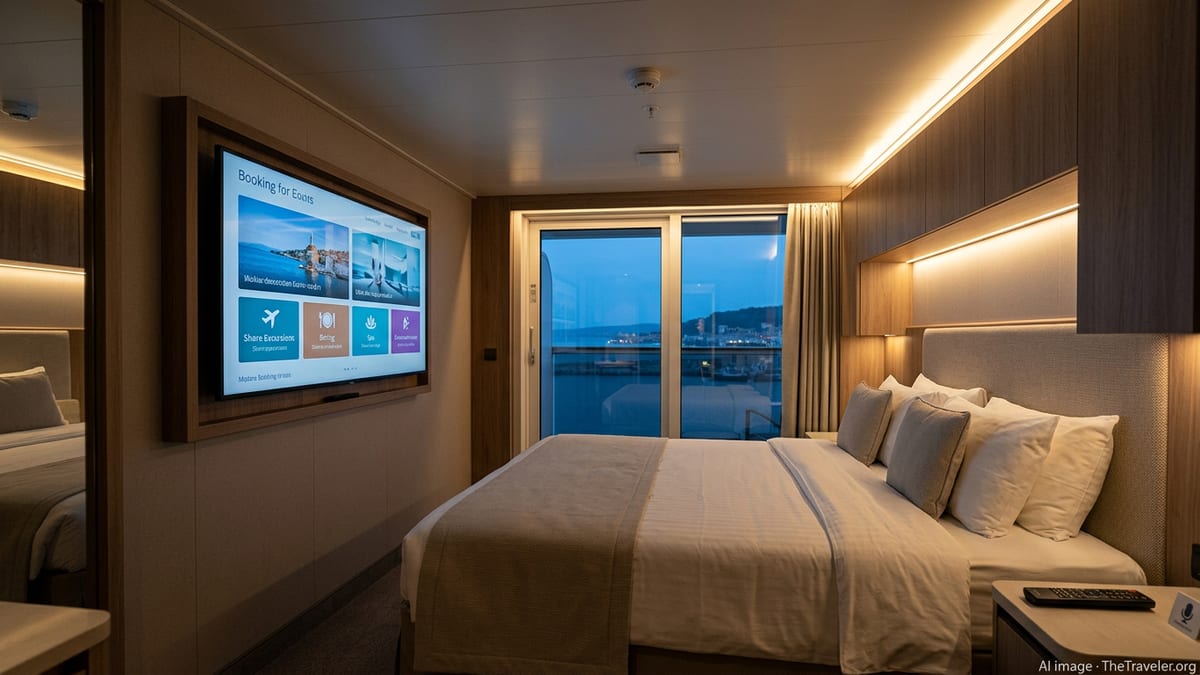
The design language on Icon also skews more residential. Press materials and reviews highlight softer color palettes, integrated lighting, more USB and device charging points and rethought storage, reflecting expectations that guests will treat cabins as real living spaces rather than just places to sleep. Even lower‑priced rooms benefit from these upgrades, though they lack the exclusive services packaged with the top suites.
The result is that the gap between a basic interior on an older ship and a standard cabin on Icon is not just about age but about a different philosophy of how passengers use their rooms, especially on weeklong Caribbean sailings with families.
Space and Amenities in the Newest Suites Redefine the Top End
The starkest contrast appears when comparing the cheapest interior cabins with the most elaborate suites on Royal Caribbean’s newest ships. On Icon of the Seas, the Ultimate Family Townhouse spans three decks and, according to published specifications and cabin databases, offers roughly 1,700 square feet of interior space plus a substantial private terrace. That makes it more than ten times larger than a typical interior stateroom on an older vessel.
Within that footprint, the townhouse incorporates features that would have been unthinkable when the brand’s early ships debuted. Families booking the space have access to an in‑suite slide, separate zones for movies and video games, karaoke setups, a whirlpool on the terrace and direct gated access to the Surfside family neighborhood. Higher‑tier suites on Icon also include multi‑level lofts with floor‑to‑ceiling ocean views, dining areas and expansive balconies.
Alongside the square footage, the service level escalates sharply. Royal Caribbean’s tiered suite program groups the largest accommodations into Star and Sky categories, which come with perks such as dedicated concierges, access to suite‑only sun decks and restaurants, priority embarkation and disembarkation, and, at the very top tier, so‑called “Genie” butler‑style services. None of these benefits are available in the cheapest interiors, where guests rely on standard housekeeping and queue in regular lines.
Pricing reflects this divergence. Industry coverage of Icon’s first seasons indicates that the Ultimate Family Townhouse and other flagship suites have commanded six‑figure fares for some peak sailings, compared with inside cabins that can sell for a fraction of that amount on similar itineraries. The spread underscores how Royal Caribbean has layered a quasi‑luxury product on top of a mass‑market base.
Technology, Location and Perks Deepen the Divide
Technology is another area where the newest cabins diverge sharply from the cheapest options. Icon of the Seas incorporates more digital features across its accommodation line‑up, including app‑based key access in many rooms, enhanced in‑cabin entertainment systems and more robust connectivity options. While some of these upgrades are being retrofitted across the fleet, older interiors often lack the same seamless integration and can feel more analog by comparison.
Location on the ship also plays a growing role. On Icon and the latest Oasis‑class vessels, suites are concentrated in dedicated neighborhoods with private sun decks, lounges and restaurants separated from general passenger traffic. Entry‑level inside cabins, by contrast, are distributed in more conventional corridors without special access points. That physical separation reinforces the experiential gap between passengers paying the lowest fares and those opting for the newest, premium cabins.
Perks bundled with newer suites can influence a cruise from the first day onward. Reports from recent sailings describe suite guests bypassing general check‑in lines, reserving prime show seating and accessing quieter pool areas, while interior passengers navigate busier public spaces and compete for loungers and reservations. The distinction is less about basic safety or comfort, which remain consistent fleetwide, and more about time saved and privacy gained.
Even standard balcony and ocean view cabins on the newest ships have evolved, with concepts such as “infinite” balconies that fold living space into the window area, creating a semi‑indoor veranda. These features sit squarely between the darkest interiors and the most extravagant suites, but are largely absent from Royal Caribbean’s oldest vessels where the cheapest cabins are found.
Value Calculus for Cruise Travelers
For travelers choosing between the lowest‑priced interiors and the headline‑grabbing new suites, the question often becomes one of value rather than absolute luxury. Public pricing data and travel‑agent commentary show that downgrading from a top‑tier suite on Icon of the Seas to an interior on an older ship can free up thousands of dollars for airfare, excursions, dining packages and future vacations.
On the other hand, families or groups who plan to spend significant time in their cabins may find that the additional space and amenities of newer suites justify the premium. Children’s play features, private outdoor areas and concierge assistance can meaningfully change how a sea day feels, especially on longer itineraries or during peak‑season sailings when public spaces are busiest.
Ultimately, the biggest differences between Royal Caribbean’s cheapest and newest cabins span more than just square footage. They encompass design, technology, service level and access to semi‑private spaces that effectively segment the onboard experience. As the line continues rolling out Icon‑class ships and refitting older vessels, that stratification is likely to remain a central feature of its business model and a key decision point for travelers weighing how much their room at sea should really matter.