


More news on this day
Intense rainfall linked to Typhoon Bavi between July 13 and 14 has brought severe flooding to parts of northeast China, inundating urban streets, swelling rivers beyond warning levels and forcing large-scale evacuations across Liaoning, Jilin and Heilongjiang provinces.
Get the latest news straight to your inbox!
Red Alerts and Peak Rainfall Across the Northeast
Publicly available meteorological bulletins describe a concentrated band of heavy rain sweeping across northeastern China from Sunday night into Tuesday, with the strongest impacts recorded in Liaoning and Jilin. Forecasts issued on July 13 warned that 24-hour totals in some locations could reach or exceed 250 to 350 millimeters, particularly in northeastern Liaoning and southeastern Jilin, where forecasters highlighted the potential for “extremely heavy rain.”
Provincial and national weather services reported that large areas of Liaoning and central to eastern Jilin saw widespread heavy to torrential rain from midday July 13 through midday July 14. In the regional hub of Shenyang, local coverage indicated cumulative rainfall approaching 200 millimeters by Tuesday morning, with continued moderate to heavy showers maintaining high runoff and saturated ground conditions.
Further north, in parts of Heilongjiang bordering Jilin, alerts for geological hazards and small river flooding were issued as rainfall associated with the outer circulation of Bavi spread inland. Forecasts indicated that totals from Monday through Wednesday in some districts could reach 100 to 130 millimeters, heightening concern over soil instability in hilly terrain and low-lying farmland already exposed to earlier summer storms.
National hazard advisories on July 13 and 14 included red-level warnings, the highest in a four-tier scale, for flash floods and related risks in pockets of Liaoning and Jilin. These alerts underscored that steep catchments and smaller rivers were especially vulnerable to rapid rises, even where larger trunk rivers remained within main levee systems.
Urban Flooding, Transport Disruption and Power Outages
Images and video broadcast by domestic outlets and international newswires on July 13 showed urban districts in northern Hebei and northeastern Liaoning with roads submerged under fast-moving floodwater. In some neighborhoods, vehicles were partially or fully underwater, and social media footage captured residents moving through chest-deep water or using small watercraft on city streets.
In Shenyang, reports from local media indicated serious surface flooding at key intersections and underpasses as intense downpours overwhelmed drainage capacity. News coverage described stranded vehicles, temporary road closures and detours as traffic authorities diverted flows away from the worst-hit areas. In low-lying parts of nearby cities such as Fushun, street flooding was compounded by rising levels on nearby rivers, pushing water into residential zones and industrial estates.
Regional and national coverage also pointed to disruptions in public transportation. Accounts circulating on July 14 referred to partial suspensions on segments of Shenyang’s subway network in response to flood risks, with urban authorities focusing on tunnel safety and water ingress at stations. Above ground, bus routes in multiple cities were altered or curtailed where key corridors were blocked by standing water or debris.
Localized power outages were reported in several districts where water reached electrical infrastructure or where preemptive shutdowns were carried out to avoid short circuits. Utility companies were described as working to restore service between storm bands, but continued heavy rain and access constraints slowed inspections in some affected neighborhoods.
Evacuations and Emergency Measures in Liaoning, Jilin and Heilongjiang
According to published summaries of emergency management briefings, evacuation operations intensified through July 13 as rainfall totals mounted. By Monday afternoon, more than 260,000 people in Liaoning had reportedly been relocated to safer areas, with a significant concentration of evacuees from Fushun and surrounding counties on the east side of the province.
These relocations focused on residents living along smaller rivers, in mountainous villages exposed to flash floods and landslides, and in low-lying urban neighborhoods where previous events had demonstrated rapid inundation risk. Temporary shelters were opened in schools, sports halls and public buildings equipped to provide basic sleeping space, food supplies and medical support.
In Jilin, county-level updates cited by state-linked outlets pointed to rising flood and typhoon emergency responses in river basins such as the Huifa River. For example, Huinan County in southeastern Jilin raised its response level as water levels approached or surpassed warning marks. Measures included strengthened patrols along levees, pre-positioning of rescue teams, and checks on the structural integrity of small and medium-sized reservoirs.
Neighboring Heilongjiang implemented a mix of orange and blue alerts for geological disasters, mountain torrents and river flooding. Authorities there focused on monitoring slopes in mining and forestry regions, where heavy or prolonged rain can destabilize hillsides, and on safeguarding key transport corridors and grain-producing plains downstream of upland catchments.
Rivers Swell Above Warning Levels
Hydrological data cited in national media showed a rapid response in regional river systems as the heaviest bands of rain passed over central and southern Liaoning on July 13. By early July 14, more than a dozen rivers, including the Hunhe, Qinghe and Puhe, had reportedly risen above official warning levels in at least one monitoring section.
These rivers drain heavily populated basins that include parts of Shenyang and surrounding industrial cities, so even modest overtopping can quickly translate into neighborhood-scale flooding. Public information highlighted the use of sluice gates and reservoir outflows to manage water levels, with a focus on keeping major embankments within safety margins while balancing downstream impacts on farmland and villages.
In Jilin, rainfall over the upper reaches of rivers feeding into larger systems continued through much of July 14, sustaining elevated flows even as the most intense convective bands shifted north and east. Forecasts on Tuesday indicated that some river levels were likely to remain high or continue rising for several days, particularly where catchments had already been saturated by earlier storms this month.
Heilongjiang, situated downstream of portions of the affected area, is expected to see lagged effects as runoff works its way through the network of tributaries. Early advisories suggested that small and medium rivers in the southeast of the province were of particular concern, though major transboundary rivers along the Russian border were still being monitored for any potential later-stage flood peaks.
Infrastructure, Agriculture and Travel Impacts
The heavy rains and flooding are arriving during a key period for the region’s agriculture, heightening concern over potential damage in one of China’s main grain-producing belts. Studies and previous flood seasons have underscored the vulnerability of corn, soybean and rice fields in low-lying plains of Jilin and Heilongjiang when exposed to prolonged waterlogging. Early July reports pointed to localized crop inundation, though comprehensive assessments for the July 13 to 14 event were still being compiled as of Tuesday.
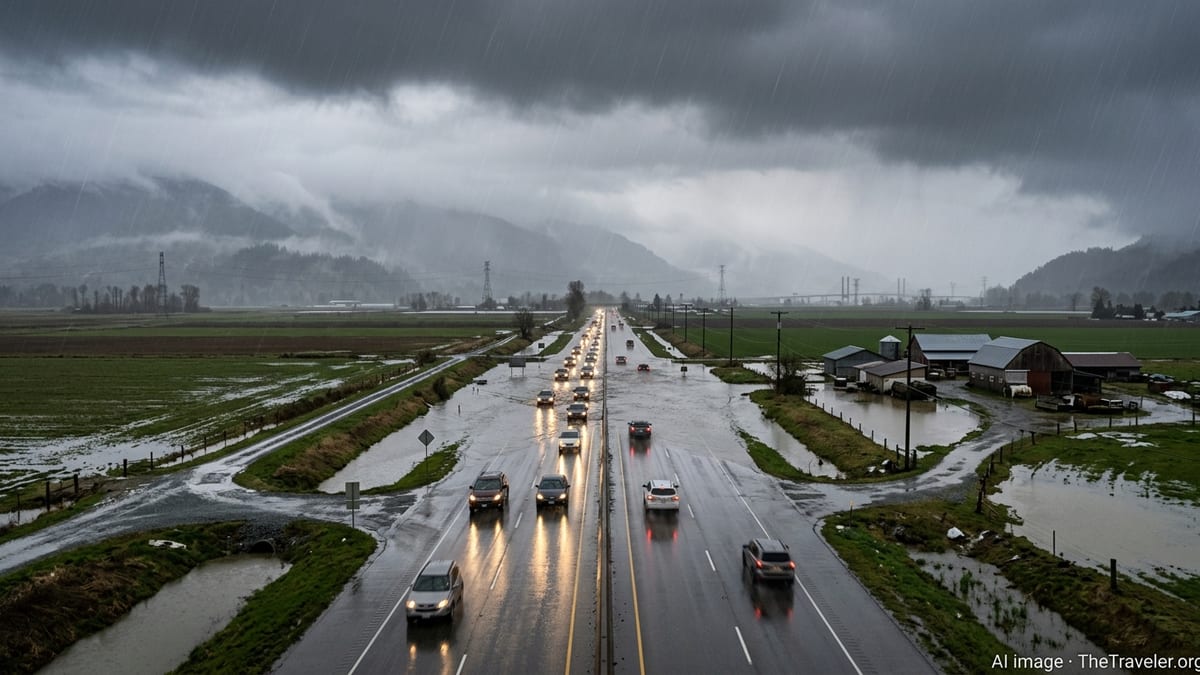
Transport infrastructure across the northeast has also come under pressure. Sections of highways and rural roads in Hebei and Liaoning were reported to be partially submerged or blocked by debris, complicating both local travel and the movement of emergency vehicles. Rail services continued on core corridors, but there were delays and speed restrictions in zones affected by heavy downpours or known landslide hazards.
For residents and travelers in the region, public advisories emphasized close attention to updated forecasts and local announcements. Recommendations circulating in domestic media included avoiding mountainous scenic areas where flash floods and debris flows are possible, staying clear of riverbanks and drainage channels during and after heavy rain, and planning for possible delays at airports, train stations and long-distance bus hubs.
With Typhoon Bavi now weakened but its remnants still feeding moisture into northern China, forecasters indicated that showers and storms could linger over sections of the northeast even after the most intense rainfall bands have moved away. Continued monitoring of river levels, slope stability and saturated urban drainage systems is expected to remain a priority over the coming days.