


More news on this day
Travelers across the United States are facing another bruising travel day as Washington Dulles International Airport records 133 flight delays and 40 cancellations, disrupting United, Republic Airways, Delta and KLM services on key routes linking Washington with Chicago, New York and other major domestic destinations.
Get the latest news straight to your inbox!
Widespread Disruptions Ripple Across Key U.S. Hubs
The latest operational data show Washington Dulles as one of the hardest hit airports in the national network, with delays and cancellations radiating outward to congest already busy hubs. Routes connecting the capital region with Chicago and New York are among the most affected, creating a choke point on corridors that are central to both business and leisure travel.
United Airlines, which operates a substantial schedule at Dulles, is bearing much of the disruption, particularly on shuttle-style services to Chicago and New York that depend on tight turnaround times. Regional operator Republic Airways, flying under major-brand codes, is also experiencing significant schedule pressure, with a number of shorter Washington routes delayed or canceled as aircraft and crews fall out of position.
Delta Air Lines and KLM, which link Dulles to wider domestic and transatlantic networks, are seeing knock-on effects as well. Delays on east coast feeder flights are pushing back departure times for onward connections, while canceled segments are leaving some aircraft and crew stranded away from their planned rotations.
As the day progresses, the operational picture remains fluid, with schedules adjusting as airlines attempt to work through long queues of delayed departures while managing runway and gate availability constrained by weather and air traffic control programs.
Weather and Air Traffic Programs Drive Hour-Plus Departure Holds
Publicly available airport status boards and tracking services point to adverse weather in the mid-Atlantic as a primary trigger for the disruption at Washington Dulles. Thunderstorms moving through the region have prompted traffic management initiatives that slow the rate at which flights can depart and arrive, pushing average departure holds to more than an hour in some cases.
When departure rates are cut, even modestly, congested banks of flights quickly stack up on the ground. Aircraft slated to operate multiple legs between Washington, Chicago and New York during the day lose their time buffers, which magnifies minor delays into major schedule dislocations. Connections that would normally be considered routine become more difficult to protect as inbound aircraft arrive late and outbound slots narrow.
For transatlantic operators such as KLM, the weather-driven slowdowns at Dulles intersect with tightly timed overnight schedules. A delayed arrival from Europe risks missing a planned departure window back across the Atlantic, while an outbound delay from Washington can disturb crew duty limits and aircraft availability on the other side of the ocean.
Operational experts note that once a threshold of delays and cancellations is crossed at a large hub, recovery can take many hours, even after the immediate weather threat has passed, as airlines work through stranded aircraft, crews and passengers while coordinating with air traffic control.
Passengers Confront Long Lines, Missed Connections and Uncertain Timelines
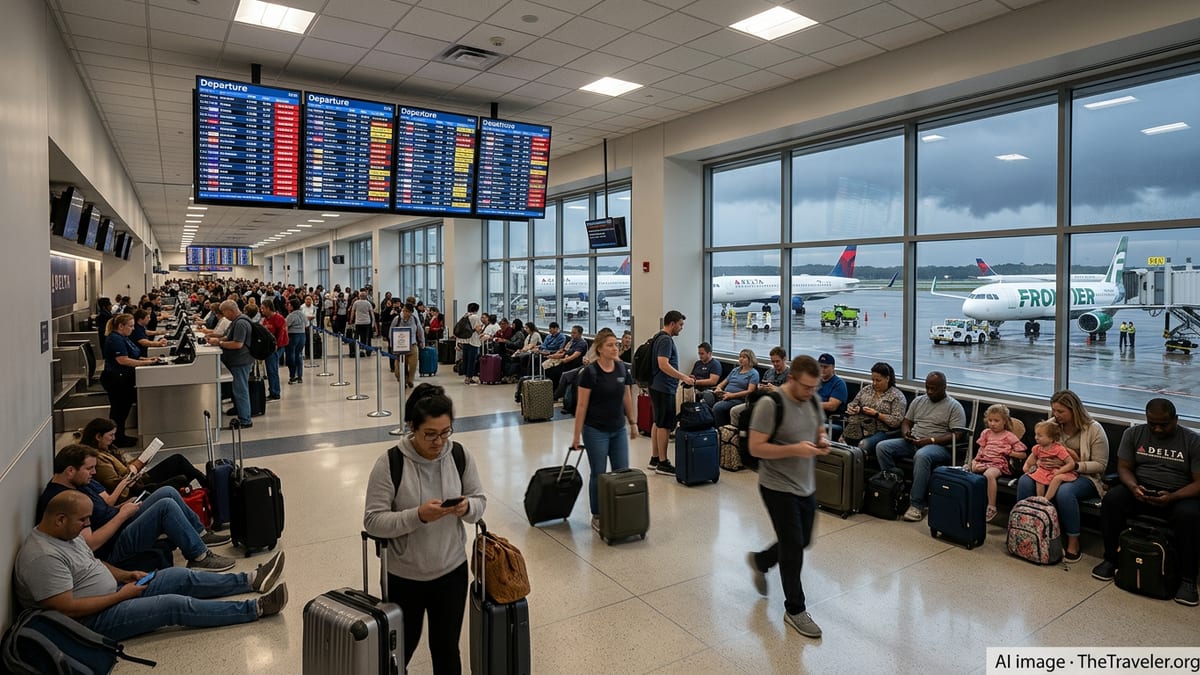
Inside the terminals at Washington Dulles, the numbers on the departure boards translate into a more personal reality for travelers. Long lines have formed at check in counters and service desks as passengers on canceled and heavily delayed flights seek rebooking options, hotel vouchers or alternative routings through less affected airports.
Those connecting through Chicago and New York are facing especially uncertain itineraries. Missed connections on short-haul links can cascade into lost seats on long-haul departures, whether to the West Coast or onward to Europe and other international destinations. Even travelers whose flights are technically still scheduled may find that estimated departure times shift repeatedly as new air traffic control instructions are issued.
Published travel advisories from major carriers encourage affected customers to use mobile apps and airline websites for rebooking in order to avoid queuing at airport counters. However, high volume on digital channels can slow response times, while limited seat availability on later flights restricts options for same day or next morning departures from Dulles.
Some passengers are opting to reposition themselves to nearby airports in the Washington region in search of more stable schedules, but with storms influencing a broad swath of the eastern United States, spare capacity at neighboring hubs is also tightening.
Airlines Activate Flex Policies and Recovery Playbooks
In response to the disruptions, United, Delta and KLM have activated elements of their standard irregular operations playbooks. Publicly available information indicates that change fee waivers and flexible travel policies are being applied on select Washington itineraries, particularly on routes where delay windows extend several hours or cancellations are concentrated.
Regional partner Republic Airways, which operates many flights under United and Delta brands, is adjusting crew pairings and aircraft routings to rebuild reliability on shorter sectors. These flights are often crucial for feeding passengers into larger hubs, so disruptions at the regional level can have an outsized impact on the integrity of the mainline network.
Industry data and historical performance reports show that a pattern of weather induced delays, followed by tactical cancellations, is a common strategy used by carriers to stabilize operations. By canceling certain flights in advance or early in the disruption cycle, airlines can free up aircraft and crews to support higher demand routes and maintain a minimal level of connectivity across their networks.
Recovery is expected to be uneven across airlines and destinations, with some routes clearing their backlogs more quickly than others depending on aircraft availability, crew duty windows and slot allocations at onward hubs such as Chicago O Hare and New York area airports.
What Impacted Travelers Can Do Next
Consumer guidance from aviation regulators and traveler advocacy groups highlights several practical steps for passengers caught up in large scale disruption events like the one unfolding at Washington Dulles. Checking flight status frequently and confirming gate information before heading to the airport remain essential, especially when estimated departure times are changing rapidly.
Passengers whose flights are canceled or significantly delayed may be eligible for refunds, vouchers or reaccommodation, depending on the airline, fare rules and whether the disruption is classified as within the carrier s control. Policies differ between United, Delta, KLM and regional operators such as Republic Airways, so travelers are advised to review the specific conditions linked to their tickets.
For those already at the airport, seeking assistance through multiple channels can improve the chances of a faster resolution. Self service kiosks, mobile apps and call centers often provide rebooking options even when in person queues are long, while some airlines allow same day changes to nearby airports if space is available.
With 133 delays and 40 cancellations recorded at Washington Dulles and additional knock on effects expected across the national network, travelers on Washington, Chicago, New York and other U.S. routes are likely to face continued disruption through the day and into the evening as the system works toward a gradual reset.