


More news on this day
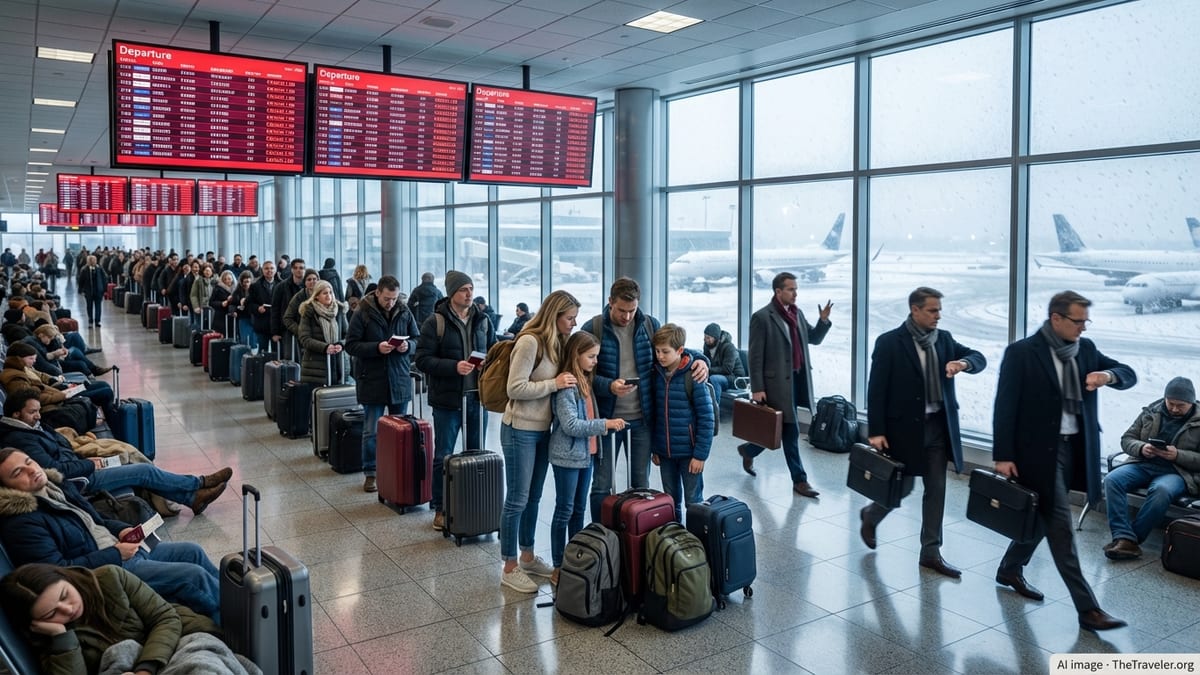
Travelers at Syracuse Hancock International Airport in upstate New York faced mounting frustration on Monday as a wave of weather-related disruptions delayed at least 11 flights and canceled five more, affecting services on American Airlines, Delta Air Lines, United Airlines, JetBlue and other carriers, including key connections to New York City.
Get the latest news straight to your inbox!
Weather Disruptions Ripple Into Central New York
Publicly available tracking data shows that widespread thunderstorms across the eastern United States have triggered significant operational challenges for airlines, with Syracuse Hancock International Airport seeing a cluster of delays and cancellations as carriers attempt to reset their networks. Nationally, aviation tracking services report hundreds of delayed and canceled flights, with major hubs in the New York City region among the hardest hit.
Those broader disruptions have filtered into Syracuse, where at least 11 flights have been delayed and five canceled across the day, according to aggregated flight-status boards and airline schedule updates. The affected operations span morning, afternoon and evening departures and arrivals, indicating a rolling pattern of disruption rather than a single isolated incident.
Local conditions around Syracuse early Monday were cool and overcast, with light winds and intermittent rain. However, the most severe weather has centered further down the line on heavily trafficked corridors to and from New York City and other East Coast hubs, where ground delay programs and congestion have slowed the flow of traffic and pushed knock-on delays into secondary airports such as Syracuse.
Aviation industry guidance notes that when storms force holding patterns, reroutes or temporary ground stops at major hubs, smaller connecting airports typically see their on-time performance deteriorate as aircraft and crew arrive late, turning what would otherwise be a routine operating day into a patchwork of rolling schedule changes.
Major U.S. Carriers Affected at Syracuse
The operational strain has been visible across the leading U.S. airlines that serve Syracuse Hancock International Airport. Schedules show disrupted flights on American Airlines, Delta Air Lines, United Airlines and JetBlue, along with several smaller or regional operators that provide feeder services into the big coastal and Midwestern hubs.
Delayed departures and arrivals have been recorded on routes linking Syracuse with Chicago, Detroit, Washington, Charlotte and Dallas, among others, with late-running aircraft cascading into further schedule slippage. Connections to New York City area airports have been particularly sensitive, reflecting both the concentration of traffic in that airspace and the weather systems moving through the region.
Published airline timetables list Syracuse as a connecting point to a range of domestic and limited international destinations, and the current disruption underscores how dependent smaller airports are on the reliability of operations at larger hubs. When aircraft are held or rerouted elsewhere, the impact at an airport such as Syracuse is often seen in last-minute gate changes, rolling departure times and sudden cancellations.
Travel industry analysts frequently point out that carriers will prioritize restoring stability at their biggest hubs first, which can leave spoke airports coping with lingering irregular operations, as aircraft and crews are repositioned and duty-time limitations are managed.
Travelers Face Long Waits and Scrambled Plans
For passengers at Syracuse Hancock International Airport, the irregular operations have translated into extended gate waits, missed connections and disrupted itineraries. Airport wait-time calculators and traveler reports describe relatively manageable security screening lines on Monday, but the primary frustration has come after reaching the gate, where departure boards have shifted repeatedly.
Some travelers bound for New York City and onward international connections have been forced to rebook through alternative hubs or accept overnight stays, as the combination of late-arriving aircraft and tight crew scheduling windows limited the ability of airlines to operate replacement services. Others on domestic routes have opted to switch to later flights in the hope that conditions at downline airports will stabilize by evening.
Publicly available airline policy summaries indicate that weather-related disruptions are typically categorized as outside carrier control, limiting automatic eligibility for compensation. However, most major airlines provide options such as complimentary rebooking within a specified time window, travel credits where applicable, or waivers of change fees when broad weather systems affect large portions of the network.
Airline and airport guidance consistently recommends that passengers maintain close contact with their carrier during such events, monitor their flight status frequently on mobile apps or departure screens, and avoid heading to the airport until a flight is shown as operating if significant disruptions are underway.
Regional and National Context of the Disruptions
The turmoil at Syracuse is part of a wider pattern of weather-driven disruption playing out across the United States. National flight-data summaries for Monday morning and early afternoon show substantial numbers of delayed and canceled services at key hubs including New York’s John F. Kennedy and LaGuardia airports, as well as major Texas and Midwestern airports affected by separate storm systems.
In such conditions, the Federal Aviation Administration’s traffic management initiatives, including ground delay programs and spacing measures in congested airspace, slow overall throughput in order to maintain safety margins. The resulting capacity constraints at large airports often force airlines to trim schedules, leading to cancellations on lower-demand routes and secondary city pairs.
Syracuse Hancock International Airport, which handled more than 1.5 million passengers in 2025 and serves as a joint civil and military facility, plays a critical role for Central New York travelers seeking both domestic and international connections. Its reliance on a relatively small number of daily departures to big hubs means that a cluster of cancellations on any given day can significantly reduce options for rebooking.
Analysts note that this operational model is common across many mid-sized U.S. airports, where a limited slate of flights must absorb the shock of systemwide weather events. When multiple flights to key hubs are delayed or canceled in short succession, the result is an immediate shortage of available seats and a sharp uptick in demand for rental cars, intercity buses and last-minute hotel rooms.
What Passengers Can Do When Flights Disrupt
Travel rights advocates and aviation consumer guides emphasize that preparation and awareness are the best tools for passengers caught in events like the current disruptions at Syracuse. They recommend booking longer connection windows during peak storm seasons, especially when connecting through known congestion points in the Northeast and Midwest.
Experts also advise that travelers download their airline’s app, enable push notifications for schedule changes and check real-time delay maps offered by aviation authorities, which can provide broader context on whether issues stem from local conditions or systemwide weather. Having this information in hand allows passengers to make quicker decisions about rebooking, rerouting or even postponing travel.
For those already at the airport, contingency planning can include identifying alternative routes, monitoring seat availability on later departures and, where practical, considering ground transportation options for regional trips. Given that Syracuse sits within driving distance of major cities across New York State and neighboring regions, some travelers faced with extended delays may find that renting a car or taking ground transport is faster than waiting for the next available seat.
As storms continue to move through busy air corridors, the disruptions at Syracuse Hancock International Airport highlight once again how quickly routine travel can be upended, and how critical it is for passengers to stay informed and flexible when weather unsettles the carefully balanced airline system.