


More news on this day
Powerful storm systems training over the Chicago area have triggered extensive delays and hundreds of flight cancellations at O’Hare International Airport, disrupting Fourth of July holiday travel and rippling across airline networks nationwide.
Get the latest news straight to your inbox!
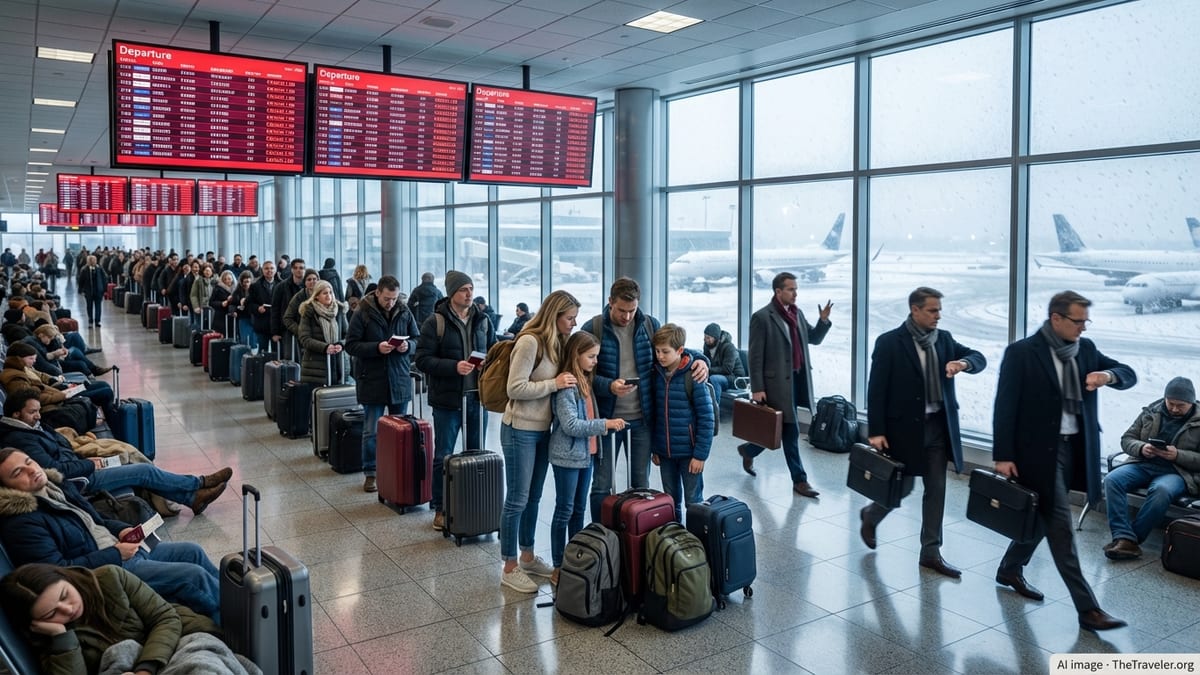
Thunderstorms Trigger Ground Delays and Cancellations
Thunderstorms and unstable air over northern Illinois have repeatedly moved across Chicago’s airspace since July 3, forcing air traffic managers to slow arrivals and departures at O’Hare. Publicly available aviation data for the holiday period indicate that the airport has cycled in and out of ground delay programs as storms built over the region, reducing the number of aircraft allowed to land each hour and backing up departures on crowded taxiways.
According to published coverage focused on the Independence Day travel rush, Chicago O’Hare recorded well over two hundred flight delays and more than one hundred cancellations in a single operating cycle on July 4, placing it among the most disrupted hubs in the United States. These interruptions compounded schedule pressures that were already elevated by near-record passenger volumes over the long weekend.
Real-time tracking from airport and flight-status dashboards shows that disruptions have not been confined to a single airline or time of day. Delays have stretched from early morning into late evening as storms repeatedly redeveloped along a frontal boundary, temporarily closing departure corridors and forcing arriving flights into holding patterns or lengthy reroutes around the worst of the weather.
While most flights have ultimately departed, the combination of rolling ground delays and scattered cancellations has left many travelers facing missed connections, late-night arrivals and, in some cases, unexpected overnight stays away from their intended destination.
Nationwide Impact as O’Hare Bottlenecks the System
Because Chicago O’Hare functions as a central hub for multiple large carriers, weather disruptions there tend to echo across the national air network. Industry analyses of the holiday period describe more than six thousand delays and several hundred cancellations across United States airports on July 4, with Chicago frequently cited as a key chokepoint when storms have been strongest over the Midwest.
Reports from aviation-focused outlets indicate that when O’Hare’s arrival rate is reduced or a temporary ground stop is implemented, aircraft bound for Chicago often depart late or remain at their origin airports until flow restrictions ease. Those late departures cascade into missed onward flights for passengers connecting through O’Hare to destinations across the country and overseas.
Individual flight reports published on aviation news sites show how quickly a local weather event can ripple outward. In at least one recent instance, passengers on a flight bound for O’Hare faced a delay of several hours at their departure airport, only to be diverted to an alternate city when storms again intensified over Chicago before arrival. That combination of delay and diversion removed both the original aircraft and many of its passengers from the schedule for the rest of the evening.
Travel data platforms and airport dashboards suggest that these knock-on effects have been felt particularly strongly on routes linking Chicago with other busy hubs in the Northeast and upper Midwest, where convective weather has also been active and where spare aircraft and crews are already stretched by peak-season demand.
Holiday Crowds, Construction and Limited Flexibility
The Fourth of July period has brought some of the heaviest traffic of the summer to O’Hare, limiting the airport’s ability to absorb weather-related interruptions. Local travel forecasts going into the holiday projected that Chicago’s two major airports would handle close to two million passengers between the middle of the week and Monday, with O’Hare carrying the bulk of that load.
This surge in demand is arriving as the airport continues a long-running modernization program intended to add gates and streamline airfield operations. Public project summaries from federal aviation authorities describe the work as ongoing through 2026, with intermittent impacts on capacity as runways, taxiways and terminal areas are reconfigured. While the construction is designed to improve resilience over the long term, short-term effects can include reduced flexibility when storms force rapid changes in traffic flow.
Travel analysts note that during peak periods, even modest reductions in arrival or departure rates can quickly translate into multi-hour queues for takeoff slots and gate space. When thunderstorms sit over key departure fixes out of Chicago, controllers may be unable to use preferred routing, lengthening flight times and pushing crews toward duty-time limits that can trigger additional cancellations.
Airlines operating at O’Hare have entered the summer with fuller schedules than in recent years, reflecting strong demand and limited spare capacity in fleets and staffing. That tighter operating environment leaves less room to recover when several hours of weather disruption compress a full day’s schedule into a shortened window.
What Travelers Are Experiencing on the Ground
Passenger accounts shared on social platforms and travel forums over the past two days describe crowded terminals, long lines at customer-service desks and mounting frustration as delay estimates shift with each new round of storms. Several travelers report spending multiple hours on board aircraft waiting for departure slots, only to return to the gate when lightning or heavy rain again passed over the airfield.
Others describe diversions to alternate airports in the Great Lakes region when O’Hare briefly became unavailable for arrivals, followed by lengthy waits for rebooking as crews timed out or aircraft reached their operating limits for the day. In a few cases, travelers recount missing family gatherings and celebrations as overnight hotel stays replaced planned evening arrivals into Chicago.
Publicly available information from consumer-rights organizations emphasizes that severe weather is generally categorized as outside airline control, which limits eligibility for financial compensation. However, airlines are still expected to provide certain forms of care when disruptions are prolonged, such as meal vouchers during extended delays and hotel accommodation when passengers are stranded overnight far from home, subject to each carrier’s policies.
For those yet to travel through O’Hare during this volatile weather pattern, travel advisers recommend arriving early at the airport, monitoring flight status frequently, and considering booking longer connection windows where possible. Travelers are also urged to keep essential items in carry-on bags, in case checked luggage is delayed on a separate flight or temporarily held back during thunderstorm ground stops.
Outlook for the Remainder of the Holiday Weekend
Short-range forecasts for the Chicago region indicate a continued risk of scattered thunderstorms as warm, humid air remains in place over the Midwest. While not every storm cell will pass directly over O’Hare, the potential for rapidly changing conditions in the terminal area and along departure and arrival paths means intermittent slowdowns are likely to persist through the close of the holiday travel window.
Meteorological analyses suggest that as long as strong updrafts and frequent lightning remain a possibility, airfield operations must be adjusted to protect ramp workers, ground equipment and aircraft moving on the surface. Even brief lightning holds, during which ground crews are required to suspend fueling and baggage handling, can add significant time to turnarounds when gates are fully utilized.
Industry observers note that the broader national air traffic system is also under heavy strain from holiday demand, leaving fewer opportunities to reroute passengers around weather-affected hubs. With many flights already operating near capacity, rebooking options for those whose trips are disrupted at O’Hare may involve longer connections, alternate airports or travel on later days.
Travel monitoring services indicate that conditions typically ease as holiday traffic levels normalize in the days after Independence Day. For now, however, O’Hare remains one of the focal points of weather-related disruption, highlighting the vulnerability of dense, interconnected flight networks when storms stall over a major hub.