


More news on this day
Travelers passing through Hartsfield-Jackson Atlanta International Airport on June 9 are facing another day of disruption, with publicly available tracking data showing 188 flight delays and four cancellations affecting major U.S. and regional carriers and itineraries linking the United States to Canada, Germany, the Netherlands, Japan, Italy, Colombia, Mexico and Nigeria.
Get the latest news straight to your inbox!
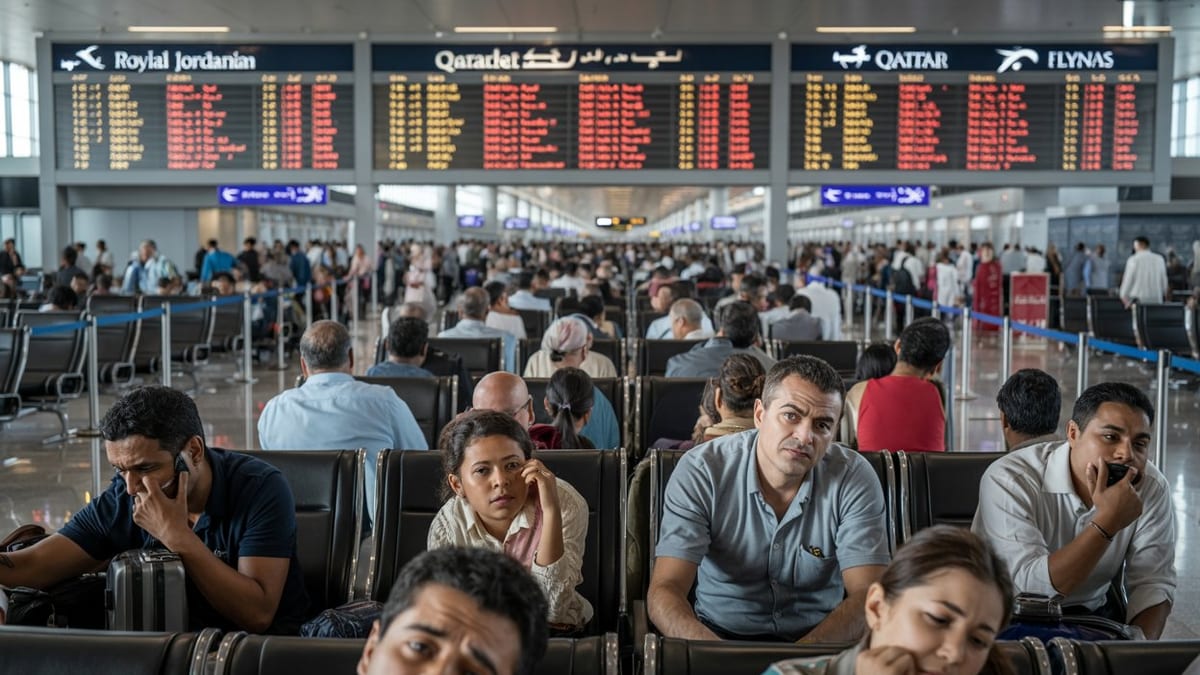
Weather and Congestion Combine at the World’s Busiest Hub
Hartsfield-Jackson Atlanta International Airport, the world’s busiest hub by passenger numbers, is particularly vulnerable when summer storms move across the Southeast. Federal aviation data for Atlanta on June 9 indicates active thunderstorms in the area, with departure programs in place and ground traffic moving more slowly than scheduled. That combination is contributing to rolling delays throughout the day.
Operational summaries for the airport show departure holdups in the 15 to 30 minute range as a baseline, but the knock-on effect across tightly timed schedules has been considerably larger. As aircraft arrive late into Atlanta, subsequent departures are pushed back, leaving passengers facing much longer waits than the official minimum figures suggest.
Hartsfield-Jackson’s role as the primary hub for Delta Air Lines and a key station for United Airlines, Southwest Airlines, American Airlines and regional partners such as Jazz means even a brief slowdown can have outsized consequences. With hundreds of daily movements concentrated into narrow time banks, modest weather-related restrictions quickly ripple across multiple waves of domestic and international departures.
Airport information pages continue to direct passengers to airline channels for the latest flight status, reflecting how rapidly conditions can shift when storms redevelop over the airfield. For many travelers on June 9, that has translated into repeated schedule updates and gate changes over the course of the day.
Major U.S. Carriers Among Those Most Affected
Within the 188 delays and four cancellations recorded on June 9, large network carriers dominate. Flight-status aggregators tracking operations at Atlanta show Delta Air Lines experiencing a significant share of the disruption, consistent with its position as the airport’s largest tenant and global hub carrier. Delays on Delta’s short-haul routes have in turn affected onward connections to long-haul services.
United Airlines, Southwest Airlines and American Airlines are also listed among the airlines contending with late departures and arrivals at Atlanta. Many of these disruptions involve narrowbody jets cycling through domestic routes, but the misalignment is most keenly felt when those aircraft are scheduled to feed transcontinental or international banks later in the day.
Regional operations have not been spared. Jazz, which provides regional feed on North American routes, appears in delay tallies where its flights are operating in or out of the Atlanta hub. These flights are especially important for connecting passengers from smaller markets into long-haul itineraries, and delays at this level can cause missed connections even when the mainline long-haul departure remains technically on time.
The four cancellations logged at Atlanta on June 9 are spread across a mix of domestic and international services. Publicly available schedules show that when an intra-U.S. segment is withdrawn, airlines often attempt to rebook passengers through alternative hubs, but options are more limited for same-day re-accommodation on international sectors.
Impact on Transatlantic and Transpacific Routes
The disruption in Atlanta is being felt well beyond the United States. Flight-status boards and global tracking platforms indicate delays on routes connecting Atlanta with major European gateways in Germany, the Netherlands and Italy. These include services that normally depart in concentrated evening banks, timing arrivals for early-morning connections in Frankfurt, Munich, Amsterdam and Rome.
When departure slots from Atlanta are compressed by weather, crews can face additional constraints related to duty-time limits, and aircraft may miss their optimal overnight windows into Europe. Even when flights ultimately depart, shortened turnaround times at the European end can affect the reliability of next-day services back to the United States, extending the disruption cycle over several days.
Long-haul routes to Asia are also implicated. Services from Atlanta to Japan, which typically operate on tight schedules to connect with domestic Japanese networks and other Asian destinations, are sensitive to delays at departure. Travel-data providers show some of these flights leaving behind schedule on June 9, which forces adjustments to connecting itineraries further down the line.
For passengers, the most immediate impacts are missed or compressed connections at intermediate hubs, particularly in Europe and Asia where border processing and terminal transfers add complexity. Many travelers heading beyond primary gateway cities are being rebooked onto later departures or rerouted through alternate hubs to complete their journeys.
Latin American and African Connections Disrupted
Atlanta has developed into an important bridge between the United States and Latin America, as well as select destinations in Africa. On June 9, published flight data indicates delayed departures on routes linking Atlanta to cities in Colombia and Mexico, alongside knock-on impacts for returning services back into the United States.
These southbound flights commonly serve as key links for business travelers and for diaspora communities shuttling between the U.S. Southeast and destinations such as Bogotá, Cartagena, Mexico City and secondary Mexican cities. When the originating leg from Atlanta pushes back late, downstream connections within Latin America often need to be adjusted, sometimes involving overnight stays.
Connections to Nigeria via European and Middle Eastern hubs are also being affected indirectly. While few flights operate nonstop between Atlanta and Nigerian cities, itineraries commonly route through major European airports or Gulf hubs. Delays on the Atlanta-to-Europe segments reduce the available transfer time for onward flights to Lagos and Abuja, increasing the risk of missed connections and baggage delays.
Published coverage from recent weather-related disruptions at Atlanta shows that such patterns are not unusual: when the hub slows, the effects propagate disproportionately along long-haul corridors where there are fewer daily frequencies. June 9’s figures, with nearly two hundred delays from a single hub, align with that trend.
What Travelers Can Expect in the Coming Hours
As storms drift across the Atlanta region, aviation meteorology reports suggest conditions may improve gradually into the evening, giving airlines a chance to clear some of the backlog. However, experience from previous disruption days at Hartsfield-Jackson indicates that schedules often remain fragile even after weather improves, as crews and aircraft are out of position.
Passengers departing later on June 9 should anticipate continued gate changes and possible rolling delays, particularly on flights relying on inbound aircraft from previously affected routes. Those with tight connections at Atlanta or at onward hubs in Europe, Asia, Latin America or Africa are likely to face the greatest uncertainty.
Public guidance from the airport emphasizes the importance of monitoring airline notifications for real-time updates, while aviation analysts generally recommend allowing additional buffer time for security screening and connections on heavy-disruption days. Given the number of flights already delayed at Atlanta, industry observers expect some residual impact to persist into June 10 as carriers reset their networks.
For now, Hartsfield-Jackson remains open and operating, but with hundreds of aircraft running behind schedule, June 9 has underscored once again how quickly weather and congestion at a single mega-hub can reverberate through global air travel.