


More news on this day
Canada’s core air travel network faced fresh turbulence today as 39 flights were cancelled nationwide, with major hubs in Toronto, Calgary and Montreal bearing the brunt of new disruptions tied to Air Canada and its regional partner SkyWest.
Get the latest news straight to your inbox!
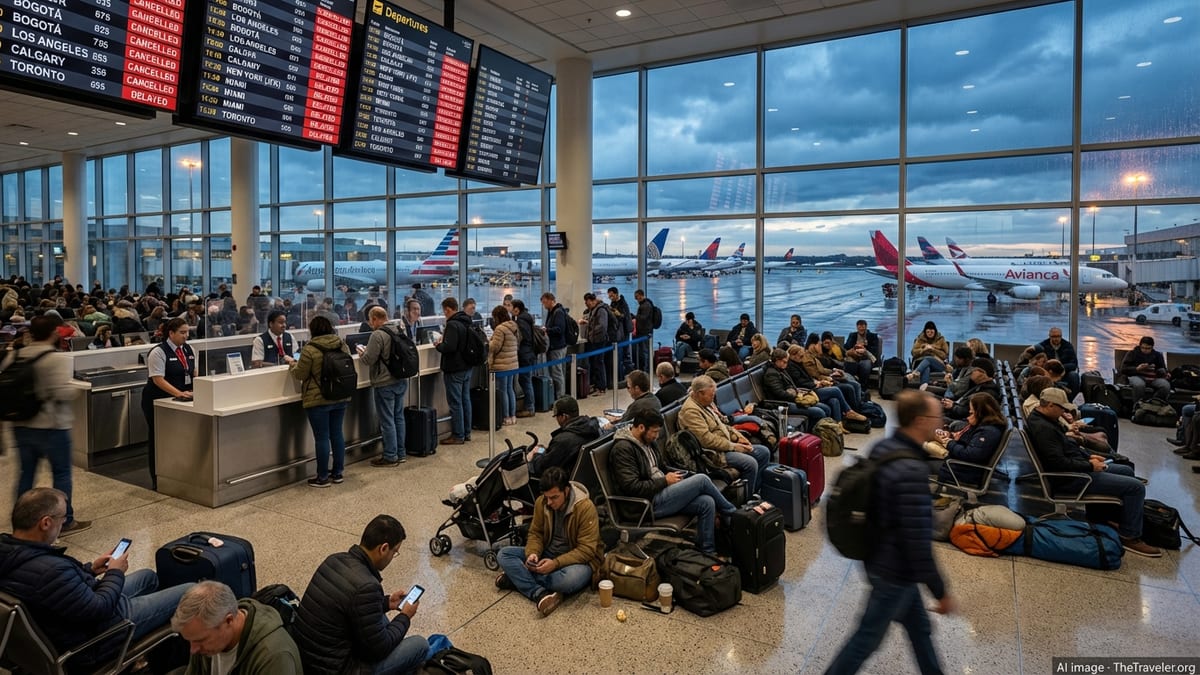
Major Hubs See Concentrated Cancellations
Publicly available tracking data and operational boards show that the latest wave of cancellations is clustered around Toronto Pearson, Calgary International and Montreal–Trudeau airports, underscoring how sensitive Canada’s aviation system remains to schedule shocks at a few key hubs. While dozens of other flights departed on time, the 39 cancellations were enough to trigger missed connections, rebookings and longer queues at service desks.
Toronto Pearson, the country’s busiest airport and primary hub for Air Canada, once again appears to be the focal point of disruption, with multiple mainline and regional departures scrubbed throughout the day. Similar patterns have been seen repeatedly in recent months when relatively small numbers of cancellations at Pearson translated into widespread inconvenience because of its role as a national connection point.
In Calgary, where both Air Canada and WestJet operate significant schedules, passengers encountered a smaller but still impactful set of cancellations. These affected a mix of domestic routes and transborder services, tightening capacity for travelers attempting to move through western Canada or connect onto longer‑haul journeys.
Montreal–Trudeau also reported several cancelled flights that contributed to the day’s national tally. The combination of Toronto, Calgary and Montreal seeing simultaneous disruption highlights how even a limited number of flights removed from the schedule at each hub can combine into a substantial nationwide total.
Air Canada and SkyWest at the Center of Today’s Disruptions
Air Canada is at the center of most of today’s cancellations, according to airport boards and schedule data, reflecting its position as the dominant carrier in the Canadian market. The airline has been adjusting its network through the first half of 2026, including trimming some U.S. routes and selectively reducing frequencies where demand or operating costs have made certain flights harder to sustain.
SkyWest, a major North American regional operator that flies under various partner brands in the United States, is also associated with part of today’s disruption picture through its codeshare links. When SkyWest‑operated regional flights are removed from the schedule, that decision can ripple into Air Canada’s published timetable, affecting passengers who may not immediately realize their trip is partly operated by a partner carrier.
Industry analyses note that these cancellations are landing on top of a period already marked by weather‑related disruption, high jet fuel prices and tight staffing in some parts of the aviation ecosystem. The result is that carriers such as Air Canada have less slack in their networks when operational challenges arise, making it more likely that flights will be proactively cancelled to protect the remainder of the schedule.
Today’s events fit into a broader pattern observed this year, where days featuring a relatively modest number of outright cancellations can still generate significant knock‑on effects when they disproportionately affect hub‑and‑spoke operations and regional partner services.
Knock‑On Effects for Travelers Across Canada
While 39 cancelled flights represents only a small share of the hundreds of daily departures and arrivals across Canadian airports, the real‑world impact for individual travelers can be substantial. Cancellations at major hubs often involve flights that feed into or out of other services, leading to missed connections that require full itineraries to be rebooked.
Reports from previous disruption days indicate that passengers on early‑morning flights are especially vulnerable, as a single cancellation can cascade into missed onward flights later in the day. With today’s disruption again centered on Toronto, Montreal and Calgary, many affected travelers are likely to be those connecting between regional Canadian cities and larger domestic or transborder destinations.
Publicly available guidance from consumer advocates emphasizes the importance of monitoring flight status frequently in this type of environment. Travelers are encouraged to use airline apps and airport information screens, and to keep an eye on inbound aircraft status to anticipate potential problems before arriving at the airport.
For those already caught up in today’s cancellations, rebooking options can vary depending on route, time of day and seat availability. On busy days, some passengers may face overnight stays or be re‑routed through secondary hubs as airlines attempt to reposition aircraft and crew.
Why Canadian Cancellations Keep Spiking
Today’s 39 cancellations are the latest in a series of disruption spikes that have hit Canada’s air network throughout 2026. Recent operational days have seen higher totals of delays and cancellations when weather systems, staffing constraints or aircraft availability problems have converged on the same few airports.
Analysts point to a combination of structural and short‑term factors behind the recurring turbulence. Concentration of traffic at a small number of hubs, reliance on regional partners for connectivity, and tight aircraft utilization all mean that any disruption can quickly spill over into a broader operational challenge. High operating costs and network adjustments in response to fuel prices add another layer of complexity for carriers planning daily schedules.
Weather remains a persistent wild card, particularly when storms or reduced visibility hit Toronto Pearson, Calgary or Montreal–Trudeau. Even on days without severe conditions, residual effects from earlier weather events, such as displaced aircraft or crews, can lead to targeted cancellations like those seen today as airlines attempt to reset their operations.
The situation is compounded by strong travel demand on many domestic and transborder routes, which leaves fewer empty seats available to absorb rebooked passengers when flights are cancelled. This dynamic can make each individual cancellation feel more consequential for those affected.
What Passengers Should Do If Their Flight Is Cancelled
For travelers caught in today’s disruption, experts in passenger rights and travel planning generally recommend a few immediate steps. The first is to confirm the cancellation through official airline channels, such as mobile apps or airport kiosks, and then to search for rebooking options as quickly as possible, since alternative flights can fill up fast on busy days.
Passengers are encouraged to keep digital copies of their itineraries, boarding passes and any written notices of cancellation, which may be useful when seeking refunds, credits or compensation later. Many airlines handling disruptions in Canada provide online self‑service tools for rebooking, allowing travelers to avoid long queues at airport service desks.
Those flying today are also advised to familiarize themselves with Canada’s Air Passenger Protection Regulations, which outline the rights and entitlements of travelers facing cancellations and long delays, depending on whether the cause is within an airline’s control. Understanding these rules can help passengers decide whether to accept proposed alternatives or request different arrangements.
With cancellations and delays remaining a recurring feature of the 2026 travel landscape, today’s events across Toronto, Calgary and Montreal serve as another reminder for passengers to build extra flexibility into their plans, monitor flight information closely and be prepared with a backup strategy if their trip is disrupted at short notice.