


More news on this day
Escalating confrontation around the Strait of Hormuz is pushing up energy prices and unsettling key air and sea corridors, creating fresh uncertainty for travelers across the Gulf, Europe and major long haul routes.
Get the latest news straight to your inbox!
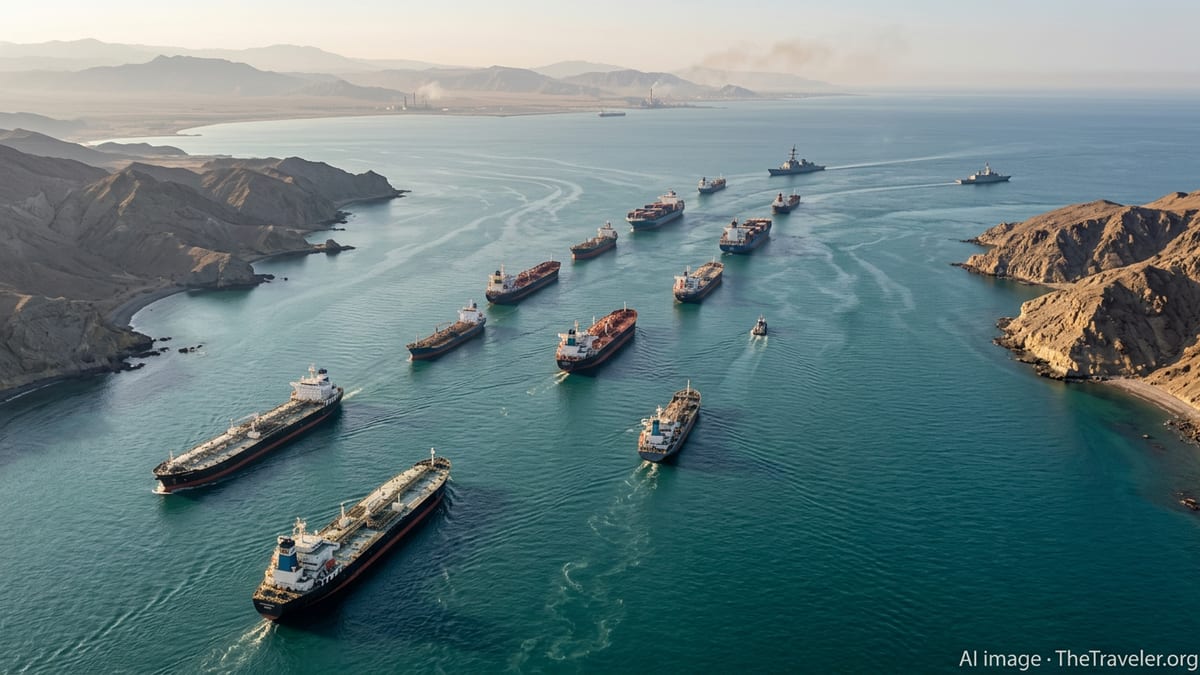
Oil Price Spike Filters Quickly Into Travel Costs
Benchmark crude prices have jumped again in mid July after new attacks on commercial vessels and renewed military strikes around the Strait of Hormuz, one of the world’s most important energy chokepoints. Recent market commentary notes weekly gains of more than 5 percent for Brent crude as shipping traffic slows and risk premiums increase. Analysts describe the strait as “effectively constrained,” with many tankers taking alternative routes or delaying transit.
Higher crude prices typically feed through to jet fuel costs within weeks. Industry research highlights that fuel already represents one of the largest operating costs for airlines, and any sustained rise in oil prices tends to be passed on in the form of higher airfares, fuel surcharges or both. Some carriers have begun updating fuel surcharge tables for long haul services, citing elevated fuel costs and ongoing volatility in global energy markets.
For leisure and business travelers in the Gulf, Europe and beyond, this means that fares on medium and long haul routes may become more expensive through the northern summer and into the autumn booking period. Price comparison data is not yet uniform across markets, but forward ticket searches are beginning to show higher average prices on routes linking Europe with the Gulf, South Asia and Australasia.
Travel planners are also watching how long the current spike will last. Commodity analysts point out that if tanker flows through the Strait of Hormuz remain disrupted or if additional infrastructure is damaged, oil prices could stay elevated, putting further upward pressure on air travel costs well into the end of 2026.
Airspace Rerouting and Potential Flight Disruptions
The Strait of Hormuz sits beneath major flight corridors that connect Gulf hubs with Europe, Africa and Asia. Since early March, aviation and maritime advisories have flagged heightened risk in the wider region, prompting airlines to review routing around sensitive airspace. Earlier in the crisis, some Gulf and neighboring states imposed partial or temporary airspace restrictions, while others remained formally open but saw carriers voluntarily shift tracks.
Publicly available flight tracking and aviation safety notices show that large international airlines have adjusted routings to avoid the most affected zones over the Gulf of Oman and along the Iranian coast. These diversions can add flight time on certain city pairs, especially those linking Europe with the United Arab Emirates, Qatar, Oman and Bahrain. Longer routings increase fuel burn and may lead to schedule padding, which in turn can cause minor shifts in departure and arrival times.
So far, there is limited evidence of large scale passenger flight cancellations directly attributed to the latest flare up around Hormuz, but transport ministries and airport operators in the region have previously acknowledged disruption to crew movements and cargo operations when tensions peak. Some carriers have consolidated services on overlapping routes or upgauged aircraft to maintain capacity while reducing the number of individual flights transiting sensitive corridors.
Travelers heading to or transiting through Gulf hubs are being advised by airlines and consumer agencies to monitor booking updates closely and to allow extra time for connections, particularly on itineraries that involve multiple stops between Europe, the Middle East and Asia. While most flights are still operating, even modest delays can cascade across tightly timed networks during peak travel periods.
Impact on Gulf Hubs and Regional Tourism
Gulf aviation and tourism economies are acutely exposed to disruptions around Hormuz because of their reliance on both energy exports and air connectivity. Dubai, Abu Dhabi, Doha and Muscat function as global transfer points between Europe, Asia, Africa and Oceania. Any perception of instability in nearby waters or airspace can translate into softer forward bookings, especially from more risk sensitive leisure segments.
Tourism boards in the region have continued to promote normal operations, emphasizing that airports and city centers are distant from conflict zones and that security measures are in place. However, booking data cited in industry analysis suggests that some European and Asian travelers are deferring or rebooking Gulf stopovers in favor of itineraries that route via southern Europe, Turkey or secondary Asian hubs.
Hotels and destination management companies report that corporate travel and events business remains more resilient than discretionary tourism, although companies in sectors directly affected by higher energy costs have begun tightening travel budgets. If fuel prices remain high and shipping disruptions deepen, analysts expect some Gulf carriers to reexamine capacity growth plans for late 2026, which could affect seat availability and pricing on key trunk routes.
For residents of Gulf states, the picture is mixed. On one hand, higher oil prices can support government revenue, which often underpins public sector wages and investment. On the other, elevated energy prices and supply chain delays can lift the cost of living and make outbound holidays more expensive, especially for families accustomed to regular trips to Europe and Southeast Asia.
European and International Travelers Face Wider Ripple Effects
Although the Strait of Hormuz is geographically distant from most European departure points, the disruption to global energy and shipping markets is already being felt in Europe’s transport and utility sectors. Energy policy institutes report that European natural gas prices have risen in recent days following an attack on a Qatari liquefied natural gas carrier exiting the strait. While European gas storage levels remain relatively comfortable, traders are building in a risk premium linked to potential longer term supply constraints.
Higher gas and electricity prices can indirectly increase operating costs for European airports and airlines, while higher refinery margins on jet fuel affect carriers across the continent. In response, some airlines serving long haul routes to the Gulf, South Asia and East Asia have signaled that they may adjust fuel surcharges, especially on premium cabins where price sensitivity is lower.
International travelers not flying to the Middle East can still encounter the effects of altered airspace patterns. Rerouting cargo and passenger flights away from congested corridors can create bottlenecks elsewhere, particularly over parts of Central Asia, the Caucasus and the eastern Mediterranean. Aviation experts note that during past regional crises, these shifts occasionally resulted in increased delays at busy European hubs as air traffic control units managed denser traffic in alternative corridors.
Travel insurers and consumer bodies in Europe are reminding passengers that standard policies may not cover all disruption related to geopolitical events, particularly if governments issue formal travel advisories or airlines cancel services for safety reasons rather than operational ones. Travelers are encouraged to check policy wording and to retain documentation of any cancellations or schedule changes when seeking refunds or compensation.
What Travelers Can Do Now
With the situation around the Strait of Hormuz evolving day by day, travel specialists recommend that passengers build flexibility into their plans. This can include opting for tickets that allow date or routing changes at reasonable cost, booking longer connection windows through Gulf hubs, and monitoring airline announcements regularly in the days before departure.
Consumer guidance from European and Gulf regulators underscores that passengers on flights departing from the United Kingdom or European Union retain clear refund and rerouting rights if flights are cancelled, regardless of the reason. However, compensation for delays or additional expenses can depend on the specific circumstances and the jurisdiction from which the journey originates.
Travelers with itineraries that cross the Gulf region may wish to consider travel insurance products that explicitly cover disruption linked to conflict or closure of key transport corridors. Policy details vary widely, and publicly available comparisons indicate that cover for war related events is often limited or subject to higher premiums.
Analysts stress that while the Strait of Hormuz crisis has introduced new risks and costs, global aviation networks have adapted to previous regional conflicts through rerouting, capacity adjustments and closer coordination between airlines and regulators. For now, most flights continue to operate, but higher prices and a greater likelihood of schedule changes are emerging as the defining features of this phase of the crisis for Gulf, European and international travelers.