


More news on this day
For residents of the Villa Vie Odyssey, a residential ship marketed as a “cruise for life,” the abrupt shutdown of its world-circling voyage in Cambodia turned a floating dream into a logistical and financial scramble to get home.
Get the latest news straight to your inbox!
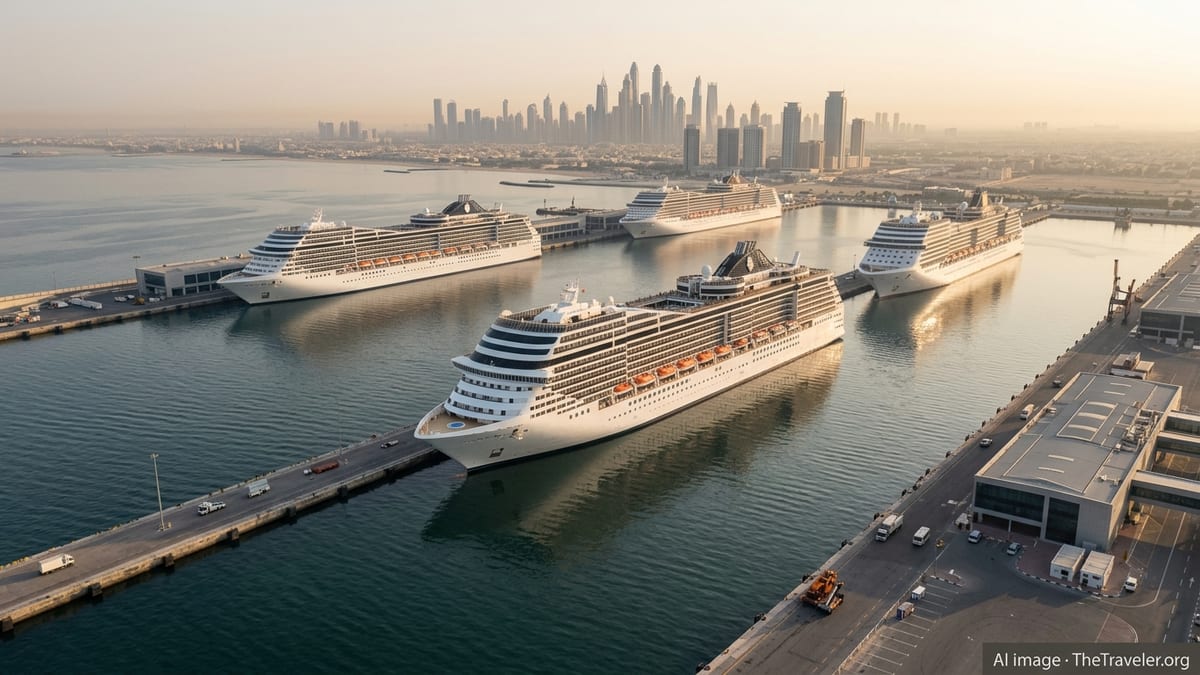
From Endless Horizons to an Overnight Deadline
The Villa Vie Odyssey departed Belfast in October 2024 on a three-and-a-half-year itinerary that was promoted as an entirely new way to live: cabins sold as lifetime or multi-year residences, a continuous route touching nearly 150 countries, and marketing that invited buyers to treat the vessel as a permanent home at sea. Publicly available information on the company’s programs shows cabin access advertised from around 299,999 dollars for single occupancy under an “Endless Horizons” offer, with higher prices for couples.
By late October 2026, that vision collided with financial reality. A statement from Villa Vie cited soaring fuel prices in parts of Asia, with per-cabin fuel costs described in company communications as rising from about 1,800 dollars a month to between 6,000 and 8,000 dollars, making the business model unsustainable. According to multiple news reports and operator updates, the decision was made to suspend the voyage while the ship was in Sihanoukville, Cambodia.
Passengers were informed that operations were halted and that they would need to disembark within hours, with various accounts describing a window of roughly seven to eight hours to pack up what, for many, amounted to their entire household. Reports from several outlets indicate that more than 200 residents and over 150 crew members were on board at the time, far below the ship’s capacity of about 650, but enough to create an instant housing and transport crunch in a busy port city.
Coverage of the final days aboard the Odyssey describes a period of mounting concern, including repeated requests for additional resident contributions toward fuel and operating expenses and last-minute fundraising among passengers to keep the itinerary going. Internal documents reported by national media suggest that residents had already stepped in earlier in 2026, with at least one large fuel invoice paid directly from a passenger’s personal bank account to keep the ship sailing.
Around the World, Then Suddenly Nowhere to Go
Unlike traditional cruises, where a line typically arranges charter flights or hotel blocks when a voyage is disrupted, reports from Cambodia suggest that Odyssey residents were largely left to manage their own exit plans. Passengers who had sold or rented out homes and moved most of their possessions on board described arriving in Sihanoukville with no immediate accommodation, onward tickets, or ground support provided by the operator.
Accounts collected by regional and U.S. media describe residents fanning out across the city in search of hotel rooms while simultaneously navigating visa requirements, airline schedules and rapidly rising airfares. Some travelers told reporters that they received no curated list of hotels or transport options, only a firm deadline to leave the ship. Others said they were still trying to secure seats on outbound flights days after the shutdown amid limited availability to North America and Europe.
For passengers from the United States, Europe and Australia, the routes home from Cambodia can involve multiple legs through hubs such as Bangkok, Singapore, Seoul or Doha. Published airfares for departures within a few days of the shutdown show one-way economy tickets from Phnom Penh or nearby regional airports to major U.S. gateways often running into the four-figure range when booked at short notice, particularly during busy travel periods. For retirees living on fixed incomes, those costs can rival a month or more of their former shipboard fees.
Travel insurance has emerged as another complication. Many residents reportedly held policies geared toward conventional cruises or short-term trips, not open-ended residence at sea. Public coverage of the situation indicates that travelers and consumer advocates are still working through how standard trip-cancellation or interruption language applies to a multi-year “residential” voyage halted due to an operator’s financial distress rather than a storm, mechanical breakdown or medical emergency.
Passengers Who Sold It All Face a New Housing Puzzle
The disruption has been especially stark for passengers who restructured their lives to move on board. Local and national outlets have profiled retirees from U.S. states such as Arizona and Wyoming who sold primary homes, placed possessions in storage or gave away furniture in order to fund long-term cabin access and the monthly fees associated with life at sea. Some couples reported investing close to seven-figure sums in lifetime or extended-stay packages.
With the ship now in what the company describes as temporary lay-up, those residents are confronting both the immediate cost of getting home and the longer-term question of where that home will be. Reports from Cambodia and passengers’ own blogs describe people deciding between short-term rentals in Southeast Asia, extended hotel stays, or rapid returns to countries where they no longer own property and where real estate prices have risen since they left.
Publicly available information about the company’s customer policies suggests that any refunds or credits will depend on the outcomes of ongoing restructuring efforts. Several analyses of the episode note that residential cruise contracts often involve a mix of one-time buy-ins and recurring charges that may not be protected in the same way as conventional cruise fares if an operator can no longer meet its obligations.
For now, many former residents appear to be leaning on personal savings, family support or temporary work to bridge the gap. Reports from passenger-focused publications indicate that some are choosing to remain in Asia for weeks or months, where day-to-day living costs can be lower than in their home markets, while they wait for more clarity on the ship’s future and on any possible recovery of their upfront investments.
What the Odyssey Saga Reveals About Residential Cruising
The Odyssey incident has drawn new attention to the small but growing niche of residential cruising, in which ships are marketed less as vacations and more as floating condominiums or co-living communities. Existing projects range from ultra-luxury, privately owned residence ships to more mid-market concepts offering long leases or “lifetime” rights of occupancy combined with globe-spanning itineraries.
Industry commentators cited in published coverage point to several structural challenges in turning that concept into a stable long-term product. Fuel is a significant and volatile expense, and the extended itineraries that appeal to residents can include long repositioning legs across oceans where fuel consumption is highest. Operators that rely heavily on large upfront payments to fund refits and operations may be vulnerable if occupancy does not reach projections or if external shocks, such as conflicts that disrupt energy markets, push costs far above forecasts.
The financial profile of the vessels themselves is another factor. Public records and maritime databases show that the Odyssey began service in the early 1990s under different names and owners before its conversion into a residential ship. Analysts quoted in travel publications note that older ships can bring higher maintenance and repair costs and may be less fuel-efficient than newer tonnage, adding more pressure when prices spike.
Observers also highlight the regulatory gray areas around classifying residents as long-term occupants versus cruise guests. That distinction can influence everything from the type of consumer protection available to the applicability of traditional cruise-ship passenger rights. The Odyssey shutdown is already being cited in commentary as a case study in how marketing language promising “forever” travel can collide with the legal and financial realities of operating an aging vessel in an unpredictable global economy.
Navigating Home and Looking Ahead
As former residents of the Odyssey make their way back to their countries of origin or on to new destinations, many are documenting the journey off the ship as carefully as they chronicled their time on board. Blogs and social media posts referenced in media reports describe improvised overland trips from Sihanoukville to Phnom Penh, improvised ride shares to regional airports and long layovers pieced together from whatever flights were still available.
For some, the route home includes a return to places they left years earlier after selling property and possessions to fund the cruise. Local coverage in U.S. states where several passengers originated describes families preparing to host returning relatives while they search for housing or consider whether to resume a land-based retirement. Others are opting to continue traveling, using the sudden break in shipboard life as a prompt to see more of Southeast Asia by train, bus or short-haul flights before deciding on a next base.
Travel analysts writing about the shutdown suggest that prospective residents of similar ventures may demand more transparency in future about operating reserves, hedging strategies for fuel and contingency plans for evacuating and repatriating long-term guests. Consumer advocates are also drawing attention to the importance of carefully reading contracts, especially clauses covering insolvency, voyage suspension and refund eligibility for large upfront payments.
Even as passengers work through that tangle of logistics and fine print, many public accounts of the experience blend frustration with a sense of having participated in a rare experiment in how and where people can live. The cruise of a lifetime did not end as anyone expected, but for hundreds of residents now piecing together journeys home from Cambodia, the final chapter of that story is still being written far from the ship’s once-promised endless horizon.