


More news on this day
Stranded travellers are slowly returning to Wellington Airport after a fire in the main terminal building forced mass evacuations, widespread flight diversions and a temporary halt to services on Friday.
Get the latest news straight to your inbox!
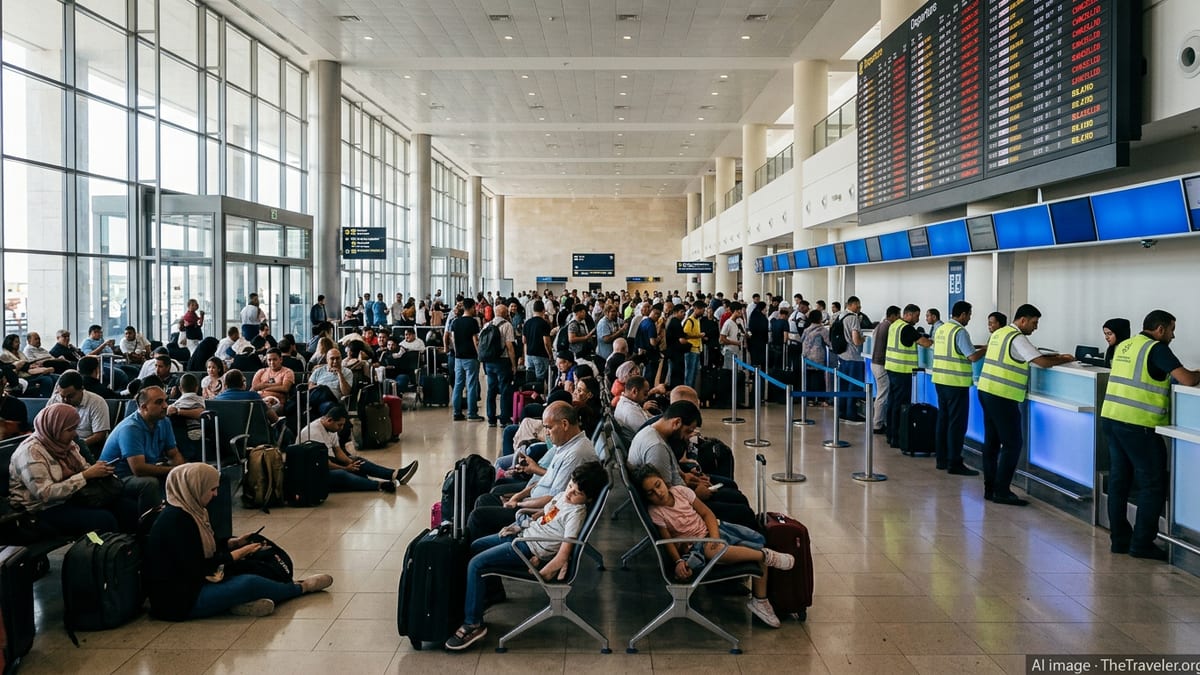
Terminal fire sparks sudden shutdown
According to multiple news reports, a blaze broke out at Wellington Airport on Friday evening, prompting an emergency response and the rapid evacuation of the main terminal and southwest pier. Fire and Emergency New Zealand crews worked alongside the airport’s own fire service, deploying several appliances, ladder trucks and a mobile command unit as smoke spread through parts of the building.
Publicly available information indicates that the fire was reported shortly after 7 p.m. local time, disrupting operations at one of New Zealand’s busiest domestic hubs at the start of a winter weekend. Flights bound for the capital were diverted to other airports, while aircraft scheduled to depart remained grounded as passengers were moved out to the forecourt and car park areas.
Early coverage from international news outlets such as Reuters and regional business publications described scenes of confusion as departure boards flipped rapidly from “on time” to “delayed” or “diverted.” Despite the scale of the response, initial statements from the airport highlighted that there were no reported injuries among passengers or staff.
Investigations into the origin of the blaze remained at a preliminary stage on Friday, with reports noting that emergency crews were still working to determine exactly what had ignited inside the terminal complex.
Passengers diverted, delayed and stranded
The abrupt shutdown of Wellington’s terminal left hundreds of travellers stranded both in the capital and at other airports around New Zealand. Published accounts from affected passengers described long queues at airline desks, crowded waiting areas and an evening of uncertainty as carriers worked to rebook disrupted journeys.
Those already in the air when the fire broke out were among the most affected. Flights inbound to Wellington were diverted to alternative airports, where travellers were held on aircraft or moved into transit lounges while airlines assessed whether the capital’s runway and terminal would reopen in time to complete their trips.
Reports indicate that Air New Zealand, the airport’s largest operator, temporarily halted flights into and out of Wellington while the situation was assessed. That decision led to knock-on delays on domestic routes linking the capital with Auckland, Christchurch and regional centres, with some passengers facing overnight stays or the prospect of re-routing through other cities.
For travellers already cleared through security, the evacuation meant leaving belongings behind in the secure area and assembling outside in cold evening conditions. As information filtered through from airport management and airlines, many turned to social media and local community forums to share updates, photos of the smoke-hazed terminal and advice for others yet to travel.
Gradual reopening brings travellers back
By late evening, publicly available updates from the airport and local media indicated that the fire had been contained and that safety checks were underway inside the affected terminal areas. As the incident moved from active firefighting to assessment, attention shifted to restoring operations and getting stranded travellers to their destinations.
Airport communications suggested that parts of the terminal could reopen once smoke had cleared and structural checks were completed, allowing a phased return of services. Travellers were advised to stay in contact with their airlines, as carriers began to schedule recovery flights and reposition aircraft back to Wellington.
Early on Saturday, social media posts and local commentary pointed to a noticeable uptick in passenger activity around the airport, with queues reforming at check-in counters rather than outside the building. While some services remained delayed or re-timed, many travellers who had spent the night in hotels, friends’ homes or alternative airports were able to return to Wellington Airport to complete or restart their journeys.
Published coverage also highlighted ongoing congestion in the terminal as backlogged passengers converged with those booked on the normal weekend schedule. Airlines signalled that it could take much of the day to work through the disruption, with further short-notice changes likely.
Operational impact and longer-term questions
Wellington Airport, which serves as a key domestic hub and a gateway to the lower North Island, operates with a compact single-terminal layout that can quickly become congested when operations are disrupted. The fire underscored that vulnerability, as the closure of one main building effectively halted passenger processing and aircraft turnarounds.
Background information on the airport shows that it typically handles several million passengers per year, with a heavy reliance on short-haul domestic routes. This density of movements magnifies the effect of even a short interruption, as missed connections ripple across the network and aircraft are displaced from their usual patterns.
Industry analysts noted in previous assessments that Wellington’s exposure to severe weather, its short runway and its position on a narrow coastal isthmus already pose operational challenges. The terminal fire added another layer of complexity, raising fresh questions about resilience planning, redundancy in passenger facilities and the speed with which disrupted services can be restored.
Airport stakeholders are expected to review how evacuation procedures, communication with airlines and real-time passenger information performed under pressure, with a focus on reducing confusion and minimising cascading delays during any future incidents.
What travellers should expect in the coming days
For travellers with upcoming flights to or from Wellington, publicly available guidance consistently stresses the importance of checking directly with airlines before heading to the airport. While the terminal has reopened to passengers, residual delays and aircraft re-positioning are likely to persist as carriers work through the backlog.
Passengers may encounter longer check-in and security queues than usual, as rebooked travellers join those on scheduled services. Travel planners suggest allowing extra time at the airport, keeping digital boarding passes and contact details up to date, and monitoring airline apps and text alerts for late changes to departure times or gate assignments.
Those connecting through Wellington to regional destinations may face tighter margins between flights, particularly on popular weekend routes. Travel experts often recommend carrying essential medications and a change of clothes in cabin baggage during periods of operational disruption, in case bags are delayed or overnight stays become necessary.
As operations stabilise, attention is likely to turn from immediate disruption to the lessons learned from the incident. For many of the stranded travellers now filtering back through the terminal, the priority is simply to get home or continue their journeys, but the episode will remain a reference point in ongoing discussions about the resilience of one of New Zealand’s most weather and capacity constrained airports.