


The Bryce Amphitheater is the heart of Bryce Canyon National Park, a vast bowl of crimson hoodoos viewed from Sunrise, Sunset, Inspiration and Bryce Points. Most travelers arrive with a camera and a checklist. Fewer arrive with a clear plan for crowds, parking, closures, altitude, weather swings and how to actually move around the rim and into the canyon. Those overlooked details are what separate a rushed stop from the kind of Bryce visit you’ll remember for years.
Get the latest updates straight to your inbox!
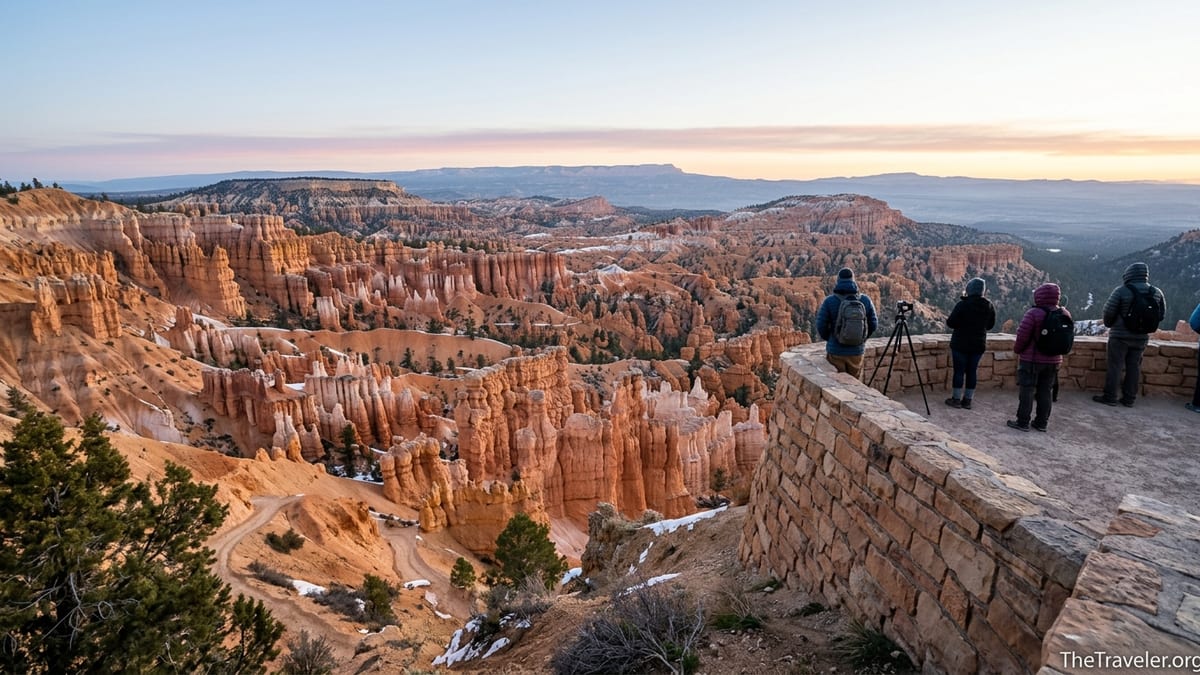
Understanding What the Bryce Amphitheater Actually Is
Many first-time visitors think of Bryce Canyon as a single overlook or a short roadside stop. In reality, the Bryce Amphitheater is a huge natural bowl in the park’s northern section, roughly 12 miles long, several miles wide and hundreds of feet deep, carved into the edge of the Paunsaugunt Plateau. It includes the park’s four marquee viewpoints: Sunrise, Sunset, Inspiration and Bryce Points. Standing at any of these, you’re looking into the same amphitheater from different angles and elevations, not at four separate canyons. That basic geography helps you understand how to move, hike and time your visit more intelligently.
Most trip itineraries squeeze “Bryce” into half a day between Zion and Capitol Reef, treating the amphitheater as just a quick rim photo stop. The result is a cluster of rental cars circling the closest lot at Sunset Point at 11 a.m. while shuttles and easy alternate overlooks sit half empty. Visitors who understand that the viewpoints are close together along a short stretch of road and rim trail can park once, ride the shuttle or walk the paved rim segment between Sunrise and Sunset, and then decide how far down into the hoodoos they want to go.
The amphitheater is also only one part of the park. South of Bryce Point, the main road continues roughly 15 additional miles to viewpoints like Natural Bridge and Rainbow Point. Travelers who expect “the whole park” to sit around one parking lot at Sunset Point underestimate how much driving and time they might want if they plan to combine the amphitheater with the full scenic drive in a single day.
Because the amphitheater concentrates Bryce’s signature scenery, it also concentrates the crowds. The park consistently reports well over one and a half million visits each year, and on busy summer days crowding is driven less by total visitor numbers than by how many people attempt to occupy the small amphitheater lots at the same late-morning window. That reality shapes nearly every practical choice you’ll make.
Parking, Shuttles and Crowds: The Logistics Most People Miss
The biggest surprise for many visitors is not the view but the parking situation around Sunrise, Sunset and Inspiration Points. The National Park Service has flagged the Bryce Amphitheater as parking constrained, and crowd calendars for recent summers show very high congestion scores on weekends and many weekdays. In peak season, parking lots at Sunset and Sunrise Points often fill by late morning. Drivers arriving around 10 a.m. may find rangers directing them away from full lots or looping traffic through congested pullouts.
To blunt that stress, the park operates a free shuttle system that focuses on the amphitheater area. The shuttle runs in the main season between Bryce Canyon City, the visitor center and key stops including Sunrise, Sunset, Inspiration and Bryce Points. Because shuttles run frequently, they give you a predictable way to move between the rim overlooks and popular trailheads without having to gamble on finding a parking space. Many hotels just outside the entrance, such as the cluster of properties around Ruby’s Inn in Bryce Canyon City, sit on or near shuttle stops, so guests can leave their cars in hotel lots and ride directly into the park.
One easily overlooked detail is that during shuttle season vehicles over a certain length are restricted from parking at the amphitheater viewpoints, and even standard-size cars may be turned away once lots are full. Practically, that means if you show up in a rented RV at noon in July, your chance of parking at Sunset Point is low. The workaround is to park at one of the larger lots near the entrance or in Bryce Canyon City and rely entirely on the shuttle for the amphitheater, then drive your own vehicle later in the day to the quieter southern viewpoints that the shuttle does not serve.
Travelers also underestimate how dramatically arrival time affects their experience. On a busy June Saturday, arriving before 8:30 or 9 a.m. can mean pulling directly into a space at Sunrise or Bryce Point, strolling the rim while the light is still soft and cooler air lingers. Arriving at 11 a.m. on the same day may mean circling in traffic while kids in the back seat grow impatient. If your itinerary is flexible, consider doing the reverse of the classic advice: use the early morning for amphitheater viewpoints and the signature Navajo and Queen’s Garden area, then drive the longer southern scenic road in the afternoon when parking pressure shifts away from the amphitheater.
Seasonal Trail Closures and Conditions Inside the Amphitheater
Most iconic photos of Bryce Amphitheater show hikers threading through orange switchbacks and tall, narrow corridors, especially the famous Wall Street section of the Navajo Loop. What many travelers fail to realize is that these specific segments are often affected by seasonal closures or storm damage. In recent winters, mudslides and freeze-thaw cycles have forced full or partial Navajo Loop closures, sometimes leaving only the Queens Garden route open for descending into the canyon. Visitors who arrive expecting to hike the classic Queens Garden to Navajo Loop combination sometimes find barricades and closure signs instead.
This matters because the feel of your hike changes significantly depending on what is open. If Navajo Loop’s Wall Street section is closed, a common alternative is to hike Queens Garden as an out-and-back, starting at Sunrise Point. It is still beautiful, but you will not get the same tight slot-like canyon experience or the dramatic hairpin switchbacks that appear on postcards. Similarly, the Peekaboo Loop, which drops from Bryce Point deeper into the amphitheater and ties into Navajo, can be closed in winter and early spring. Travelers who count on these routes for a long, immersive day hike should check current conditions with the park rather than assuming summer-style access in April or November.
Trail surface and footing also surprise many people. Inside the amphitheater, paths are usually a fine, dusty mix of sand and eroded rock. After snowmelt or summer monsoon storms, that dust can turn into slick mud, especially on the steeper switchbacks. Flat sneakers with worn soles feel very different on a dry August afternoon than on a shaded, icy stretch in March. Adding simple traction devices over boots, or even just choosing hiking shoes with real tread, can be the difference between an enjoyable descent and a cautious, nerve-wracking slide back to the rim.
Elevation change catches visitors off guard as well. Even “short” routes such as the combination of Queens Garden and Navajo Loop involve several hundred feet of loss and gain. Starting down from Sunset Point feels easy, but the return climb can be slow and strenuous, especially for travelers who are already adjusting to the park’s altitude. Families with younger children often underestimate the time it will take to complete these loops and end up rushing to meet afternoon driving plans. Planning your canyon descent early in the day and allowing generous time to climb back to the rim helps avoid those unpleasant surprises.
Altitude, Weather Swings and What That Means for Your Visit
Bryce Amphitheater sits at over 8,000 feet above sea level, much higher than nearby parks like Zion. That altitude influences more than just scenic views. The thinner air affects how hard simple activities feel, how quickly you tire on climbs out of the amphitheater and how you should approach hydration and sun protection. Travelers who drive up from Las Vegas or St. George in a single day sometimes feel unexpectedly winded or develop mild headaches after a short walk along the rim. That reaction can be more pronounced for older visitors or anyone with underlying heart or lung conditions.
Weather at that elevation is also more volatile than many people anticipate. In summer, daytime highs may climb into the 70s or 80s Fahrenheit, but nights routinely drop into the 40s or lower. Shoulder seasons amplify that contrast. A clear October morning can start below freezing, warm quickly under intense sun by midday, and then cool again sharply once shadows reach the hoodoo walls. In winter, snow is common on the rim, and viewpoints like Inspiration and Bryce Point can temporarily close during active storms or while crews plow park roads.
Those swings matter because they influence everything from clothing choices to trail safety. A visitor from coastal California might arrive in June in shorts and a T-shirt, then find themselves shivering at Sunrise Point as the first light hits the amphitheater in 40-degree air and a steady breeze. Later that same morning, the sun at altitude can feel almost harsh, reflecting off pale rock and snow patches and increasing the risk of sunburn. Packing layers, including a windproof outer shell, gloves or a warm hat in shoulder seasons and high-SPF sunscreen is not just a mountaineer’s habit; it is practical preparation for a standard day at Bryce.
Thunderstorms are another overlooked factor, particularly in late summer when monsoon patterns bring afternoon buildups. While Bryce does not have the same slot-canyon flash flood reputation as some nearby desert areas, lightning on the exposed rim can be dangerous, and heavy rain can quickly make steep trails muddy and unstable. Planning your deeper canyon hikes for morning hours and keeping an eye on the sky in mid to late afternoon is a smart adjustment that many visitors skip in their enthusiasm to maximize every daylight hour.
Sunrise, Sunset and How Light Actually Works in the Amphitheater
Names like Sunrise Point and Sunset Point suggest obvious times to visit, but the way light enters the Bryce Amphitheater can defy first impressions. Because the amphitheater faces generally east and southeast, sunrise often produces spectacular, rapidly changing color as first light catches the hoodoo tops and then flows down their sides. Sunrise Point and nearby areas of the rim are indeed excellent for that show, but travelers frequently ignore the fact that other viewpoints like Bryce Point can be equally, if not more, dramatic for first light, with a broader panorama of the entire bowl.
Sunset behaves differently. Instead of the sun dropping behind the amphitheater and exploding the hoodoos into golden color from the front, the light often comes from behind you or to the side as you stand at the main overlooks. Colors can still be beautiful, especially as warm tones intensify before the sun falls below the plateau edge, but they may not match the cinematic scenes people imagine. Many photographers and experienced visitors prefer late afternoon and early evening at Inspiration or Sunset Point, when the low angle light slants across the formations, to the few minutes right at official sunset time.
The names can also mislead people into crowding one or two viewpoints. On busy summer days, Sunset Point’s railings may be lined two or three people deep half an hour before sunset, while equally good or better views along the adjacent Rim Trail remain relatively open. Travelers who understand that the rim path between Sunrise and Sunset is paved and mostly level can stroll a few minutes away from the main clusters and experience a quieter, more personal show without sacrificing the view. The same is true for sunrise; even a short walk north from Sunrise Point can reveal different compositions and fewer tripods.
Finally, many visitors overlook night sky conditions in their lighting plans. Bryce Canyon is recognized as an excellent stargazing destination, and the amphitheater area can be extraordinarily dark once the last shuttle has stopped and most day trippers have left. If your schedule allows an overnight stay, bundling up for a brief return to the rim after full dark can deliver a Milky Way arc over hoodoo silhouettes that rivals the park’s daylight drama. Just remember that trails into the canyon are not recommended after dark for most visitors; stick to the rim overlooks and bring a red-light flashlight to preserve night vision.
Accessibility, Acclimatization and Matching Plans to Ability
Images of Bryce Amphitheater often focus on dramatic, steep trails, which can leave some travelers assuming that meaningful experiences are out of reach for those with mobility limitations, young children or anyone not comfortable with long hikes. In reality, the amphitheater area includes several accessible features that many visitors overlook. Portions of the Rim Trail between Sunrise and Sunset Points are paved and relatively level, suitable for wheelchairs and strollers, with benches and frequent viewpoints. The shuttle system allows people to step off almost directly at the rim, minimizing walking distances.
At the same time, altitude and steep grades can make certain routes unexpectedly difficult. A traveler who manages a 3-mile hike at sea level may find the climb out of the amphitheater on the Navajo switchbacks surprisingly taxing. That mismatch between expectation and reality is one reason some visitors cut their hikes short, feel rushed or leave with a sense of frustration. Matching your route to your group’s fitness and experience level, and building in more time than you think you need, are practical ways to avoid that outcome.
Acclimatization is another underappreciated factor. Many Utah road trips route visitors from low desert elevations directly up to Bryce for a single night between other stops. If you arrive late, sleep poorly because of the sudden change in altitude and then push into a strenuous canyon hike early the next morning, headaches and fatigue are common. If your schedule allows even a relaxed afternoon or evening walk on the rim the day you arrive, followed by more ambitious hikes the next morning, your body has a small but meaningful window to adjust.
Travelers with specific health concerns should consider discussing the altitude and hiking plans with a medical professional before their trip. Simple steps like pacing yourself, carrying more water than you expect to drink, and scheduling regular breaks in shaded pockets along the trail can make the amphitheater welcoming rather than overwhelming. The beauty of Bryce is that you can tailor your experience: some visitors never walk below the rim and still leave deeply satisfied, while others spend full days linking longer loops such as the connections between Navajo, Peekaboo and the Under-the-Rim Trail network south of the main bowl.
Planning Your Time: Common Itinerary Mistakes Around the Amphitheater
Many travelers underestimate how long they will want to stay at Bryce Amphitheater. It is common to see itineraries that allocate just three or four daylight hours before a long onward drive. In practice, even a simple combination of rim viewpoints, a modest canyon hike and a meal at the lodge or in Bryce Canyon City can easily fill a full day. Rushing through the amphitheater on a tight schedule often means hitting only Sunset Point, glimpsing the view, and leaving with the sense that you have “seen Bryce” when you have barely begun.
One frequent oversight is trying to tag the amphitheater at midday in the middle of a travel day between distant parks. For example, some visitors drive from Zion, aim for a quick lunchtime stop at Bryce, then push on to Capitol Reef or Moab. That plan collides with peak crowding in the amphitheater lots, the harshest light for photography and the warmest part of the day. A more thoughtful approach is to either stay overnight near Bryce, catching evening and early morning in the amphitheater, or to reframe Bryce as the main goal for the day, letting the rest of your route flex around it.
Another common mistake is treating the viewpoints as separate, time-consuming destinations. Because Sunrise, Sunset, Inspiration and Bryce Points sit relatively close together along the same short stretch of road, you can often see all four comfortably in a couple of hours when traffic is manageable. For example, you might ride the shuttle to Bryce Point first for a sweeping overview, then stop at Inspiration and Sunset on your way back, finishing at Sunrise for a gentle walk along the paved rim. Knowing that these viewpoints are part of one continuous amphitheater helps you avoid driving back and forth unnecessarily and wasting time in your day.
Travelers also tend to ignore how the rest of the park fits around the amphitheater. The southern viewpoints along the main road are less crowded and can be combined into an afternoon drive, especially after the peak parking crunch at the amphitheater eases. If you are short on time, prioritize early and late hours for Bryce Amphitheater and consider trimming distant stops rather than sacrificing the changing light and relative quiet that make the amphitheater special.
The Takeaway
Bryce Amphitheater rewards visitors who plan beyond the postcard. Understanding that the four main viewpoints look into the same vast bowl, that parking and shuttle logistics shape your day more than raw distance, and that altitude, weather and seasonal trail conditions can change the character of your visit will help you avoid the most common frustrations. Instead of circling a full lot at midday and rushing a quick photo, you can arrive early or late, move easily along the rim, and choose canyon routes that match your abilities and the day’s conditions.
With a bit of preparation, your time at Bryce Amphitheater can feel spacious rather than hurried. Watch first light move across the hoodoos instead of fighting for a parking space, linger at quieter overlooks just beyond the main railings, and give yourself enough hours to descend among the formations and then return, without pressure, to the rim. Bryce Canyon will always be popular, but the visitors who understand what most travelers overlook are the ones who leave with both the photographs and the memories they hoped for.
FAQ
Q1. How early should I arrive at Bryce Amphitheater to avoid parking problems?
On busy spring and summer days, aiming to be at Sunrise, Sunset or Bryce Point parking areas by around 8:30 a.m. typically provides a smoother experience and greatly reduces the chance of full lots compared with arriving late morning.
Q2. Do I really need to use the shuttle, or can I just drive my own car?
You are allowed to drive your own car, but the free park shuttle is often the most predictable way to reach Sunrise, Sunset, Inspiration and Bryce Points during peak season, especially when lots are full or larger vehicles face restrictions.
Q3. Is the classic Navajo Loop through Wall Street always open?
No. Sections of the Navajo Loop, including the Wall Street area, close periodically in winter and after storms because of ice, mudslides and rockfall, so you should check current trail conditions with the park before counting on that route.
Q4. What is a good alternative hike if parts of Navajo Loop are closed?
When Navajo Loop is not fully available, many visitors hike Queens Garden from Sunrise Point as an out-and-back, or combine open segments of Navajo with nearby trails if conditions and park guidance allow.
Q5. How does the high elevation affect my visit?
The amphitheater rim sits over 8,000 feet above sea level, so you may feel more easily winded on climbs, and mild headaches or fatigue are common for some visitors, making hydration, pacing and rest especially important.
Q6. What should I wear for a typical summer day at Bryce Amphitheater?
Even in summer, mornings can be chilly and afternoons sunny and warm, so plan on layered clothing, a light windproof jacket, sun hat, sunglasses and sturdy footwear suitable for dusty or uneven trails.
Q7. Are there accessible viewpoints for visitors with limited mobility?
Yes. Portions of the Rim Trail between Sunrise and Sunset Points are paved and relatively level, and the shuttle drops visitors close to railings at major overlooks, making it easier to enjoy amphitheater views without long walks.
Q8. Can I see the main viewpoints if I only have a few hours?
If crowds and traffic are moderate, you can often visit Bryce, Inspiration, Sunset and Sunrise Points within a few hours by combining the shuttle with short walks along the rim, though you may not have time for a full canyon hike.
Q9. Is Bryce Amphitheater worth visiting if I’m not a hiker?
Absolutely. Many visitors never go below the rim and still have a rewarding experience simply by spending time at the overlooks, walking short paved segments of the Rim Trail and watching the changing light across the hoodoos.
Q10. Should I plan to stay overnight near Bryce or visit as a quick stop?
Staying at least one night nearby lets you experience sunrise, sunset and possibly the night sky over the amphitheater, which most day-trippers rushing through at midday never get to enjoy.